


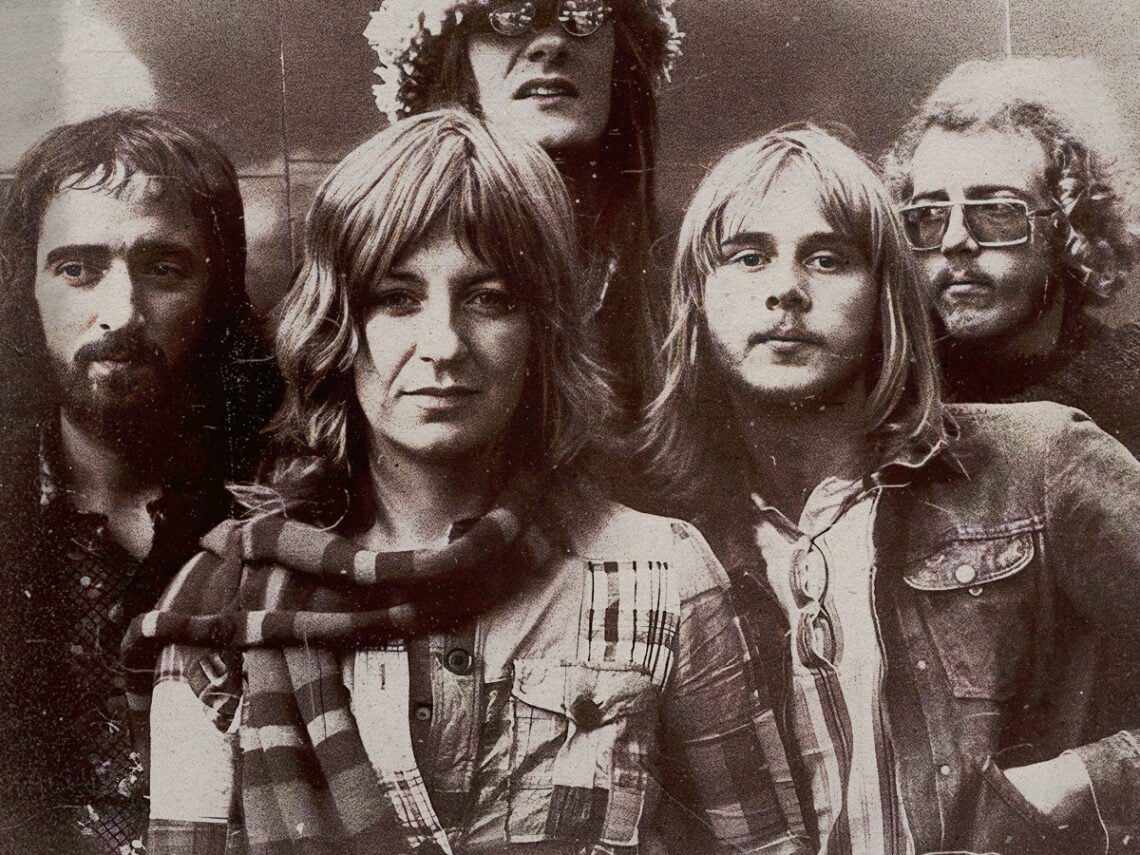
Mick Fleetwood once revealed the “secret ingredient” to Fleetwood Mac’s success

From an outsider’s perspective, the many reasons why Fleetwood Mac remained one of the most immensely interesting bands on the planet are clear. Not only did each member possess an immaculate amount of talent, but the trials and tribulations they faced both as a group and as people with romantic entanglements meant for observations that were at times more interesting than a soap opera.
Of course, the two most obvious examples of The Mac’s tumultuous goings-on are the relationships between Stevie Nicks and Lindsey Buckingham and Christine and John McVie. While this only became a significant focal point of the band in the mid-1970s, the fact that their relationships and break-ups coalesced with one of their best periods for musical excellence was not lost on audiences.
During this time, they crafted some of the best hits of their discography, like the angst-filled ‘Go Your Own Way’ and the hard-hitting response that was ‘Dreams’, as well as McVie’s secret marital affair chronicled in ‘You Make Loving Fun’, and the unforgettably rich dynamic infused in ‘The Chain’. The music alone would have likely pulled in new legions of fans, but the fact that there was a myriad of drama going on behind the scenes only served to enrich the allure.
This was not lost on the band at the time, and the benefit of hindsight only strengthens this view with the passing of time. Nicks and Buckingham, for instance, have both commented on the band’s dynamics over the years, claiming that this was undeniably a significant part of their success, even though it was difficult to endure at the time.
As strange as it might be to say, however, it’s difficult to imagine where they would be without such career-defining romantic overtures. According to Mick Fleetwood, they likely wouldn’t have made it as far as they did. “The secret ingredient is that the audience is involved with us as people, as much as they are with the band,” the musician once told Briefings Magazine. “Quite early, we became a sort of pop-orientated band, even though we don’t think of it that way. But we weren’t candy floss. We had this sort of darkness about us.”
Elaborating on the ways the audience felt drawn to what was going on in their personal lives, he added: “What I’m saying is that there was a form of human investment in us that went from happiness to pain. People became invested in that journey. That’s my explanation of it.”
He added: “But let me also say, me and John McVie have been in the band from the beginning and we sometimes just sit and go, “Wow, how did that happen?”
Although much of their success also came with the motivation to avoid financial and commercial worries and strains, the most important thing was that the audience remained endeared to who they were as people, even if their choices were sometimes questionable. At the same time, there was certainly an element of embellishment when it came to their internal frictions, but that only added to the appeal in the long term.
