


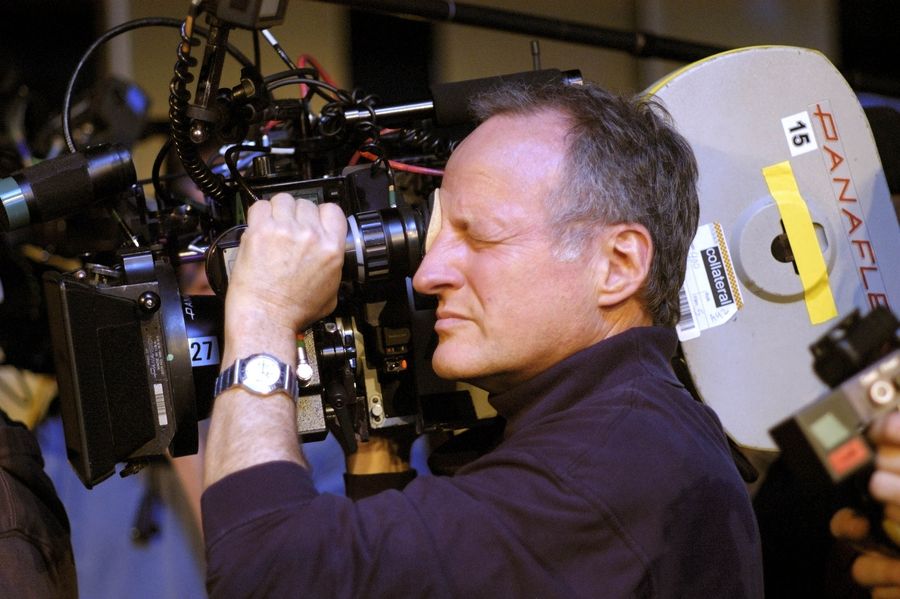
Michael Mann names the 10 greatest films of all time

A four-time Academy Award nominee, Michael Mann is one of the most revered forces in contemporary cinema. The director, screenwriter and producer broke onto the scene with his award-winning 1979 TV movie Jericho Mile, which was followed by his feature film debut, Thief, released in 1981. After years working on Miami Vice as an executive producer, he directed films such as 1992’s The Last of The Mohicans, 1995’s Heat, The Insider in 1999, and Public Enemies in 2009. Here, Mann names ten of his all-time favourite films.
Mann’s list is taken from his ballot for Sight and Sound’s greatest films list. His first selection is Francis Ford Coppola’s Apocolypse Now, a retelling of Joseph Conrad’s Heart of Darkness which Mann describes as a “dark, high-voltage identity quest, journeying into over-load, wilderness and nihilism in an operatic and concrete narrative. A masterpiece”.
There are a couple of other American masterpieces on Mann’s list, such as Orsen Welles’ much-celebrated Citizen Kane, which tells of an investigation into newspaper magnate Charles Foster Kane. He is a complex and elusive character whose dying word – “Rosebud” – serves as an entry point into one of cinema’s great character portraits. “Citizen Kane was a watershed,” says Mann, describing the film as “a life’s linear narrative reassembled into a novelistic narrative by investigators querying its meaning”.
Mann’s list also features numerous non-American masterpieces, including Battleship Potemkin by Russian innovator Sergei Eisenstein. “Eisenstein not only laid the theoretical foundation for much of 20th-century modernist cinema,” he begins, “But in 1924 made one of cinema’s great classics, applying dialectics to montage, composition and meaning. Its influence in British, Weimar and American cinema is huge.”
You can check out Michael Mann’s full selection below.
Michael Mann’s 10 greatest films list:
- Apocalypse Now (Francis Ford Coppola, 1979)
- Battleship Potemkin (Sergei Eistenstein, 1924)
- Biutiful (Alejandro González Iñárritu, 2010)
- Dr. Strangelove or: How I Learned to Love The Bomb (Stanley Kubrick, 1964)
- Citizen Kane (Orsen Welles, 1941)
- The Passion of Joan of Arc (Carl Theodor Dreyer, 1928)
- Raging Bull (Martin Scorsese, (1980)
- Out of the Past (Jacques Tourneur, 1947)
- Pale Flower (Masahiro Shinoda, 1964)
- Confessions (Tetsuya Nakashima, 2010)
Mann also includes Dreyer’s The Passion of Joan of Arc, in which the protagonist’s experience of the divine is “conveyed from his visualisation of the human face: no one else has composed and realised human form quite like Dreyer.” Other films are selected for less mystical reasons. Masahiro Shinoda’s Pale Flower, for example, makes it onto the list “for its incredible opening scenes alone.”
