


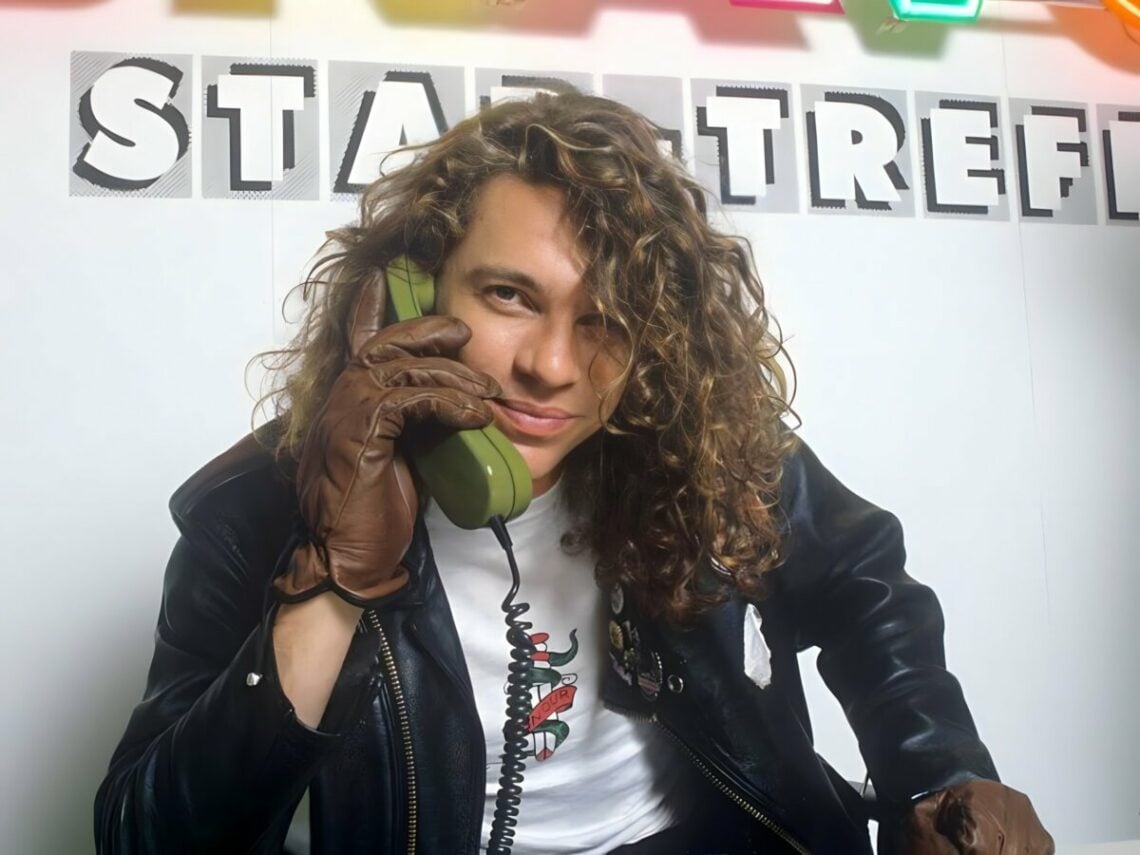
Michael Hutchence’s nifty trick for instantly identifying whether a band was Australian

In 1988, right around the same time the fiery Australian political rockers Midnight Oil were getting regular MTV play in America with their single about Aboriginal land rights (‘Beds are Burning’), their countrymates INXS were taking a very different approach.
Rather than bringing the headlines of their homeland to a worldwide audience, the goal was more about transcending their origins entirely.
“I think of us as a band first and Australians second,” frontman Michael Hutchence told the Los Angeles Times. “There’s no real star system in Australia, so why become one? It’s futile. They say in Australia that the worst thing you can do is become successful.”
And yet that’s exactly what INXS had done. Ten years into the band’s career, they’d taken the leap to megastardom via their hit-filled 1987 album Kick, which did nearly as well in America – peaking at number three on the Billboard – as it did in Australia (number two).
Unlike Midnight Oil or Men At Work, though, or Little River Band before them, there was no utilisation or advertisement of INXS’s Aussie-ness as a factor in their music, their subject matter, or their style.
“In our minds we’ve always felt like we’re an international band,” guitarist Kirk Pengilly explained. “To us it doesn’t matter where you come from. And I don’t know if the majority of American kids are that aware of where you’re from. Music is music.”
If you were alive in 1988 and owned a radio, odds are good you were being inundated with INXS, whether you knew anything about them or not. Kick’s first four singles were all monsters, starting with the bangers ‘Need You Tonight’, ‘New Sensation’, and ‘Devil Inside’, all leading up to probably the band’s most covered song, the tear-jerking ballad ‘Never Tear Us Apart’. What, did you think that was a Paloma Faith original?
For a brief moment in time, INXS had landed on the sliver within the Venn diagram between anthemic U2 guitar rock and Prince’s sex appeal, much to Bono’s jealous annoyance. Despite their disinterest in flag waving, though, the Sydney-based band were also still very much Australian in their personal sensibilities. And lest anyone accuse them of doing the contrary, they never lost sight of those roots.
“We are what Australian audiences made us,” said Hutchence, whose death in 1997 has unfortunately cast a lasting shadow over a lot of his band’s best work. “You get formed by them. I remember times when you wouldn’t dare finish a set and walk backstage. You had to walk straight off the front of the stage into the bar and buy drinks for people.”
That cultural difference in the relationship between bands and their fans also gave Hutchence a special insight that allowed him to sniff out other Aussies in the music world, even if he was encountering them for the first time in, say, a dingy bar in Oklahoma.
“I know when a band is Australian,” Hutchence told the LA Times. “There’s a certain way they treat the beat and a particular tongue-in-cheek attitude. There’s no preciousness in Australian bands.”
