


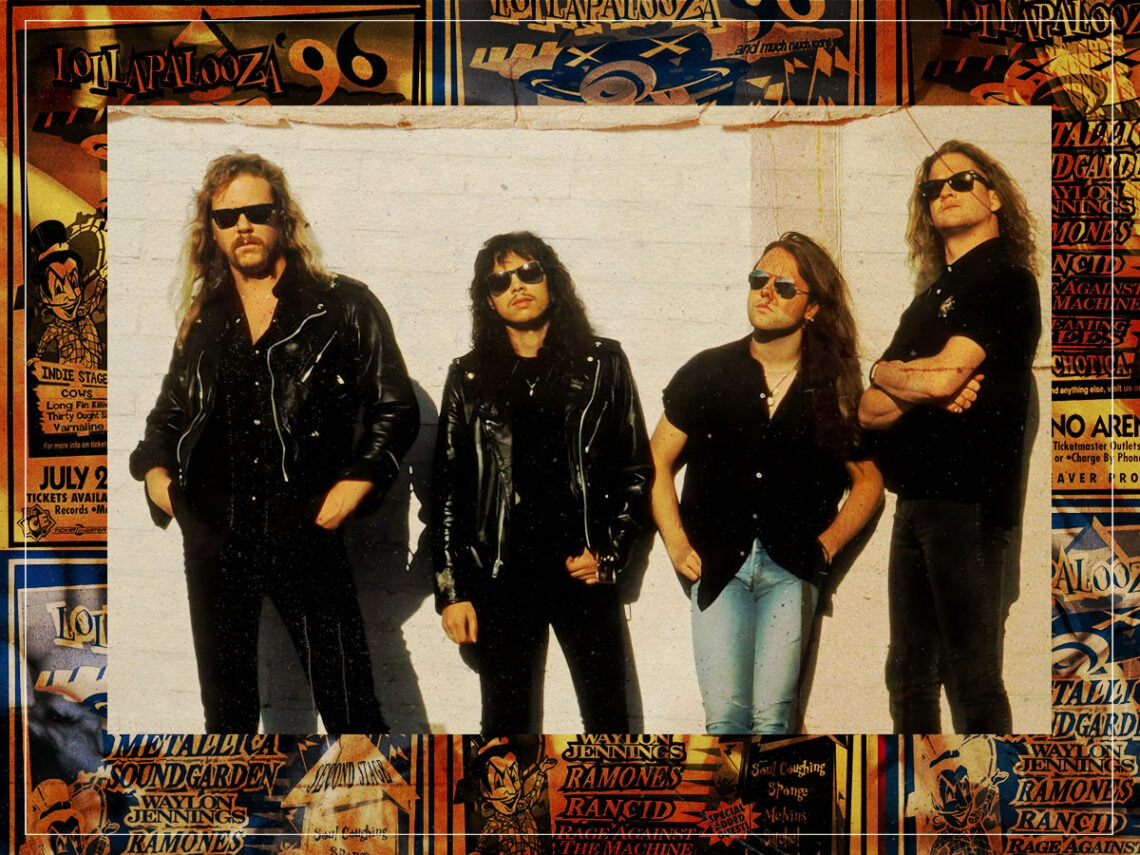
Did Metallica nearly kill Lollapalooza?

The 1990s were pivotal in many ways, particularly in the consolidation of what we now recognise as alternative culture. Generation X’s interpretation of the countercultural spirit, fueled by punk, progressive politics, and musical innovation, simmered underground throughout the 1980s. By the dawn of the new decade, it was ready to emerge into the mainstream. The inaugural Lollapalooza in 1991 played a crucial role in this cultural shift.
Since 2005, Lollapalooza has been held annually over four days at Chicago’s Grant Park, but it was initially conceived as a touring event by Jane’s Addiction frontman Perry Farrell in 1990, serving as the Californian band’s farewell tour. Inspired by Britain’s Reading Festival and travelling circuses like Barnum & Bailey, Farrell, along with Ted Gardner, Don Muller, and Marc Geiger, was committed to bringing this refreshed version of a festival to life. Intended as a celebration of alternative culture, featuring a mix of alt-rock, industrial, and rap, the first edition travelled across the United States and Canada from mid-July to late August 1991.
The bill featured Siouxsie and the Banshees, Butthole Surfers, Nine Inch Nails and even the launch of Ice-T’s metal outfit Body Count. Presciently, the rapper told an interviewer on the opening day: “I know it is gonna be a tour people are gonna talk about for a long time.”
Comprised of music and non-musical features such as the Jim Rose Circus Side Show, visual art, virtual reality games and information tables about political and environmental issues, Lollapalooza refreshed the concept of a musical festival as Farrell was bored with tradition. Furthermore, it materialised at the perfect time and effectively set the scene for the alternative tidal wave that was to consume culture with Nirvana’s arrival only months later.
Of course, the grunge and alternative rock explosion of the early 1990s played a vital role in Lollapalooza’s success. The 1992 edition saw the globally successful acts Red Hot Chili Peppers and Soundgarden headline, demonstrating how far it had come in just 12 months.
Accordingly, the festival became the spiritual home of Generation X’s music while continuing to include rap acts on the bill, spreading diversity. It also increased the participatory angle, with open mic readings, tattoo parlours and, most bizarrely of all, television-smashing pits on offer. However, 1992’s outing was criticised for being much more commercialised than its original format. This was the first whiff of what was to come.

The festival continued successfully until 1996, despite Nirvana turning down a headline slot for $10million in 1994. Amid a changing world, where rock was fast going out of style after so long at the top, the zeitgeist proved too much to withstand.
In a sign of the times, despite being so central to Lollapalooza and the originator of the “Alternative Nation”, in 1996, Farrell concentrated on bringing a new festival to life, the short-lived ENIT, an electronic music celebration. Therefore, he did not participate in that year’s edition of Lollapalooza. Resultantly, his absence meant that a disaster was on the way.
Two mainstream headliners were booked, who caused outrage as they went against everything the festival stood for: Metallica and Waylon Jennings. While including the country superstar Jennings surprised many, adding the San Francisco thrash band angered vast swathes of attendees. Not only would Metallica’s fans then be criticised by fellow revellers for only being bothered about them without respecting anyone else on the lineup, Farrell had the most damning word. As alternative culture was pitted against alpha male behaviour and machoism, he felt that the James Hetfield band’s inclusion was antithetical to his peaceful concept of Lollapalooza. In response, he severed all ties.
“I helped create the genre alternative, and alternative was against hair metal, teased-out hair, spandex, bullshit rock music,” Farrell recalled to Rolling Stone in 2015. “Metallica, in my estimation at that time, wasn’t my thing. I was into alternative and punk and underground. My friends were Henry Rollins and Gibby Haynes and Ice-T. … So, I was not sure about Metallica back in those days. It’s my fucking party, and I’ll have who I want.” He also clarified that he likes Metallica’s music these days.
Unfortunately, the writing was on the wall for Lollapalooza, with the Metallica incident hastening its fate amid a changing world. In response, in 1997, the festival placed emphasis on the electronica of The Prodigy, The Orb and Orbital in a bid to stay relevant, but it would be the final tour. In 1998, the organisers failed to find a headliner and announced the end of Lollapalooza. This demise symbolised alternative rock losing cultural relevance as dance music took hold. The days of 1991 were just a distant memory.
While the Metallica debacle could have introduced the final chapter of Lollapalooza’s story, it didn’t. In 2003, Farrell was on hand to resurrect the corpse and revive his dream. Fittingly, when Jane’s Addiction toured their first album in 13 years, Strays that year, this included a headline slot at a revamped Lollapalooza tour. However, they weren’t out of the woods just yet.
Due to high ticket prices, the 2003 event wasn’t a resounding success, and neither was the ensuing year. Despite boasting Morrissey, PJ Harvey, Pixies and Sonic Youth, 2004’s edition, which consisted of a two-day festival in each city, was cancelled due to poor ticket sales. Sensing he needed help, in 2005, Farrell partnered with Capital Sports & Entertainment and settled on the format that has seen it housed in Grant Park ever since. It has since had a rebirth on a global scale. The alternative dream lives on.
