


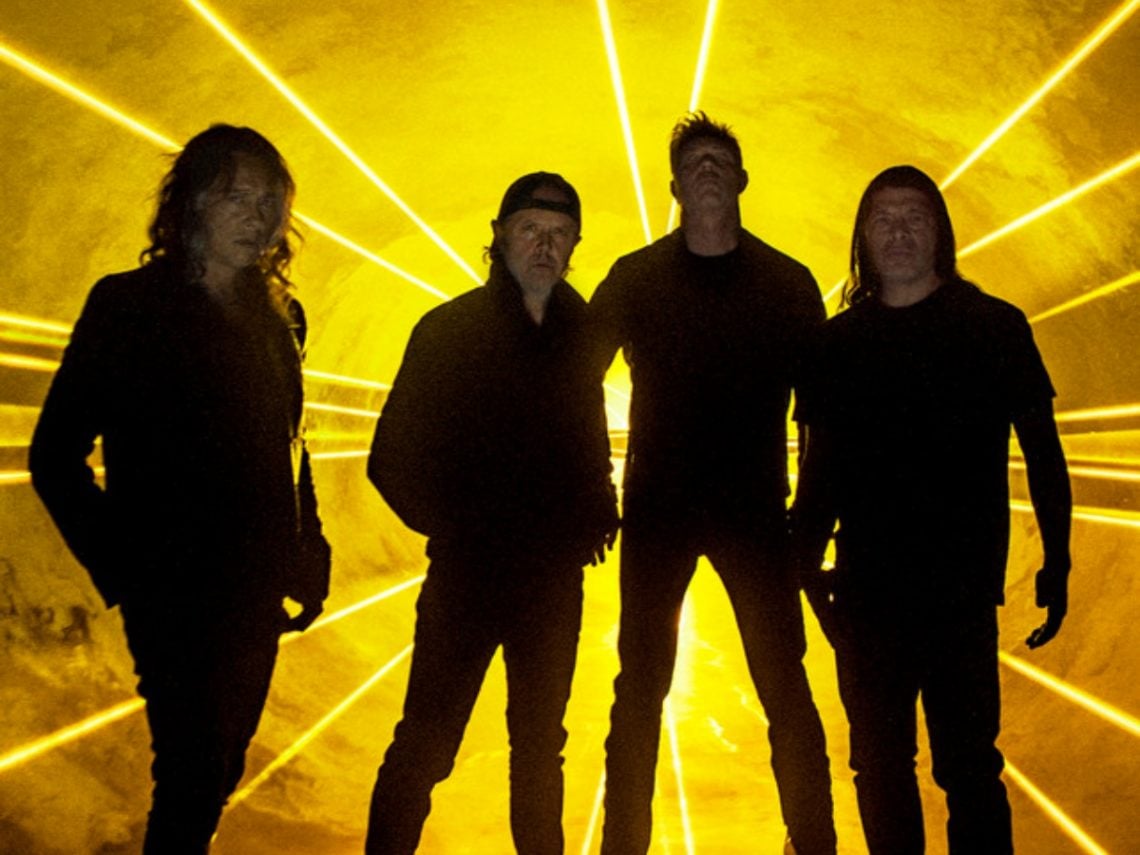
Metallica – ’72 Seasons’ album review

The ageing process happens to us all, and Metallica are old. They’ve been old for at least a decade now (or more, depending on who you ask), but their days as grizzled metal elder statesmen are now official. So what’s the response when the world has written you off? By keeping your head down and getting harder, faster, longer, and more aggressive. After all, the worst thing a metal band can get is soft.
72 Seasons, the group’s 11th studio album, follows the same pattern that Metallica’s past two albums have: epic lengths, whiplash-inducing tempo changes, oddly precise riffing, and an unrelenting freneticism. Similarly to those two previous albums, 2008’s Death Magnetic and 2016’s Hardwired… to Self-Destruct, 72 Seasons comes after more than a half-decade away from the studio.
Metallica seem more intent on ever than proving themselves on 72 Seasons. There’s not much in the way of accessible stadium-ready singalongs. The multi-part arrangements that they fit into their songs are unwieldy and complicated, often unnecessarily so. Everything is razor sharp, including the guitars, the drums, the vocals, and the uncanny accuracy of the performances.
Album opener ’72 Seasons’ at least contains a recognisable and memorable chorus. However, the rest of the song is filled with seemingly random changes in speed, an annoying trait that Metallica has made a signature of their musical style. It’s not progressive rock either: the changes amount to little more than switching between double-time and half-time.
72 Seasons attempts to hold onto a central theme – a journey through adolescence and how it can shape adults. The mix between James Hetfield’s audio therapy sessions and band practice has been a delicate balance since the St. Anger days. You’ve still got Kirk Hammett riffing it up with a wah-wah pedal on ‘Shadows Follow’, but if you’re looking for true substance, you might not find it as Hetfield barks out lines about setting inner demons and wolves free. Hetfield’s interrogation of his own childhood had produced mixed results over the years, but the man would at least be commended on trying to work through some things. Sometimes it can be interesting, but often the material on 72 Seasons fails to actually stumble onto anything terribly profound or riveting.
So that means that the album’s success or failure hinges on the instrumentals. And I have to tell you: if I hear Lars Ulrich’s open hi-hat one more time, I might start screaming suicide myself. I’m not interested in the debate regarding whether Ulrich might have some mechanical assistance or not. When it comes to the things that are undeniably Ulrich, the schtick gets old fast. His lack of variety is nothing new, but at least Ulrich had a certain Ringo Starr-like quality of serving the song on past records. On 72 Seasons, it’s all energy and sameness.
At least Kirk Hammett appears rejuvenated. The occasionally put-upon lead guitarist blamed a lost phone for his lack of any songwriting credits on Hardwired… to Self-Destruct. Here, four different songs feature a Hammett credit. His three-song run of ‘Crown of Barbed Wire’, ‘Chasing Light’, and ‘If Darkness Had a Son’ represent some of his most inspired lead playing in a decade, with the solo on ‘Chasing Light’ feeling especially loose and unmoored to expectation, with surprisingly simple runs being followed by lightning-quick stabs.
As for Robert Trujillo, the bass player seems content with not being much of a presence. Trujillo grabs songwriting credits for ‘Screaming Suicide’, ‘Sleepwalk My Life Away’, and ‘You Must Burn!’. However, apart from the rumbling bass intro to ‘Sleepwalk’ and some barely audible backing vocals for ‘You Must Burn!’, Truijillo’s contributions rarely do anything other than keep the songs moving forward. His fills are minimal, and even if he is going across the fretboard, he’s often buried underneath endless layers of guitars.
These all might seem like standard complaints for a Metallica album, but that should be telling: Metallica are so committed to their established sound that nothing experimental, forward-thinking, or particularly notable can filter through. The energy and dedication to greatness is there, and it certainly seems like the four band members are more comfortable and happy to be together than ever before. That means that Metallica live shows will still delight millions for years to come. But it doesn’t mean that the group is making relevant work anymore. It makes you yearn for them to take some kind of chance on anything. Maybe Bob Dylan could be the new Lou Reed for them?
72 Seasons isn’t a concept album, which is good, because its central themes only barely seem to hold together. Sometimes Hetfield is talking about witches, sometimes he’s interrogating himself, and sometimes it’s completely unclear what he’s on about. Behind him, the other members break out a different variation of the same thing for every song. Metallica clearly thought that they could get by on speed and aggression because 72 Seasons proves that there’s nothing new under the sun for metal’s most popular band.

Never Miss A Beat
The Far Out New Music Newsletter
All the latest New Music from the independent voice of culture.
Straight to your inbox.