


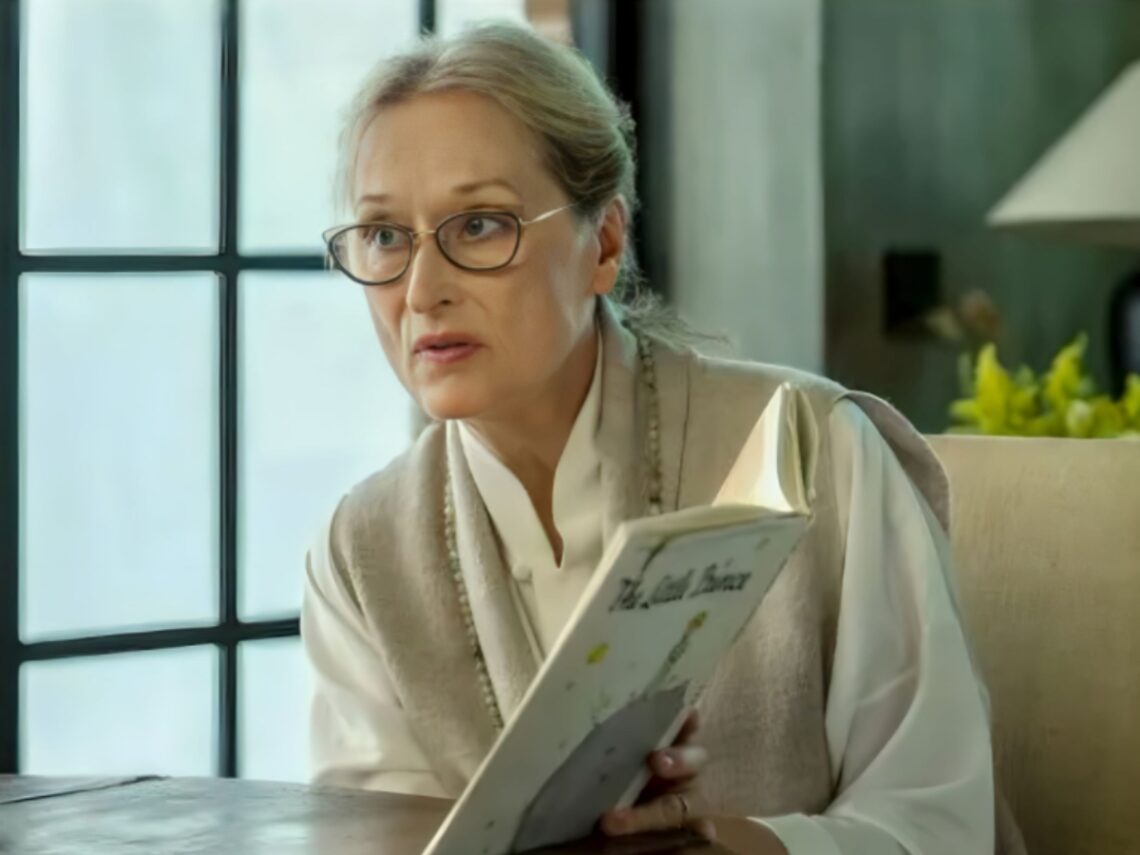
Meryl Streep explains why Botox on an actor is “not a good thing”

Over her illustrious career, Meryl Streep has delivered powerful performances across genres, amassing an enviable collection of accolades and firmly establishing herself as one of Hollywood’s most accomplished female talents. She began turning in supporting roles in the 1970s, and before the century was up, she had become a bonafide and bankable star.
Streep’s roles in films like The Iron Lady, Sophie’s Choice, and Kramer vs. Kramer have won her numerous awards, including three Academy Awards, and have solidified her standing as a veritable legend in the realm of cinema. In the way that a young Streep would have looked up to Bette Davis or Joan Crawford at the end of the 20th century, so do now younger stars see Streep as the beacon of female talent.
Despite her incredible prowess on the silver screen, Streep has also consistently challenged the conventional boundaries and expectations imposed on female actors in Hollywood. The industry is infamous for its stringent beauty standards, and it often pressures its stars, especially women, to maintain youthful appearances. This unspoken expectation has, over the years, pushed many towards cosmetic procedures: liposuction, teeth whitening, and even plastic surgery, all in a bid to adhere to Hollywood’s rigid definition of beauty.
Yet, for Streep, this conventional route doesn’t just seem unnecessary; it appears to be a significant impediment to an actor’s true purpose: to communicate, engage, and connect with an audience. In her eyes, procedures like Botox injections interfere more than they enhance and are one of the worst things you could do as an actor.
Brigitte Lacombe, a renowned photographer with a career spanning decades, has enjoyed a long-standing friendship and collaboration with Streep, having taken multiple portraits of the actor and shot several movie posters, including the iconic Kramer vs. Kramer one. In a 2009 interview with Vanity Fair, just off the back of Streep’s performance in Julie and Julia, Lacombe captured the essence of Streep’s views on the issue. As Streep opined, the desire “to try to stop the time, to look young” is not only an “absurd way to look at life” but can also be profoundly “detrimental” to an actor’s work.
Furthermore, Streep relayed in the same interview the palpable disconnect she feels when meeting actors undergoing cosmetic surgery procedures. “When I see it in people I meet, it’s like an interruption in communication with them,” the actor explained. “It’s like a flag in front of the view, and that, for an actor, is like wearing a veil—it’s not a good thing,” she articulated.
In an industry where ageing is often viewed through a skewed lens, Streep’s decision to embrace her age naturally and gracefully is truly commendable and inspirational. As she continues to captivate audiences worldwide with her performances, one can’t help but wonder if the next generation of actors will heed her wise words – choosing authenticity over artifice.
