


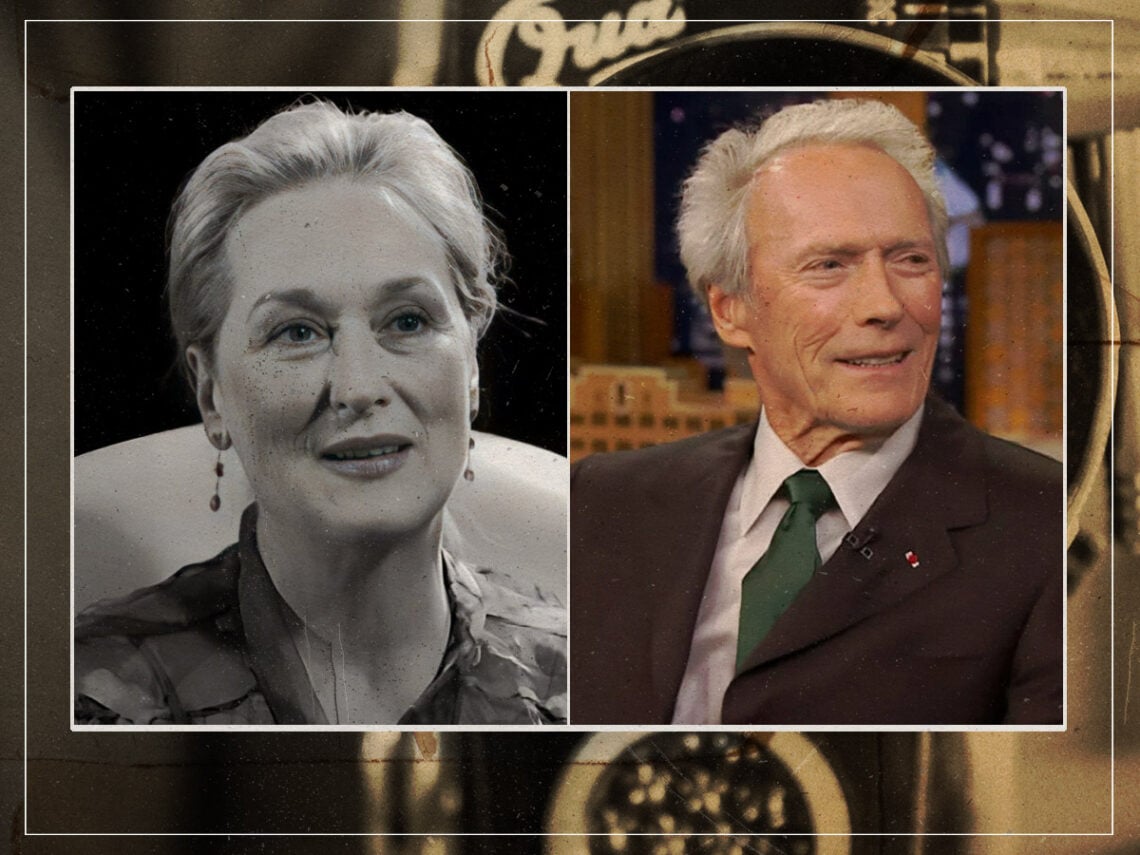
Meryl Streep explains how Clint Eastwood schooled audiences: “Only he could bring them there”

Over the course of her meteoric rise to the top of Hollywood, Meryl Streep has inevitably received the opportunity to work alongside some truly illustrious collaborators. Be it her acclaimed performance opposite Robert De Niro in The Deer Hunter or her Oscar-nominated outing with Tom Hanks in Steven Spielberg’s The Post, the American icon has done it all.
However, even among the ocean of talented stars who have contributed to her extensively praised body of work, Streep definitely has a few favourites whom she regards as true titans of the industry. One such figure is Clint Eastwood, the legendary hero of Sergio Leone’s spectacular Dollars trilogy, who went on to become one of Hollywood’s most respected directors.
The two worked together on Eastwood’s 1995 directorial project The Bridges of Madison County, where Streep delivered a stunning performance as a wife who has a whirlwind affair with Eastwood’s photojournalist. Not only did it rack up a massive box office total of $182million, but Streep also received widespread critical acclaim, with her picking up a nomination for ‘Best Actress’ at the Academy Awards.
During a conversation with Esquire, Streep directed some high praise towards Eastwood and claimed that he knew exactly how to manipulate the audience in order to create the ideal cinematic experience. She cited his 1992 revisionist western Unforgiven as the perfect example of this, where Eastwood subverted many of the genre’s frameworks.
“He’s schooled them,” Streep said. “He banked an enormous amount of credit with the male audience in the early part of his career, when they were eager to imagine themselves as whatever character he was playing. And then he sort of brought them into material that they never would have gone to. Starting with maybe Unforgiven, he started bringing them along on a left-hand turn, where violence wasn’t the thing you got your rocks off with. It was something horrible. And only he could bring them there.”
When asked about these comments, Eastwood responded: “I like Meryl. She’s a smart woman and a pleasure to act with. But I don’t know if I’m that aware. I’m not that self-examining. I’ve always felt that if I examine myself too much, I’ll find out what I know and don’t know, and I’ll burst the bubble. I’ve gotten so lucky relying on my animal instincts, I’d rather keep a little bit of the animal alive.”
Whether it be Eastwood’s natural instincts as a filmmaker or his calculated approach to his craft, Unforgiven is undoubtedly among the greatest westerns of the modern era. Any neo-westerns that have come out or will in the 21st century will always be in its shadow, in one way or another.

Never Miss A Tale
The Far Out Clint Eastwood Newsletter
All the latest stories about Clint Eastwood from the independent voice of culture.
Straight to your inbox.