


‘Meet Me in the Bathroom’ review: a messy visual history of New York’s early 2000s indie scene

Will Lovelace and Dylan Southern, best known for creating LCD Soundsystem’s 2012 documentary, Shut Up and Play the Hits, have reteamed for Meet Me in the Bathroom, an adaptation of Lizzy Goodman’s book of the same name. The directors weave the narrative of Goodman’s oral history into a visual journey of New York’s early 2000s indie rock scene, which spawned the likes of The Strokes, the Yeah Yeah Yeahs and LCD Soundsystem.
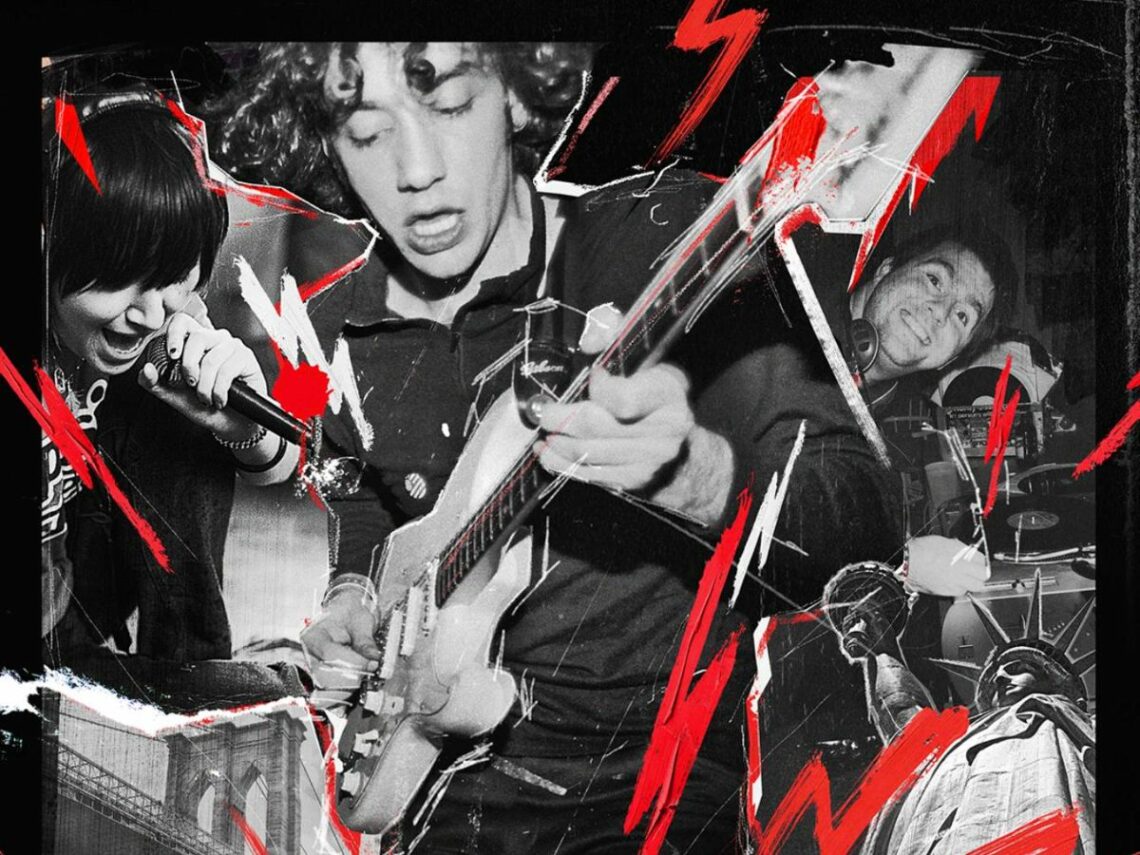
Archival footage is used to immerse the audience in a pre and post-9/11 world, where young musicians found like-minded people in New York’s underground venues, creating music out of a desperate need to express themselves and be heard. Figures that emerge from the beginning of the documentary include quirky anti-folk duo Adam Green and Kimya Dawson from The Moldy Peaches and the Yeah Yeah Yeah’s hypnotic leader Karen O. Soon enough, clips of The Strokes looking particularly baby-faced and naive are collaged across the screen, either messing about on the subway or performing to eager gig-goers.
The clips are sure to please any hardcore fans of these bands, offering us an intimate glimpse into the lives of musicians that became integral to the development of indie rock. Lovelace and Southern introduce us to other characters from the scene, including LCD Soundsystem’s awkward frontman James Murphy and Interpol, who, quite frankly, come across as insufferably pretentious. Bands and musicians such as Ryan Adams, TV on the Radio, and The Rapture make brief appearances, yet these sequences often feel rushed and underdeveloped. Instead, they simply act as a reminder that there were other (albeit less important) bands in the scene beside the ones central to the documentary.
Meet Me in the Bathroom fails to delve into any of the bands with sufficient depth. Rather, the filmmakers gloss over the key figures, seemingly harnessing the expectation that the audience already has developed knowledge of the subjects. For a film named after a song by The Strokes, easily the most influential band from the movement, Meet Me in the Bathroom does not focus on the five-piece nearly as much as you’d hope. Whereas some bands provide retrospective commentary over clips of themselves, The Strokes give very little. Despite the documentary attempting to hone in on the fact that the band’s ringleader, Julian Casablancas, was a misunderstood rich kid, the film fails to give us any contemporary thoughts from the man himself.
Another issue the film possesses is its use of voiceover, with it often being unclear who is speaking, making the documentary feel messy and disjointed. Bandmembers’ voices merge as they attempt to explain the significance of the scene or the effects of 9/11. Lovelace and Southern weave harrowing found-footage clips of the terrorist attacks into the film; however, ample time is not given to the weighty event, which undeniably impacted New York’s music scene more than the documentary lets on. Similarly, the issue of Albert Hammond Jr.’s heroin addiction, encouraged by Ryan Adams, is brushed over quickly in an attempt to show the ‘dark side’ of the scene.
Moreover, Karen O’s struggles with misogyny and racism in a white male-dominated scene are only briefly touched upon. Thus, Meet Me In The Bathroom fails to truly harness a strong narrative, instead relying on archive clips to tell a fragmented story whilst expecting the audience to fill in the gaps.
Still, diehard fans of the scene, or those longing to relive their memories of the era, will undoubtedly appreciate the clips that paint a picture of a thriving and hopeful scene. Unfortunately, for those with more of a casual interest in early 2000s New York indie, you might find yourself getting a little lost.
