


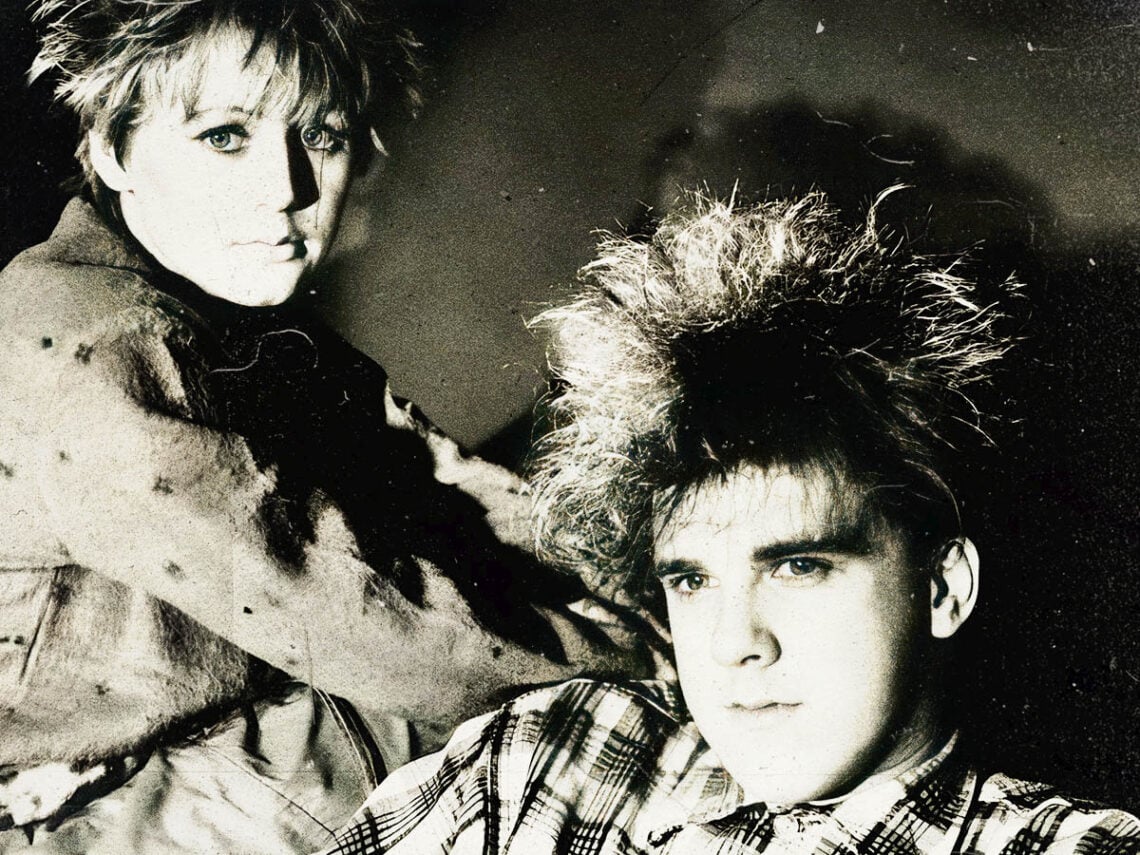
‘Bluebeard’: Exploring the meaning of Cocteau Twins’ most tragic song

When you think of the Cocteau Twins, you probably think of the atmospheres they create. The Scottish trio produced swirling worlds of echoing guitars and dreamy vocals, each shimmering layer perfectly placed to forge the most dazzling dream-pop. Their sound hinges on that distinctive ambience, one that’s immediately determinable just seconds after you hit play on a Cocteau Twins song.
When considering the Cocteau Twins, you probably don’t think of their lyrics. Or, if you do, it’s because they’re so famously unintelligible, lost amidst guitar twangs and drum machines, lost to Elizabeth Fraser’s characteristic glossolalia, or lost from the moment they were written, comprised of gibberish or words chosen at random.
Fraser’s swinging soprano tones are an essential part of the Cocteau Twins’ sound, a major contributor to their enigmatic ethereality, but the content of her wails is often far less important. While other songwriters pen lyrics as poetry or as stories, Fraser’s words are there to create a feeling. Still, that doesn’t mean all of Cocteau Twins’ lyrics were devoid of meaning.
Three years on from the release of their iconic magnum opus, Heaven or Las Vegas, Cocteau Twins put out a follow-up album, Four-Calendar Café. The album spawned two singles, the delicate ‘Evangeline’ and the shimmering ‘Bluebeard’. Contrary to the instrumentation of the latter, marked by bouncy twangs and soft background vocals, the song featured some heartbreaking lyrics.
In the early 1990s, Fraser was struggling to sustain her relationship with fellow Cocteau Twin Robin Guthrie. The pair had been together throughout the 1980s, but issues had begun to arise surrounding Guthrie’s addictions and Fraser’s mental health. The couple broke up in 1993, the same year ‘Bluebeard’ was released, and it seems that the song might have charted their relationship in its decline.
Amidst soft percussion and optimistic guitars, Fraser’s words, at first, seem hopeful. “Aliveness, exploration, aliveness, energy,” she sings, but her lyrics quickly fall into darker places as she contemplates the suitability of her partner. “Are you the right man for me?” she asks repeatedly, “Are you safe?”
Throughout the track, Fraser flits between toxicity, betrayal and healthy dependence. It seems that she’s trying to add up the elements of her lover to determine if his impact on her is more bad than good. Though there’s hope in her words and in the plucked strings that swirl around her, there’s heartache, too, and it seems that she already knows the answers to her questions.
After her split from Guthrie, Fraser embarks on a relationship with the late Jeff Buckley. Their whirlwind romance spawned duets and intense love, prompting some to wonder if ‘Bluebeard’ was actually about Buckley. Perhaps Fraser’s flitting between feelings was not directed at her Cocteau Twins colleague but towards her new lover. The song could even be about both of them, Fraser figuring out her romantic feelings in the early 1990s.
No matter the subject of her wavering affections, ‘Bluebeard’ remains one of the most meaningful and tragic entries into the Cocteau Twins’ catalogue. It’s an example of a song where it’s worth delving into those indecipherable tones to find the meaning of their lyrics. A tale of tentative love told during the breakdown of Fraser and Guthrie’s relationship, it’s just as beautiful as it is heartbreaking.
Listen to ‘Bluebeard’ by Cocteau Twins below.
