


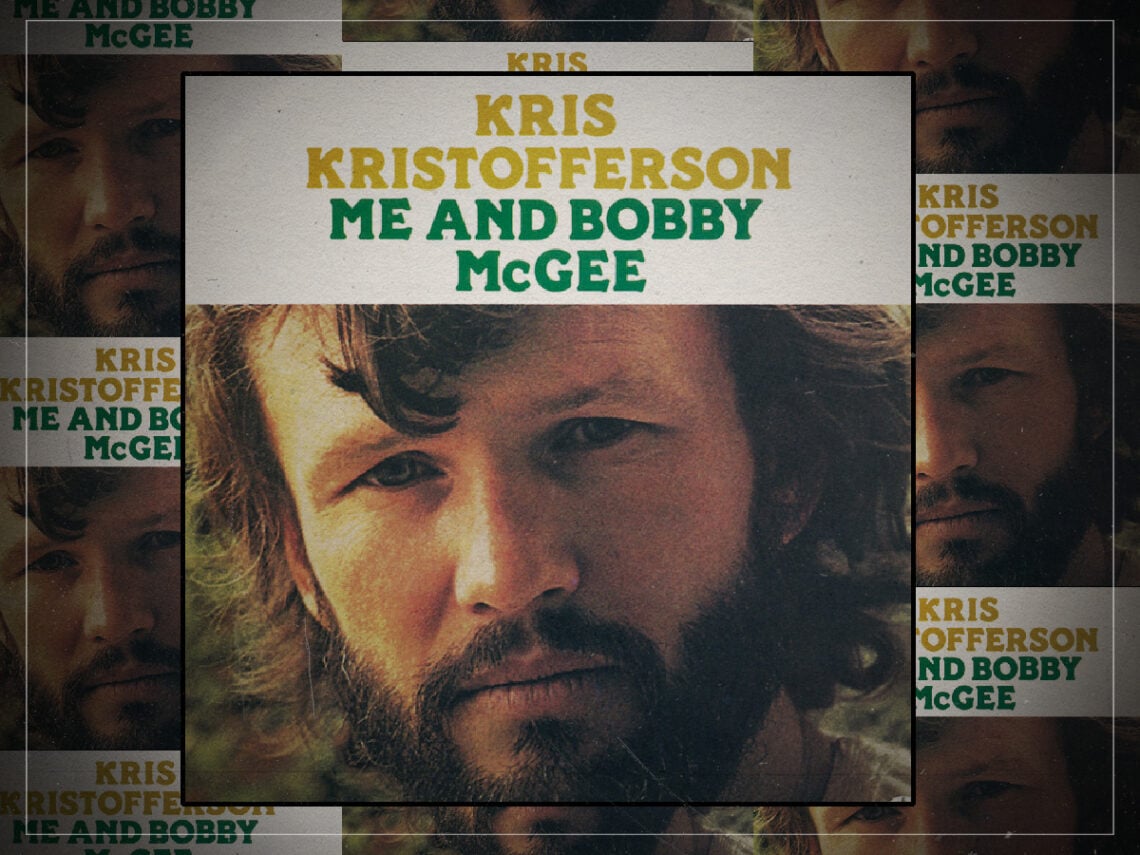
‘Me and Bobbie McGee’: The secretary behind a counterculture classic

Janis Joplin’s legendary mezzo-soprano voice soundtracked her generation’s political and cultural upheaval, communicating a raw emotion with every piercing wail, but despite becoming synonymous with the youthquake of her era, she would only achieve a singular number one song: ‘Me and Bobby McGee’.
Written by Kris Kristofferson, in a cruel twist of fate, the song would top the charts after Joplin’s untimely death at 27, with her blues-driven rendition remaining the best-known of one of the many interpretations of Kristofferson’s tale since he wrote it in the late 1960s. However, when she gender-swapped his characters, an unnamed narrator and the titular Bobby, she unintentionally removed the song’s core inspiration, the real-life Bobbie McKee.
Barbara ‘Bobbie’ Lewis was raised in Waverly, Tennessee, an area with its own musical undercurrent, seeing the likes of Hank Williams and Johnny Cash pass through her town, as she imagined a future singing career of her own. She was known locally for her voice, singing country and western tunes at festivals and school events, joined by her father on guitar and sometimes her older sister, Joyce, but, as she got older, she desired a family more than a singing career, eventually marrying Robert McKee and stumbling upon a job as a secretary for Boudleaux Bryant.
Bryant, alongside his wife, Felice, formed a songwriting team that wrote numerous hits during the 1950s and ’60s, including many of the Everly Brothers’ best-known songs. The building they worked in was shared with Boudleaux’s friend, Fred Foster, who, upon meeting Bobbie, was instantly taken with her, and to show his affection, he called his friend, Kristofferson, to write a song called ‘Me and Bobbie McKee’.
Outside of the name, Kristofferson had creative freedom to write whateverr story came to him, for which he used fragments, piecing the song together as a first-person narration of a pair of hitchhikers travelling across the United States, stopping in New Orleans, Kentucky and Salinas, California, before the narrator lets Bobbie “slip away” to find a love he couldn’t give. The song’s most famous line, “Freedom’s just another word for nothin’ left to lose”, came to Kristofferson after watching Federico Fellini’s 1954 film La Strada, about which he told Performing Songwriter, “To me, that was the feeling at the end of ‘Bobby McGee. The two-edged sword that freedom is. He was free when he left the girl, but it destroyed him.”
Once he finished writing the song, Kristofferson went to Foster’s office, where he and Bobbie would meet for the first time. As she recounted to Slate, Bobbie found a guitar for him to play ‘Me and Bobby McGee’ (he had misheard her last name during Foster’s phone call), and she remained in a state of shock. “Well, I didn’t know how to act, I’ll just be honest with you,” she said, “You just sit there, and you listen, and you think, ‘Oh, my goodness!’”
With Kristofferson eventually leaving for Nashville to film Dennis Hopper’s The Last Movie, ‘Me and Bobby McGee’ bounced around various musicians before the songwriter could record his own version. Country singer Roger Miller was the first, followed by Gordon Lightfoot, who found success with his rendition on both the country and pop charts, while the writer would finally record his song in the summer of 1970 for his eponymous debut album.
Joplin was introduced to the song by Bob Neuwirth, who was taught to play it on guitar by Lightfoot, and he taught her with handwritten lyrics that same night. That December, she would perform it for the first time at a gig in Nashville, preluding the song as being written by “a good friend”, prophesying, “He’s gonna be very famous… I give him a year”; the next fall, she would record her version during a studio session, but would pass away just nine days later.
Bobbie would become somewhat of a local celebrity in Nashville, due to Kristofferson and Foster continually telling her story and the number of covers that were performed. After Joplin, the song reached the Grateful Dead, Dolly Parton and more. Kristofferson alleged that more than a dozen women had tried to claim ownership of ‘Me and Bobby McGee,’ but those who were privy knew that Barbara McKee was the true inspiration, who, maintaining a humility about this chapter in her life, simply reflected, “I just thought it was the most fantastic song I had ever heard”.
