


‘Tears of Injustice’: Mdou Moctar’s stripped-down rebuke of Nigerien political failure

Some records capture the landscape and spirit of their creative origins with such evocative potency that it feels like the very master tape has bypassed all industry measures and business checks, arriving in your ears straight from the artist’s jam session.
Take Niger’s Mdou Moctar. Raised in Tchintabaraden and later studying in Arlit, the mining town nestled between the Sahara Desert and the Aïr Mountains, Moctar, real name Mahamadou Souleymane, imbues his meld of traditional Tuareg blues with Western psychedelic garage with his hometown’s dusky desert plain’s looming presence, a character that colours the atmosphere of his disparate run of albums across early electronic stylings to later desert folk.
As Moctar’s assouf rock took off leading to his eventual signing with Matador Records, his political bite only grew sharper. Last year’s Funeral for Justice was his most explosive yet, his takamba guitar taken to combative edges, scoring lyrical rebukes against his home country’s precarious democracy, extractive Western foreign policies, compromised African leaders, and waving the flag of Tuareg nationalism in the face of French colonial history. Receiving unanimous critical acclaim for their raw desert rock statement, his direct and outspoken political commentary won him enemies, even several death threats.
Political turmoil engulfed Niger while Moctar and his backing band were touring the States in July 2023. A military coup d’état overthrew President Mohamed Bazoum, placed him under house arrest and suspended the constitution. Triggered by General Abdourahmane Tchiani upon reports Bazoum intended to shake up the presidential guard and replace him as its head, his successful chorale of the Nigerien Army secured his grip on political power, timeframes as to when martial law will be suspended and a return to civil rule implemented yet to be clarified nearly two years since Bazoum’s deposition.
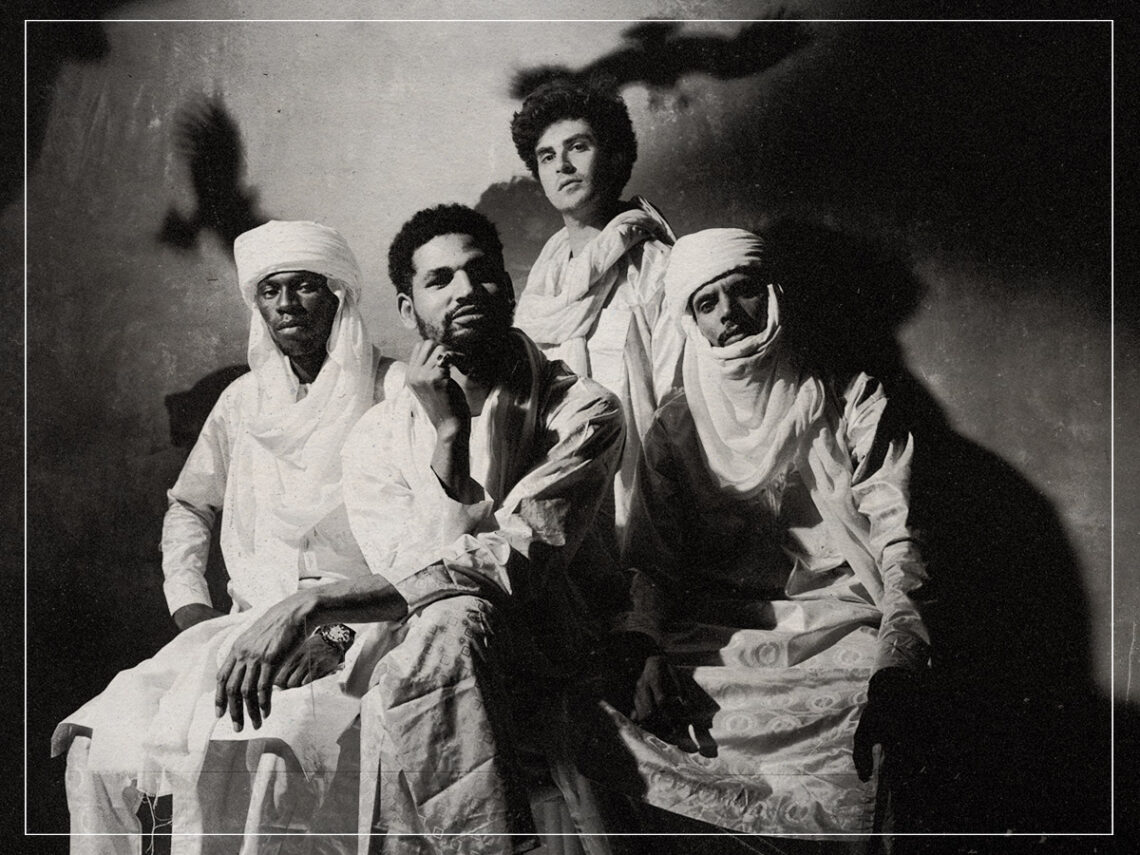
The coup forced Niger’s borders to close, leaving Moctar and fellow bandmembers Ahmoudou Madassane and Souleymane Ibrahim unable to return home. Already toying with the idea of a companion LP to Funeral for Justice, Moctar and his desert rock ensemble headed to Brooklyn’s Bunker Studio with engineer Seth Manchester to pour their grief and consternation at Niger’s regime collapse into Tears of Injustice, a stripped-down acoustic take on last year’s incendiary Tuareg pummel no less politically charged but wandering paths of rumination over belligerent condemnation.
Opting for a loose and spontaneous capture of their hypnotic sound, Moctar and his band tracked everything in one room with little arrangement preparation prior, driven by the slapdash magic of musicians playing in natural, organic harmony with each other, principal recording finished in two days.
Tears of Injustice is enriched by its ephemeral sessions. The weight of Moctar’s strings is audibly felt as he strums with passion. Acoustic is where he sketches out his protest music in the first place, offering a window into Tuareg protest music at its most nakedly pure.
Never feeling superfluous or an unnecessary retread, Tears of Injustice is a new record in its own right, scoring political failure and a nationalist vision for a better future with grit and soul.
