


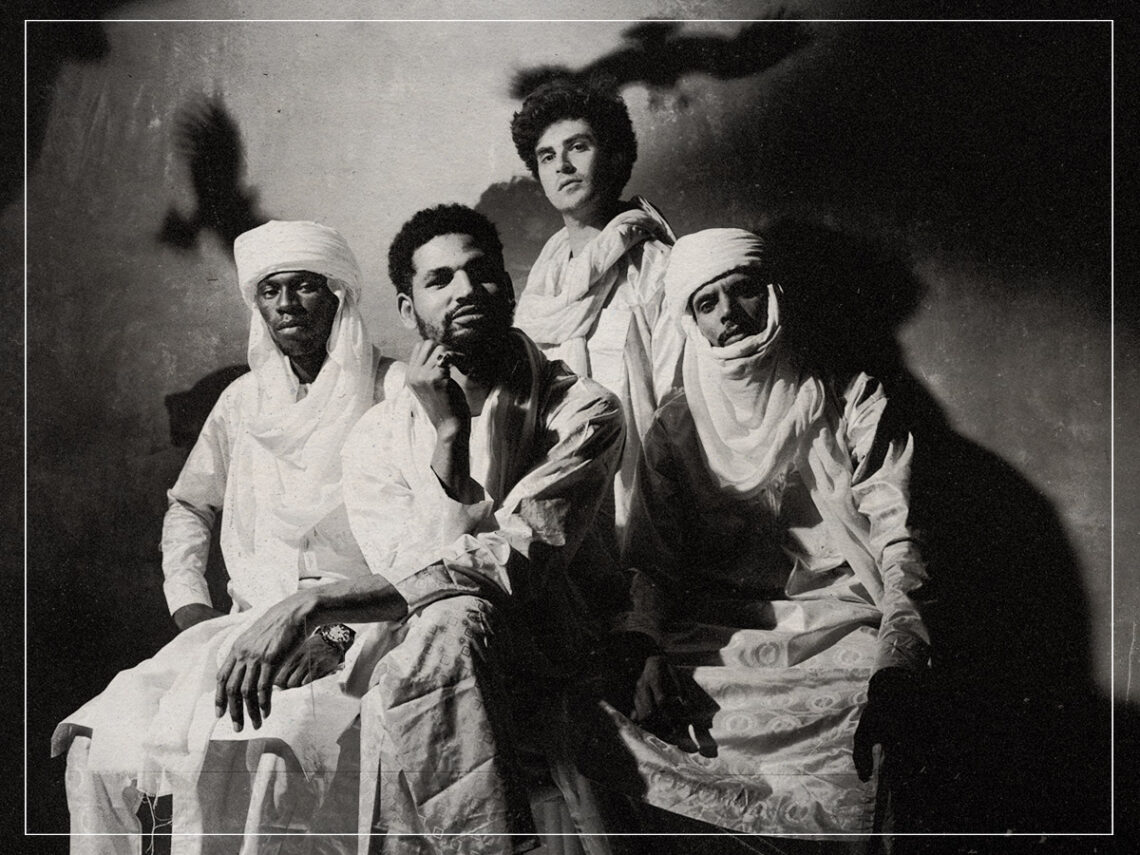
Mdou Moctar: What makes his guitar playing so good?

Where would we be without the guitar? Ever since the dawn of rock and roll, the six-string has been its defining instrument. Over the years, countless figures have risen to fame with their own unique guitar-playing skills, and as such, the debate around the greatest guitarists of all time has been endless. There are some figures, like Jimi Hendrix, who are virtually unavoidable in this field, but the conversation rarely stretches to include modern artists reinventing guitar music. Enter Mdou Moctar.
It is not controversial to suggest that Mdou Moctar is among the finest guitarists currently in operation. For years, the pioneering songwriter has been stunning audiences across the world with his unique playing style. His appeal is both a result of his undeniable technical ability and the emotional complexities he is able to convey armed only with a six-string.
Memphis, London, New York: these are the cities that are forever linked to guitar excellence, but Mdou Moctar – or, to use his birth name, Mahamadou Souleymane – hails from Tchintabaraden in Niger. As a result of this, much of the discourse surrounding the guitarist revolved around his nationality, as if it were the cause of some kind of spectacle. In fact, Niger – and the surrounding areas of West Africa – have an incredibly long and vibrant musical history, particularly in terms of guitar music.
Moctar, for instance, draws from the world of Tuareg guitar playing, often referred to as desert blues. The style, originating from the region of north and western Africa, around the Sahara desert, first rose to prominence during the post-colonial period of the 1980s. It is this tradition which Moctar continues to showcase within his playing style, although he tends to blend it with a vast array of modern, Western musical influences.
Anybody who has had the pleasure of seeing Mdou Moctar perform will be all too aware of his awe-inspiring guitar playing, but what exactly makes it so good? The answers to this question are, of course, myriad. For starters, it is worth noting that Moctar has been on the scene for nearly two decades and has dedicated himself to mastering the guitar since his childhood during the early 1990s. With that much experience under his belt and a clear adoration for the instrument, it is a no-brainer that the Nigerien artist plays with a skill unparalleled by many other currently active players.
On top of that, Souleymane was reportedly denied a guitar during his youth. His family in Niger were not approving of electronic music. As we all know, if you tell a child not to do something, they will undoubtedly do that thing. Hence, the musician crafted his own makeshift guitars during his adolescence, on which he learned to play. This is partly what sets Mdou Moctar apart from other guitarists currently on the scene. Not only did he have to fight to play the guitar, but he has spent much of his life dedicated to the instrument and proving its innate power.
Anybody can learn a few riffs and a few chords to bring out at a party, but, like with all forms of art, it is the emotional quality of the music which makes it captivating. Moctar harbours an incredibly passionate, emotional style of guitar music which is able to resonate with audiences across the globe. Much of this emotional weight is owed to his upbringing in Niger, during which he was ostracised for wanting to play the guitar.
Another key aspect of Moctar’s success is the universal power of his playing style. Not only does the guitarist draw from desert blues but from retro psychedelia, Western blues rock, and even traditional Nigerien folk music. Plus, the focus of Moctar’s live performances is predominantly the instrumentation rather than the vocals or lyricism, which means the music and emotional message of Mdou Moctar can also largely transcend language and nationality.
Whether or not Mdou Moctar is, indeed, the greatest guitarist on the scene at the moment is almost beside the point. After all, he is hardly making music to boast about his technical proficiency or expertise, it is all about conveying emotion and feeling through the medium of music, as well as paying homage to the cultural heritage of his homeland. That fact sets the Nigerien apart from virtually every other guitarist currently in operation and should act as justification for the dedicated cult following he has amassed in recent years.
