


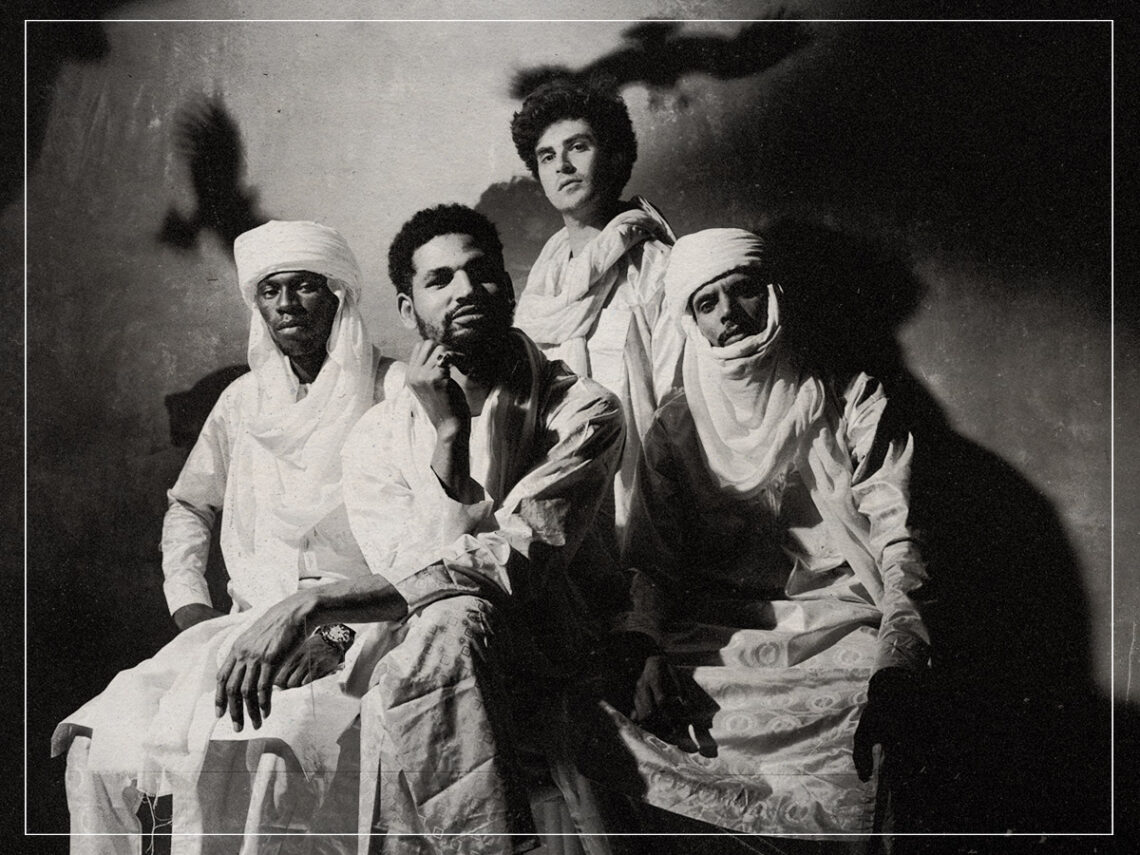
Mdou Moctar: Two years on the road brings the Saharan soul to electrifying life

It is estimated by the EIP that by 2050, 1.2 billion people will be displaced by climate change. The worst effected areas will be places already on the brink of climatic extremes, like Mdou Moctar‘s saharan home of Niger. Resource scarcity and economic hardship in the area has already proliferated power grabs by Al Qaeda and ISIL, both of which have enforced Sharia law in seized regions of neighbouring Mali, making music for the purpose of entertainment a crime punishable by death.
This brutalism is at odds with the traditions of the Tuareg people, who once roamed there freely—their nomadic lifestyles shaped by the harsh and unforgiving environment, but existing in harmony with it. Mdou Moctar, who himself travelled from Abalak to Tchintabaraden and Arlit in his youth, embodies the inherent resilience of his culture through his music. It echoes the ancient rhythms and melodies of his Tamasheq- speaking ancestors while also serving as a form of defiant resistance against the insidious forces threatening his homeland.
For better of worse, you hear more of Mdou Moctar these days than you do of the harrowing geo-politics of large swathes of the Saharan region. One is far easier to make sense of than the other. This seamless connectivity is apparent every time Mdou Moctar and his band take the stage.
The four-piece’s relentless touring schedule over the past two years can, in a way, be seen as a modern extension of the Tuareg’s nomadic lifestyle, a journey across borders and cultures that keeps their traditions alive in a new and evolving form. In this way, Mdou Moctar and his band not only bring the sounds of the Sahara to the world when they take to the stage but also carry with them the spirit of a people who have long thrived despite ever-worsening adversity. This makes the band not only a captivating triumph against the odds, but perhaps one of the most vital and prescient on the global circuit.
Even the merchandise stand at their show is indicative of this: it’s not your typical array of t-shirts, CDs, vinyl and tote bags; it comes with signed traditional Nigerian pouffes, jewellery made back in Mdou Moctar’s home village, and handcrafted leather handbags. So, the purchase of a snake-eye ring for my better half is not just a glamorous, consumerist token from an evening of blistering music, but a small gesture honouring the lifeblood of an ancient culture that Mdou Moctar channels into his sweet serenades.
And yet, to say he is a vehicle for Taureg traditions is also reductive. Not only has he overcome his own personal adversity – with his parents once opposing his desires to play music for religious reasons, forcing him to make his own guitar out of bicycle cables and two-by-four – but to say he his an extension of any collective strips him of his engrossingly enigmatic identity.
His guitar playing is so thrillingly unique, that to try an emulate it – as I’m sure a few foolhardy inspired folks attempted after spilling out of Newcastle’s Boiler Shop on September 3rd – is an impossibility. His music, of course, carries strains of his people’s history, and is a collective cry in spirit, but it ultimately sounds exactly how he wants it to sound. That much is apparent from the way that the band constantly adjust to the whims of his playing, building his wandering solos into a gathering ensemble storm.
He is, undoubtedly, one of the most original and virtuosic musicians playing right now, and he has assembled a band around him who can match his talents. What were they playing last night and what is he like as a man? Bar the odd recognisable refrain from Funeral for Justice or Afrique Victime and his sweet smile, both of those things remain inscrutable. But what is certain is that Mdou Moctar and his band are cooler than a polar bear’s toe nails, and as densely poetic in their playing as Yeats etched into Tungsten—somehow orchestrating all of this into a sound that rendered the audience a dancing demi-mosh.
Then after 90-minutes or so, the band simply put down their instruments and wandered off into the night. Their time on stage, however, was not only a stunning exhibition of electrifying skill, but an unspoken statement of defiance, courage, and a desire to carry a threatened way of life into the future.
