


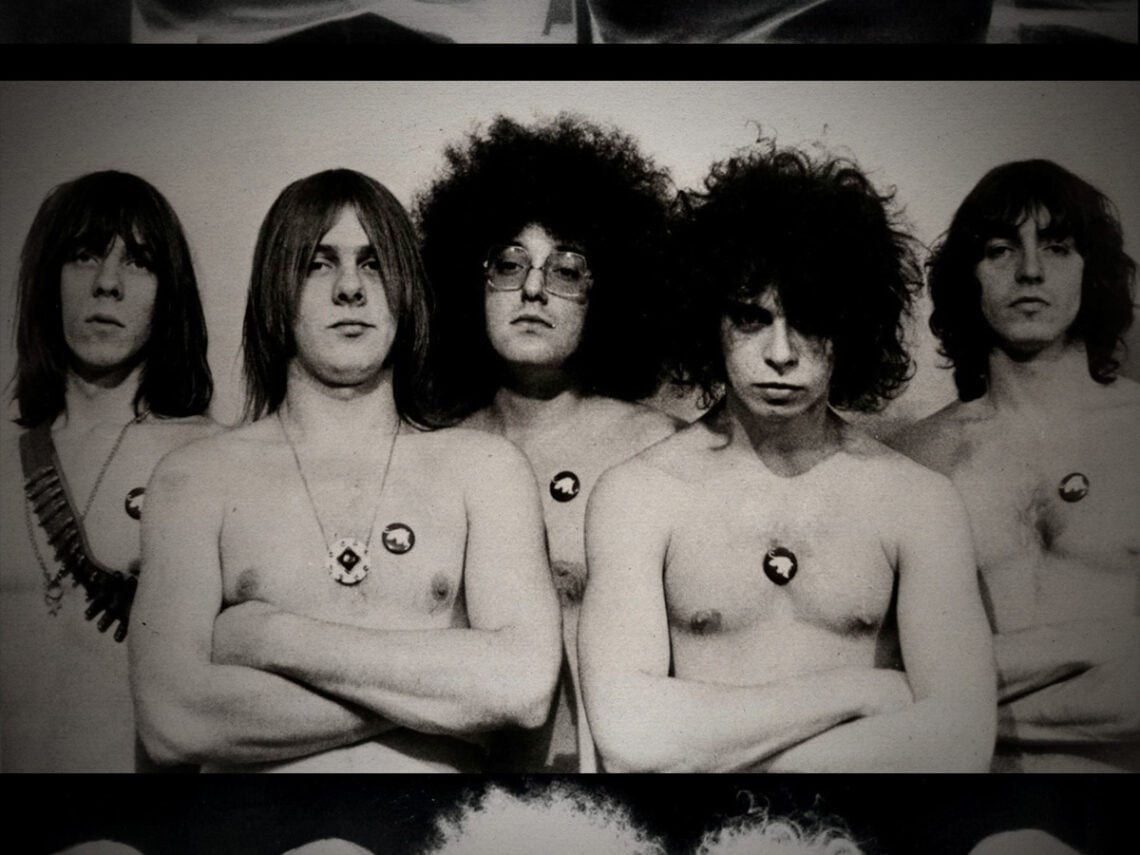
MC5 and the White Panthers: A sincere political revolution and an “inevitable” fall out

Anti-fascist punk rockers have tried their best over the decades to stand in solidarity with oppressed racial, ethnic, and religious minority groups, but they haven’t always had the best instincts when it comes to branding.
In 1977, The Clash famously wrote the song ‘White Riot’ as a call for their white fans to join their Black brothers and sisters in the struggle for equality, but thanks to that clunky title, a lot of people got the wrong end of the stick, thinking the song was some sort of skinhead anthem. Ten years prior, there was another well-intentioned but simultaneously ill-advised effort to rally around a similar cause.
The MC5, arguably the original punk band, joined their manager, the poet and activist John Sinclair, in launching the White Panther Party in 1968, supposedly at the indirect request of Black Panther Party leader Huey Newton. Again, loads of people saw the name and the logo and immediately presumed the worst, causing plenty of headaches for the guys in the MC5. Misconceptions soon became the least of the band’s problems, however, as the serious, revolutionary message of the White Panthers turned Sinclair and the MC5 into the target of a government crackdown.
“We were just a group of marijuana-smoking poets in a rock ‘n’ roll band from Detroit, and they thought we would be the easiest to railroad,” MC5 guitarist Wayne Kramer told Associated Press in 2018, explaining, “We didn’t have the backing of millions of Americans who stood behind the civil rights movement. We weren’t The Beatles or The Rolling Stones, with millions of fans across the world. We were just this rock band from Detroit saying some scary things, and [the powers that be] thought, ‘Ah, these guys will be easy’.”
After performing in the streets during the violent protests outside the 1968 Democratic National Convention in Chicago, the MC5 and their White Panther pals were put under tight scrutiny by the FBI as part of a widespread effort to curb left-wing dissent.
“They were searching our van, tapping our phone, constantly draining our time and energy,” Kramer recalled, “Eventually, it just drove us nuts and made the entire record industry decide we were too hot to handle.”
According to journalist Ben Edmonds, who covered the MC5 at the time, the band had gotten in over their heads, having originally joined the White Panthers without understanding just how dangerous being a flag-flying radical could be once Richard Nixon was in charge. After John Sinclair was arrested and given a ten-year sentence for a simple pot-dealing offence, the movement and the MC5 began to collapse.
“Personally, I see the break with Sinclair as being inevitable,” Edmonds told Perfect Sound Forever in 1998, “just because there was so little real organisation in the White Panther party as a political situation. The way it came down and the time it came down, and the way it looked was far from ideal.” He then pointed out how, maybe if there was someone to replace Sinclair and pick up the reins for the MC5 once he had to go serve his prison sentence, their uncontested demise could probably have been avoided.
The MC5 folded in 1972, and Wayne Kramer wound up in prison himself on a similar drug offence. The White Panthers did continue on, however, with a wise rebrand into The Rainbow Peoples’ Party.
