


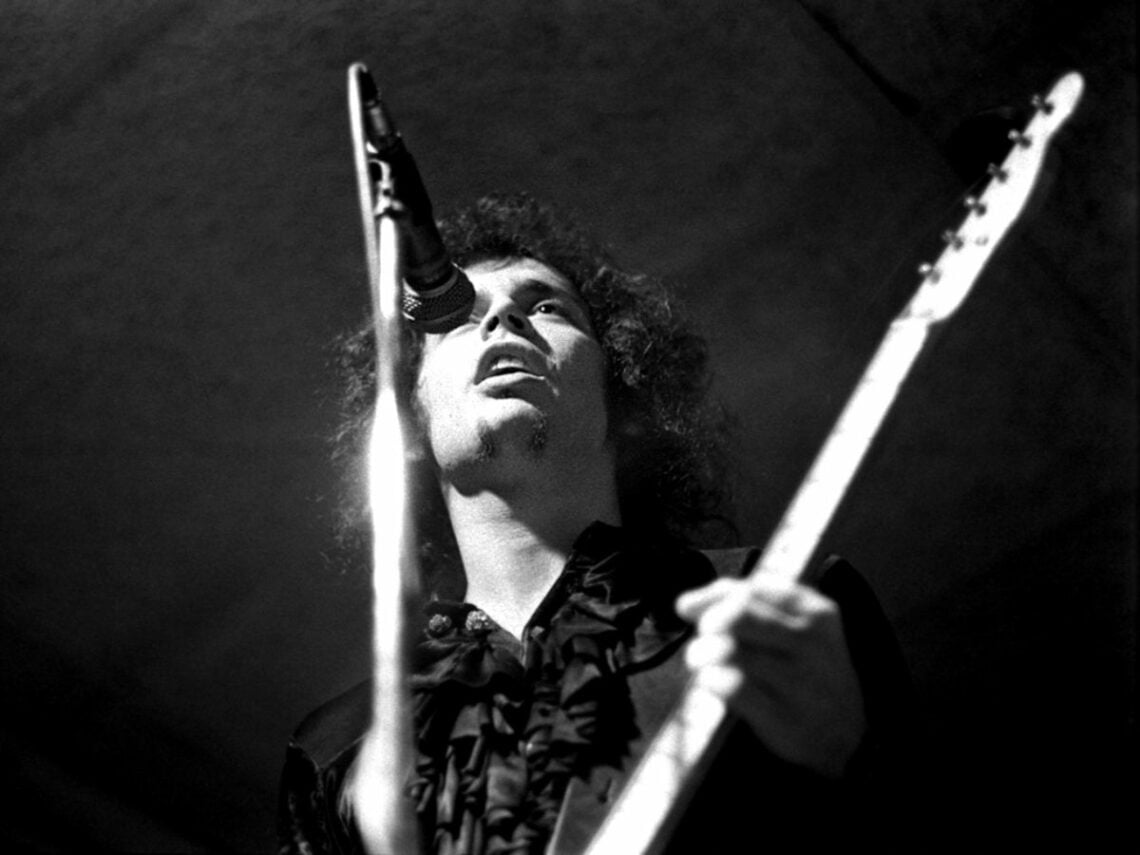
How the MC5’s Wayne Kramer reformed himself in prison: “They don’t give a damn”

“If you think of all the rock music today that goes against the mainstream,” Wayne Kramer said in 1995, “The MC5 was the big bang that started that universe.”
Even bands that weren’t directly influenced by the late 1960s Detroit rockers were almost certainly inspired by the groups that had carried on the MC5 ethos. The political lane of punk, in particular, traces back to them, as evidenced by The Clash recording a partial ode to Kramer in 1977, titled ‘Jail Guitar Doors’.
“Let me tell you about Wayne and his deals of cocaine,” Mick Jones sings on that track, “A little more every day / Hold for a friend till the band do well / Then the DEA locked him away.”
‘Jail Guitar Doors’ was essentially a protest song against the targeted imprisonment of musicians for drug offences, and Kramer got first billing for good reason. At the time, the MC5 guitarist was serving the third year of a four-year sentence at the Federal Medical Center prison in Lexington, Kentucky, also known as “the Narcotic Farm”. He had been arrested trying to sell cocaine to an undercover cop in Detroit in 1975 after several years of personal struggles and poverty following the MC5’s demise.
“The loss of the MC5 was a major blow,” Kramer told the Express News Services in 1997. “Those were my best friends; those were my brothers. . . . It was all my hopes and dreams as a young guy, and one day it was all gone. I truly lost my way there for a while. It was a long walk into the woods and a long walk back out.”
Kramer was already wise to many of the injustices inherent in American society, and he’d been raging against the proverbial machine since back in the earliest days of the MC5 in the mid-1960s. Serving time in a federal prison, though, opened his eyes to much more nuanced, systemic problems.
“Jail changes you,” Kramer told Perfect Sound Forever in 1998. “I had a lot of time to think! I had to go back and think of what I was going to do to make sure that this never happens again. Ideally, that’s what they want you to do, but the truth is that they don’t give a damn what you do there until they tell you that you can go. It’s just a human warehouse system.”
Kramer was particularly stunned by the way so many of his fellow inmates had wound up in whirlpools of recidivism: getting arrested, serving time with no real rehabilitation, and inevitably winding up right back in prison again. That trend only grew with each subsequent decade.
“I’m really anti-drug war,” Kramer said 20 years after his 1979 release, “and the more I follow what happens, the angrier it makes me. . . . Today there’s over a million people in prison and over 60 percent of them are there for drug related offenses. It’ll never work. It doesn’t work. It’s all about treatment and options. You cannot legislate morality and desire”.
“You have to look deeper into the reasons why folks turn to drugs and the culture of getting high. It’s existed since the beginning of time.”
Wayne Kramer
Kramer went from trying to destroy the system in the ‘60s to getting swallowed by it in the ‘70s and finally looking to help reform it in his later years.
In 2009, he co-founded the charity Jail Guitar Doors USA, named after the Clash song, which is still going today, focused on the mission of “empowering youth and adults impacted by incarceration through creative programs that support reentry, recovery, and employment}”.
Wayne Kramer died from pancreatic cancer in 2022 at 75, leaving no surviving members of the original punk band, the MC5, but a significant legacy that shows no signs of waning.
