


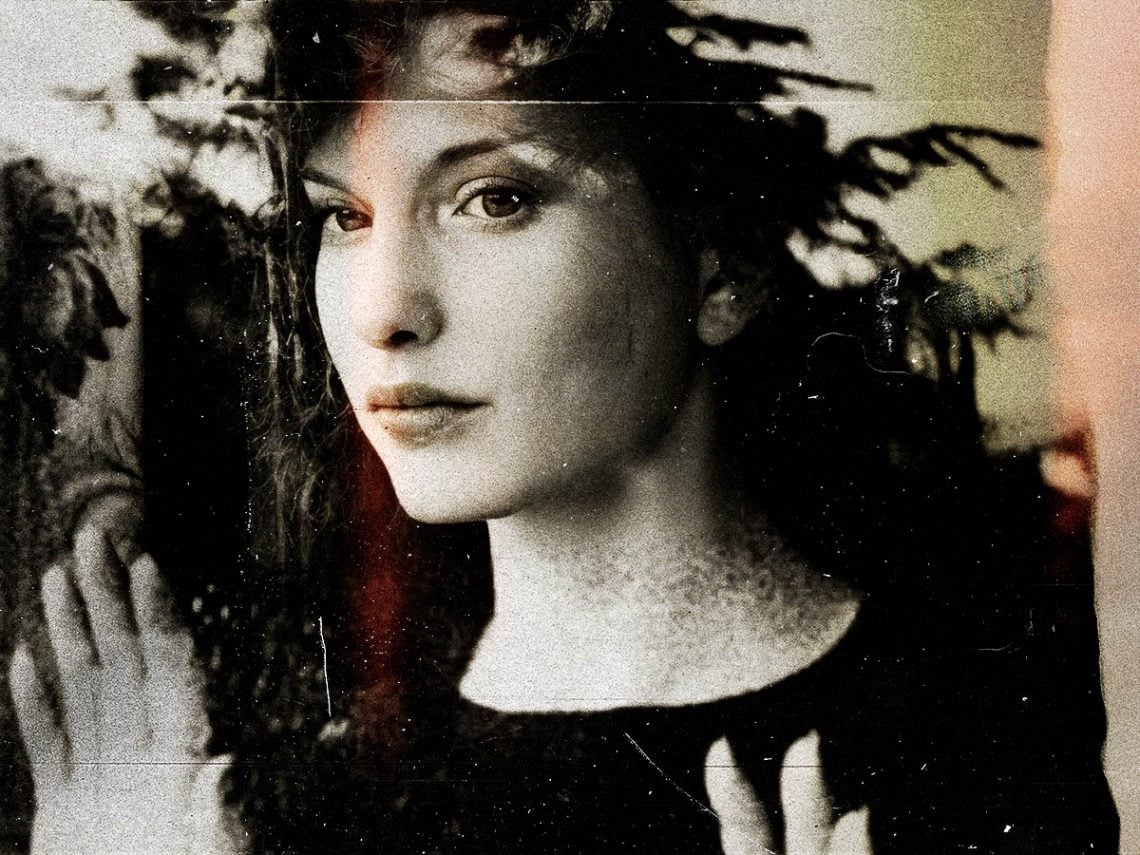
Did avant-garde filmmaker Maya Deren inspire David Lynch’s movies?

David Lynch’s work has fascinated and confused audiences for decades, presenting an idiosyncratic, haunting vision of America through the use of surreal imagery and thematics. His 1977 debut feature Eraserhead, a darkly experimental meditation on fatherhood, identity, sex, and social alienation, earned Lynch popularity amongst the underground midnight movie circuit. In the following decade, the director continued to gain recognition for his unique approach to filmmaking, releasing The Elephant Man and Blue Velvet, two of his greatest works.
By the start of the 1990s, Lynch entered a prolonged period of depicting “a woman in trouble”, beginning with Twin Peaks, the cult television series centring around the disappearance of reckless high-schooler Laura Palmer. The series was followed by a prequel movie, Twin Peaks: Fire Walk With Me, which attentively explored trauma and abuse. Moreover, the “woman in trouble” theme can be explicitly traced in his masterpiece Mulholland Drive and, of course, Inland Empire, the film from which the phrase derives. It is arguably the most Lynchian of all Lynch films.
Lynch’s preoccupation with identity, specifically feminine identity, is concerned with instability and uncertainty. Thus, by using surrealist imagery, non-linear narratives, recurring motifs, and innovative POV shot-reverse-shots, the filmmaker is able to convey the fragile nature of the mind and its relation to the outside world, the dissociation from identity, and emotional fragmentation. Lynch’s obsession with dreams and fractured perceptions of reality reflects the influence of seminal classics such as The Wizard of Oz and Persona. However, one of Lynch’s most significant influences is Maya Deren, an avant-garde filmmaker who worked between the 1940s and ’50s.
Inspired by the likes of Salvador Dalí and Luis Buñuel, Deren wrote, directed, edited and starred in her first short film, Meshes of the Afternoon, in 1943. Now widely considered one of the greatest short films ever made, the 14-minute exhibition contains a series of significant motifs, such as keys, mirrors, lamps, knives, flowers, and a phone hanging off the hook. Deren stars as a woman who slowly loses her grasp on reality, reflected in the film’s innovative techniques, such as slow motion and a non-linear narrative, blurring the lines between dream and reality, fact and fantasy.
Discussing Meshes of the Afternoon, Deren explained: “This film is concerned with the interior experiences of an individual. It does not record an event which could be witnessed by other persons. Rather, it reproduces the way in which the subconscious of an individual will develop, interpret and elaborate an apparently simple and casual incident into a critical emotional experience.”
Although it is clear that Deren’s influence has seeped into all of Lynch’s work, it is most prominent in Mulholland Drive. The filmmaker borrows many similar motifs from Deren, such as keys and mirrors, replicating some of Deren’s shots with striking similarities. In both films, keys represent the unlocking of a part of the character’s psyche, welcoming in another world (Deren described her film as “a crack letting the light of another world gleam through”).
Furthermore, the use of mirrors reflects the character’s distorted identities. In Meshes of the Afternoon, Deren is followed by a cloaked, Grim Reaper-style figure with a mirror for a face, which leaves a flower on her bed. The image of death stares back at Deren, directly reflecting her face. It invades her personal space. Every figure within the film is a manifestation of Deren’s character, creating an unstable spiral of images reckoning with femininity, identity, mortality, time, and humanity.
In Mulholland Drive, these motifs serve similar purposes, with Lynch emphasising fragmentary female identity through the exchanging of identities. Rita wears a blonde wig to resemble Betty’s hairstyle, staring at herself in the mirror. The theme of doppelgangers and the uncanny is central to both films, moving the narrative away from reality and suspending it in a dream-like state, welcoming viewers to puzzle together the pieces that are as fragmented as the character’s identities. Lynch’s oeuvre owes its debts to Deren’s disorientating cinematic techniques, which outwardly reflect the characters’ inner workings.
Watch Meshes of the Afternoon below.
