


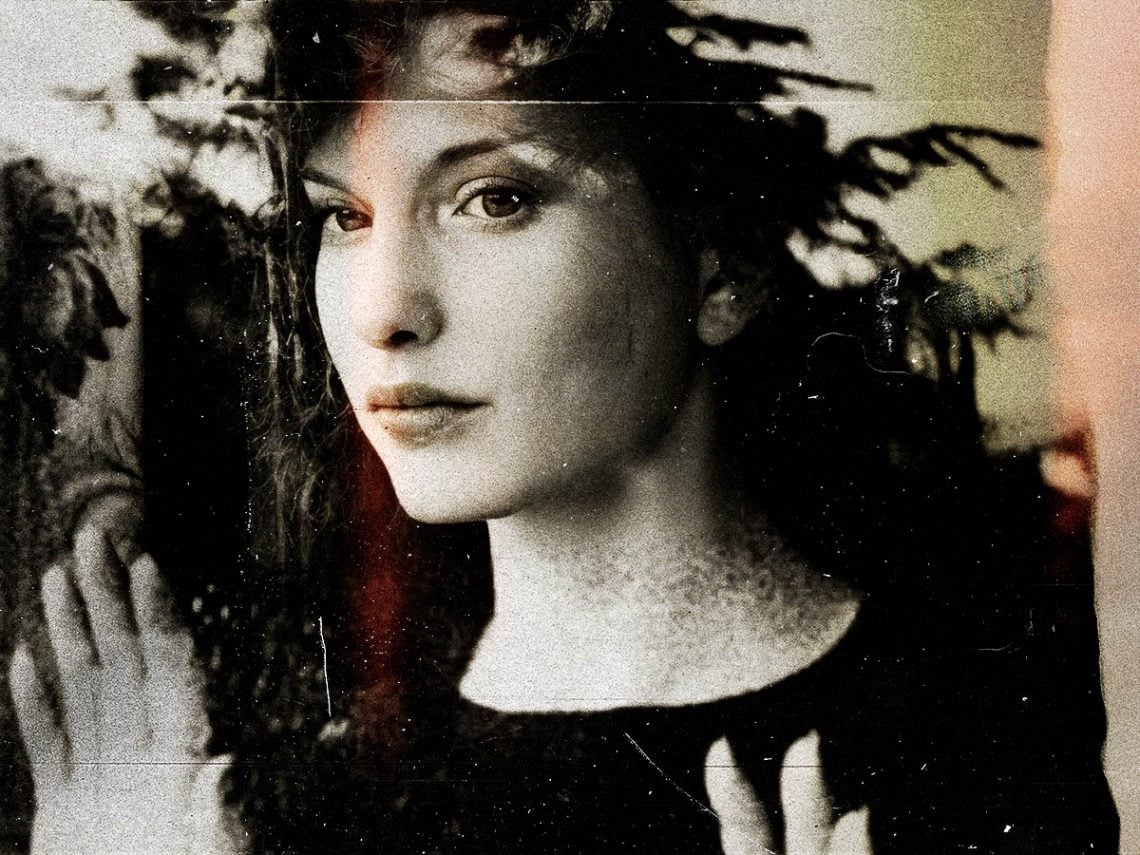
Maya Deren: the pioneering filmmaker who changed the course of avant-garde cinema

If you’ve ever studied film, you’ve probably seen, or at least heard of, Meshes of the Afternoon. The 16mm short film was created by Maya Deren and her husband, Alexandr Hackenschmied, in 1943, coming in at just 14 minutes in length. Yet, during this short runtime, Deren, who took charge of the film’s creative direction, crafted a rich world of images and symbols with herself at the forefront.
Since its release, Meshes of the Afternoon has become a seminal cinematic text, inspiring swathes of directors, from Stanley Kubrick to David Lynch. Essentially, Deren was one of the most influential filmmakers of the 20th century, becoming a champion of avant-garde cinema through her determined and focused approach to creating evocative and personal pieces of work. After Meshes of the Afternoon, she released several other short films while immersing herself in New York’s artistic and bohemian milieu, becoming well-known for throwing lavish parties and screenings of her experimental short films.
Deren was born in Ukraine in 1917 to a successful Jewish family. However, her family soon fled to New York due to antisemitic pogroms imposed by the White Volunteer Army. Deren, real name Eleonora Derenkovskaya, was an intelligent child, eventually studying political science and journalism at university when she was just 16. Her interest in politics encouraged her to pursue social activism, leading her to meet her first husband, Gregory Bardacke.
However, the marriage didn’t last long, and after her divorce, Deren soon took off to join Katherine Dunham’s dance company as they travelled around the United States. Although Deren had no formal training in the art form, she became obsessed with dance and often centred it in her later short films. While on tour as Dunham’s assistant, she met her next husband, Hackenschmied, who had a successful career as a cameraman in Czechoslovakia. Together, the pair expressed a shared love of cinema, deciding to make Meshes of the Afternoon in 1943, using money Deren inherited from her late father.
In Meshes of the Afternoon, Deren appears as multiple versions of herself, losing sight of reality as motifs like a key, a rose, a mirror-faced figure, and a knife reappear. Hackenschmied’s camera is often disorientating in its non-linear approach, using techniques that often give a voyeuristic feel to many of the shots, as well as other methods like slow motion. The film has been subject to many interpretations over the years, although Deren once shared her own thoughts on the film in some program notes.
She wrote: “This film is concerned with the interior experiences of an individual. It does not record an event which could be witnessed by other persons. Rather, it reproduces the way in which the subconscious of an individual will develop, interpret, and elaborate an apparently simple and casual incident into a critical emotional experience.”
The following year, Deren released At Land, in which she also starred in multiple roles (if you can call them that), exploring the fragmented nature of personal identity. Deren was not a professionally trained actor – or anything – rather, she was a creative spirit who poured herself into her film projects. Thus, Deren’s films seemed to possess an added layer of authenticity. These shorts were not given big budgets or had countless crew members working behind the camera. Rather, Deren was in complete artistic control, allowing herself to experiment with the ways in which the camera could become a voice, a tool for expression without words – just images.
In fact, Deren was fiercely critical of Hollywood, believing that it hindered creativity. She explained for Film Culture, “Artistic freedom means that the amateur filmmaker is never forced to sacrifice visual drama and beauty to a stream of words…to the relentless activity and explanations of a plot…nor is the amateur production expected to return profit on a huge investment by holding the attention of a massive and motley audience for 90 minutes.”
Deren’s love for dance led her to explore the art form in many of her films, such as Ritual In Transfigured Time. She emphasised the fluidity of the body and dance’s relation to freedom, space and time. Moreover, Deren found parallels between choreographed dance and the process of editing films, as she explored in 1945’s A Study in Choreography for Camera. In her last picture, The Very Eye of Night, Deren edited ballet dancers to appear as though they were floating in space, their bodies moving seamlessly, weightless as they float into frame among the stars. Through simple yet beautiful images, Deren allows the viewer’s imagination to take precedence, highlighting the expressive nature of movement as a means of communicating emotion.
The filmmaker continued to create mesmerising and pioneering short avant-garde films into the 1940s until her life began to unravel due to a dependency on Benzedrine, health issues, and money troubles. She died in 1961 from a haemorrhage resulting from malnutrition, cutting a groundbreaking life and career tragically short. However, in the time she was here, she created an astounding body of work that challenged pre-conceived notions of avant-garde cinema. Her advocation for experimental cinema, even setting up a Creative Film Foundation to aid young creatives, significantly aided the development of the medium.
At a time when it was difficult for women to make films, Deren rebelled against Hollywood’s tyranny and created and distributed her own films, immersing herself in her own richly artistic world. Her innovative approach to exploring identity and bodily movements through surrealist imagery, taking a brilliantly symbolic approach, made Deren a leading figure in avant-garde cinema.
