


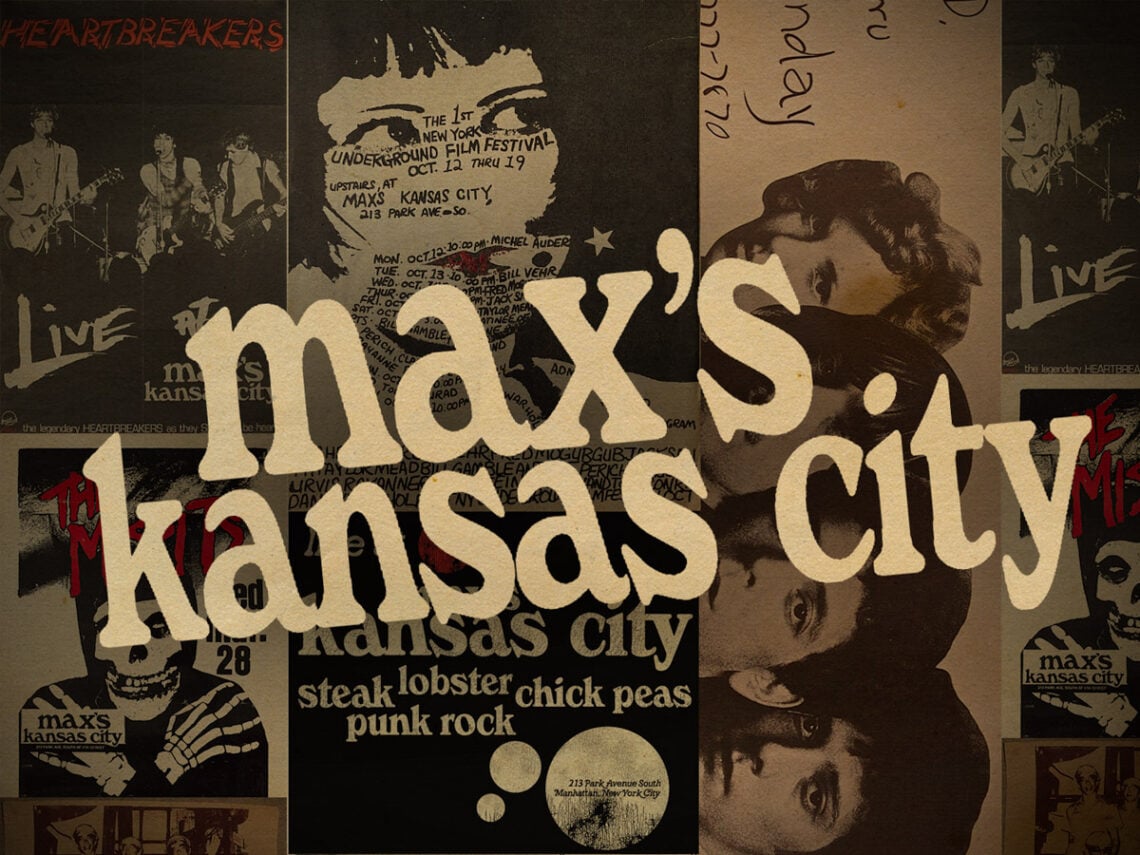
Max’s Kansas City: the nightclub that defined downtown New York

“The politics at Max’s were very similar to high school, except the popular people were not the cheerleaders or football heroes, and the prom queen would most certainly be a he, dressed as a she, knowing more about being a she than most she’s.”
So described Patti Smith in Just Kids of the infamous Max’s Kansas City, the club that hosted New York’s most hedonistic artists and helped spawn the wave of punk that would soon define the era. Its founder, Mickey Ruskin, was a New Jersey-born attorney-turned-restaurateur: within five years of 1960, he’d opened two coffeehouses in the East Village (Tenth Street Coffee Shop and Les Deux Mégots), and a jazz club, The Ninth Circle, that was so popular, he and his partner opened The Annex to handle the overflow from the original.
By 1965, all three had been partially sold or had closed their doors, which left Ruskin with a new opportunity at 213 Park Avenue South, between 17th and 18th Street in Manhattan’s Union Square, a space soon to be known as Max’s Kansas City.
While Ruskin had gained something of a following over his years of being a nightlife fixture, one that carried over and spilt into Max’s once it opened, the club earned its seal of approval from the who’s who of the Pop Art Scene of the day: Roy Lichtenstein, Robert Rauschenberg, and Andy Warhol.
In exchange for dining credit for him and his so-called superstars, Warhol offered Ruskin artworks. Ruskin, then, earned not only priceless art, which he, as an acute curator, could display alongside the countless pieces of contemporary art he feverishly collected to display within Max’s walls, but an unrivalled endorsement from the powerful presence of Warhol and his crew, and all of New York’s eccentrics followed in their wake. As Smith described in Just Kids, Max’s was “Andy’s second silver kingdom”. Many artists followed suit with their own exchanges with Ruskin, as regulars began to accumulate tabs paid off with various forms of art.

“Max’s Kansas City was the exact palace where Pop Art and pop life came together in the 1960s,” Warhol described in his 1980 memoir Popism, “teeny boppers and sculptors, rock stars and poets from St Mark’s Place, Hollywood actors checking out what the underground actors were all about, boutique owners and models, modern dancers and go-go dancers – everybody went to Max’s and everything got homogenised there.”
The Warhol superstars took over Max’s back room, a red light-lit main area of the club, separated from the bar and upstairs. Permanently clouded by cigarette smoke, with glimpses of faces, camera flashes and colour breaking through, Max’s became a cultural hub of both glamour and grime, one whose crowd teetered into an intimidating exclusivity. The front door was tended to by a woman nicknamed Tiny Malice, who made sure the “normal” people were kept outside, brushing them off with, “You don’t belong here. Get the fuck out.”
Alongside the art scene, writers like William Burroughs could be found sitting at a table, while the burgeoning glam and punk scenes’ musicians began to trickle in, too, turning the club into a sort of headquarters of New York’s music niches. Any wayward artist could be found lounging across Max’s: famous and unknown actors, models, drag queens, poets and more, joined together by a sea of drinks, food, cigarettes and drugs.
“The back room was vicious. Vicious,” musician Jayne County recalled in Please Kill Me. “Everyone was on a different drug, and if you got up to use the bathroom, you didn’t dare turn your back… People would say horrible things about you the minute you got up.”
The intensity of Max’s back room was challenged once Ruskin began to allow bands to perform at the club. The Velvet Underground were regulars, even hosting Lou Reed’s final shows with the band before he quit in the summer of 1970. Musicians began to play often in the early ’70s: glam rockers from David Bowie to the New York Dolls and Slade; and early punks, including County, Iggy Pop and Patti Smith, played in the club’s upstairs. Smith and her then-partner, Robert Mapplethorpe, were initially not seen as having the right “look” to be allowed into Max’s. Instead, the pair would simply return every night and sit outside, starting conversations with whoever crossed their path, until Danny Fields granted them access.
“Those of us who were sitting down used to look at this adorable, sexy young couple in the doorway, wondering who they were, wishing that they would come over and sit down with us,” Danny Fields explained in Please Kill Me. “Finally, I said, ‘Well, come and sit down, you two, who are you?’”
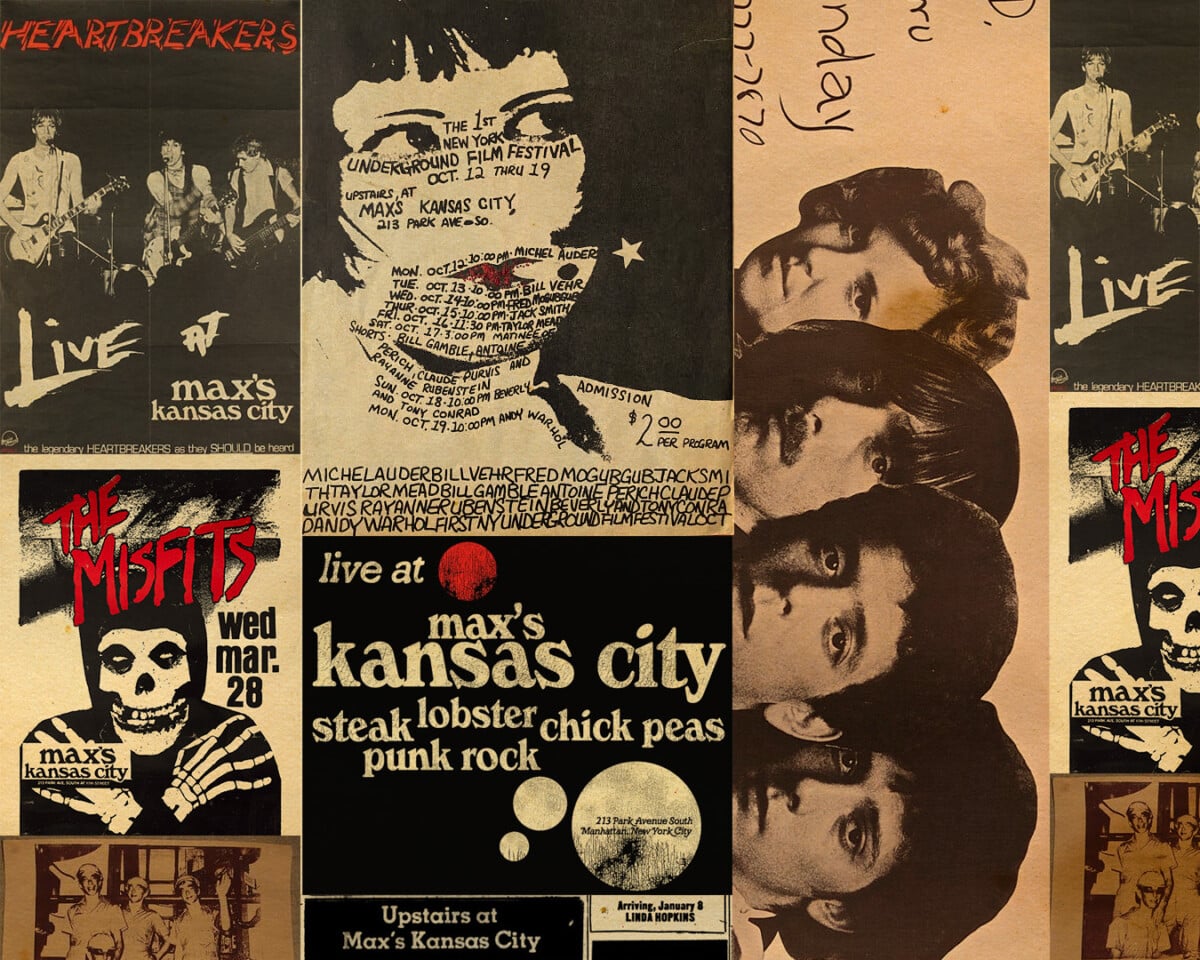
To some, the inclusion of live music marked the beginning of the end of the club’s heyday. “Max’s had been an exclusive downstairs enclave,” Fields explained, “And only people who knew about it knew about it.” Gone was the reign of the infamous back room, in favour of the spectacle of an up-and-coming band that provoked lines of people to queue outside for entry.
Once music properly took over as Max’s primary entertainment, the characters who granted the club its “cool” factor slowly but surely stopped going, finding other enclaves (including CBGB) to make their own. “Disbanded by Andy, banded by us,” Smith wrote in Just Kids, “No doubt to be disbanded again to accommodate the next scene.”
On top of losing the majority of their loyal regulars, Max’s was facing overarching financial difficulties that forced Ruskin to file for bankruptcy in August of 1974. Ruskin lost control over operations the following month, and the courts placed Donaldo Soviero in control instead. When Soviero declined to buy Max’s, Ruskin returned that December, but the club closed indefinitely shortly after.
Max’s reopened the following year under the new ownership of Tommy Dean Mills, who wanted to make it a disco. Peter Crowley, who had been booking early punk acts at CBGB and Mothers, a gay bar, made Max’s a space where punk thrived. Some of the old regulars returned – Patti Smith, Jayne County, The New York Dolls, Television – while the Ramones, Blondie, The Heartbreakers, Talking Heads and more followed.
Crowley even produced a compilation-type album, Max’s Kansas City: 1976, that featured the biggest names to take Max’s stage, but on December 12th, 1981, the club had once again closed its doors. A final gasp took place in January of 1998, when Mills reopened Max’s at a new location at 240 West 52nd Street, but it closed shortly after.
While its heyday did not last even a full decade, Max’s became intrinsic to the artistry that continues to define New York, a necessary space that, for a time, gave artists a chance to coexist and find themselves, and each other.
