


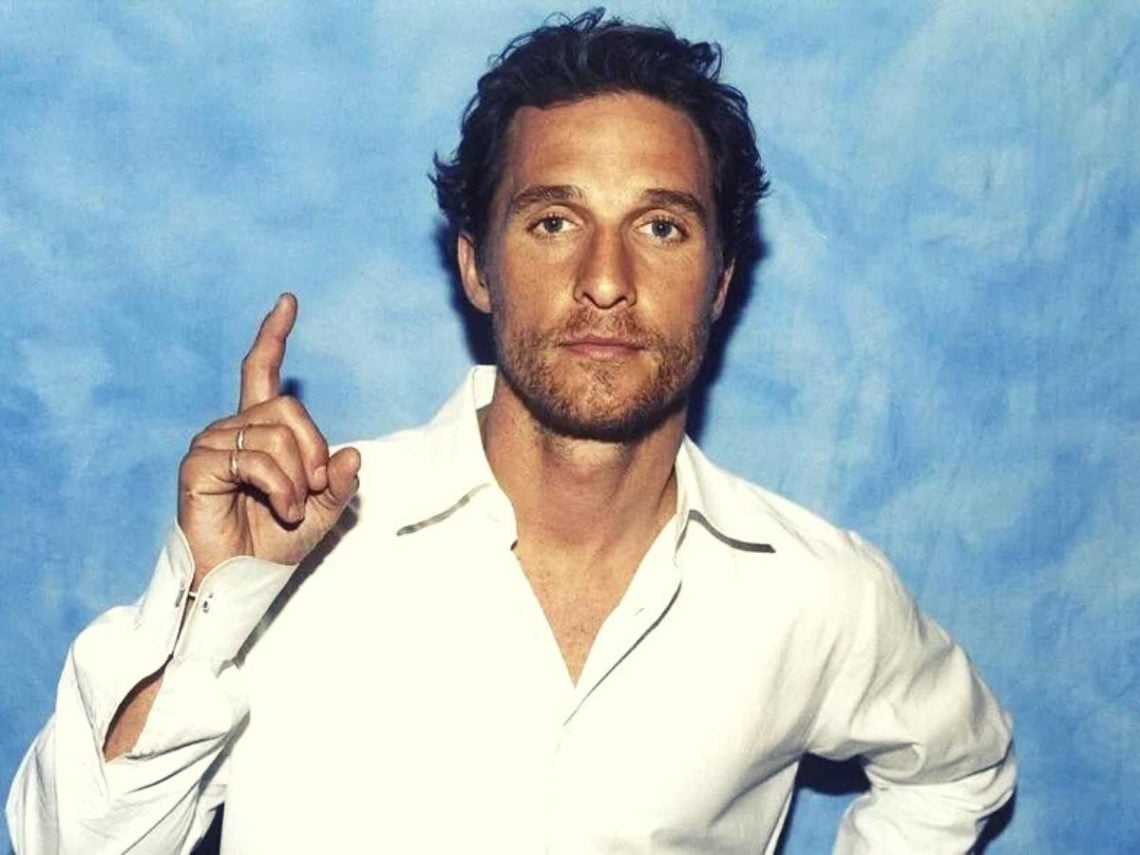
Matthew McConaughey names cinema’s biggest bastard: “Yet I loved him”

Matthew McConaughey is many things, including an Oscar winner, a recovering rom-com star, and the owner of a tequila brand called Patalones, about the quality of which I have no intel, but top marks must be given to the name.
We may also be able to add bastard to the list of his credentials, but I do not have any insider knowledge on that front and will therefore withhold judgment.
What we do know for sure is that he’s cultivated a persona of maximum ease over the years. From his breakthrough role as a 20-something slacker trying to relive his high school glory in Richard Linklater’s Dazed and Confused to his all-too-brief performance in The Wolf of Wall Street that was so avant-garde it would have given Marcel Duchamp a run for his money, McConaughey has never ceased to incite a kind of stoned euphoria in his audience. The fact that he’s also good at acting is beside the point as his qualification as a slow-moving loose cannon is the key to his success.
Do not let this laid-back nature fool you, though, for Mr McConaughey is a student of cinema, and his favourite films run the gamut. You might have thought that he’d be a devotee of the acid western genre, but it turns out that he casts a much wider net. In 2013, he compiled a list of his top five movies of all time for Rotten Tomatoes, and it included the 1963 western Hud, starring Paul Newman.
“Family, generations, hero worship, a classic American landscape and anti-hero,” he wrote, adding that Newman’s character is a lead with no arc, “[a] bastard, an ass, a great character who never wavers in his ornery and despicable ways”, all of which is true. Martin Ritt’s film is no John Wayne propaganda; for one thing, it centres on a ranch on the brink of bankruptcy over a diseased herd of cattle, and there is no foreign enemy or evil gang to fight, just the brutal whims of nature.
Newman plays the self-centred, self-destructive son of an ageing rancher, Hud, who is often drunk, always antagonistic, and frequently violent. He attempts to rape the family’s housekeeper and sabotages his father’s plans for the land. He is, in other words, a despicable person who, thanks to the vulnerability of Newman’s performance, is somehow sympathetic.
McConaughey thinks so, anyway, who, after listing all of Hud’s many failings, concluded, “Yet I loved him”. For him, the film is a shining example of how drama can unfold even when the main character never changes. Hud is exactly the same bastard at the end as he was at the beginning, and the tragedy of this stasis is what drives the plot.
Ritt’s film falls into the category of revisionist westerns, like Sergio Leone’s Dollars trilogy, with all the trappings of a classic western but constantly undercutting any notions of heroism. Instead, it presents the mythical American West as a place where dreams go to die, where men with good hearts are beaten into bitterness or die weak and defeated.
It’s not the most uplifting of genres, but it did provide cinema with some of its most complex lead characters, including, of course, Newman’s Hud.
