


The 2004 scene that became the toghest of Matt Damon’s career: “It kept me up at night”

For somebody who played one of cinema’s most iconic action heroes, Matt Damon hasn’t made a whole lot of action movies.
Of course, embodying Jason Bourne is a tall order for the star, which might explain why he’s tended to avoid the genre when he’s not called upon to revisit cinema’s favourite amnesiac secret agent.
He’s been in plenty of films with explosive action sequences, but he’s rarely the one in the thick of the action. Damon might have been the title character in Steven Spielberg’s Saving Private Ryan, but for the most part, the characters trying to safely retrieve him from behind enemy lines bore the brunt of the battle scenes.
The most action-heavy roles Damon has ever taken on outside of his signature franchise came in Neill Blomkamp’s Elysium and Zhang Yimou’s The Great Wall, and nobody’s going to rank them among his finest work. The original Bourne trilogy, on the other hand, endures as one of the 21st century’s finest triptychs, even if the fourth instalment took some of the shine off its predecessors.
With that in mind, it shouldn’t be a surprise that it was one of the high-octane spy stories that presented Damon with his toughest task. It preyed on his mind so much that he struggled to sleep. In hindsight, it was understandable, considering it required the actor and co-star Franka Potente to be submerged underwater for an extended period of time.
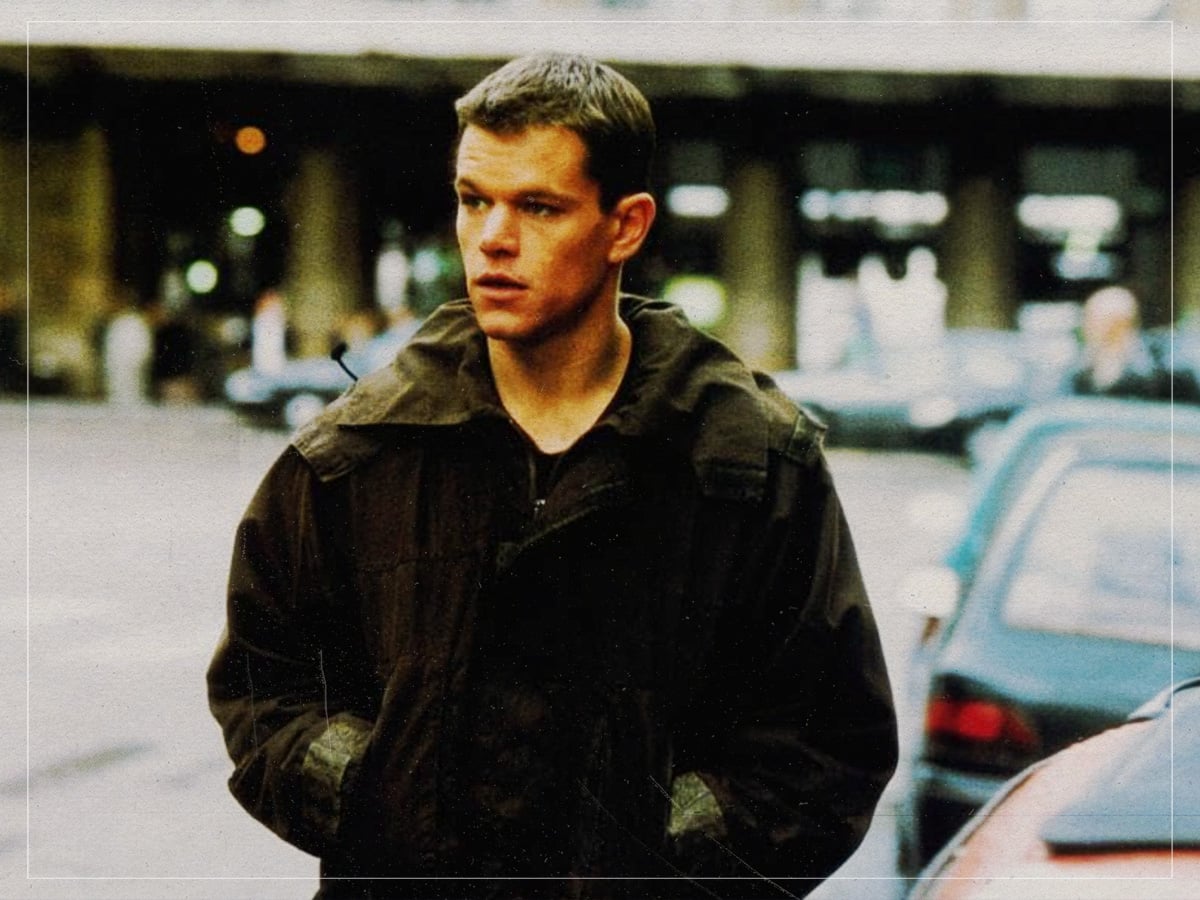
“I spent a couple of months in the swimming pool after work every day, just practising with the stunt guys, being underwater and getting my air taken away,” Damon told Collider. “It was really smart what they did; they gave me little tasks like tying a shoe underwater or little things. They just worked with me to get me comfortable underwater in an enclosed space.”
For a scene that barely amounted to more than a few minutes of screentime in Paul Greengrass’ The Bourne Supremacy, Damon put in months of work to master the underwater scene. The downside is that when it came time to actually shoot the thing, “They put milk in the tank in the water to make it look like river water and particulate and all of this stuff, so you couldn’t really see.”



That obsessive level of preparation was hardly unusual for Damon at that stage in his career. Across the Bourne films, he became known for throwing himself fully into the physical and psychological demands of the role, helping redefine what audiences expected from modern action heroes. Unlike the invincible secret agents that had dominated previous decades, Bourne was bruised, exhausted and constantly improvising to survive.
The franchise’s stripped-back realism became hugely influential throughout Hollywood in the years that followed. From the frantic hand-to-hand combat to the jittery camera work and grounded stunt choreography, the Bourne films changed the language of blockbuster action cinema almost overnight. Damon may not have considered himself a traditional action star, but his commitment to authenticity helped create one of the genre’s defining modern franchises.
The Academy Award winner and Ben Affleck’s platonic life partner said that even though he “shot it relatively easy” due to the prep he’d put in beforehand, visualising the scene and trying to figure out how to navigate his way through the briny deep while remembering to give a performance “kept me up at night a lot.”
For a guy who once pushed himself to such lengths that it took his body years to recover from a supporting turn in Courage Under Fire, submerging himself for a short spell should have been a walk in the park. Instead, Damon remembers it as the single toughest scene of his career.
