


‘Dahomey’ movie review: a moving historical examination by Mati Diop

In 2021, France returned a portion of the artefacts plundered from the former African kingdom of Dahomey (now Benin). The transfer of these treasures back to their homeland was accompanied by considerable fanfare on France’s part and significant media coverage, much of which focused on the country’s “generosity”.
The modest documentary Dahomey, running just over an hour, examines the event from other perspectives. It received critical acclaim and was named the year’s best film at the Berlinale, as well as by the National Board of Review (US). The film, a collaboration between France, Senegal, and Benin, is Senegal’s submission for this year’s Oscars.
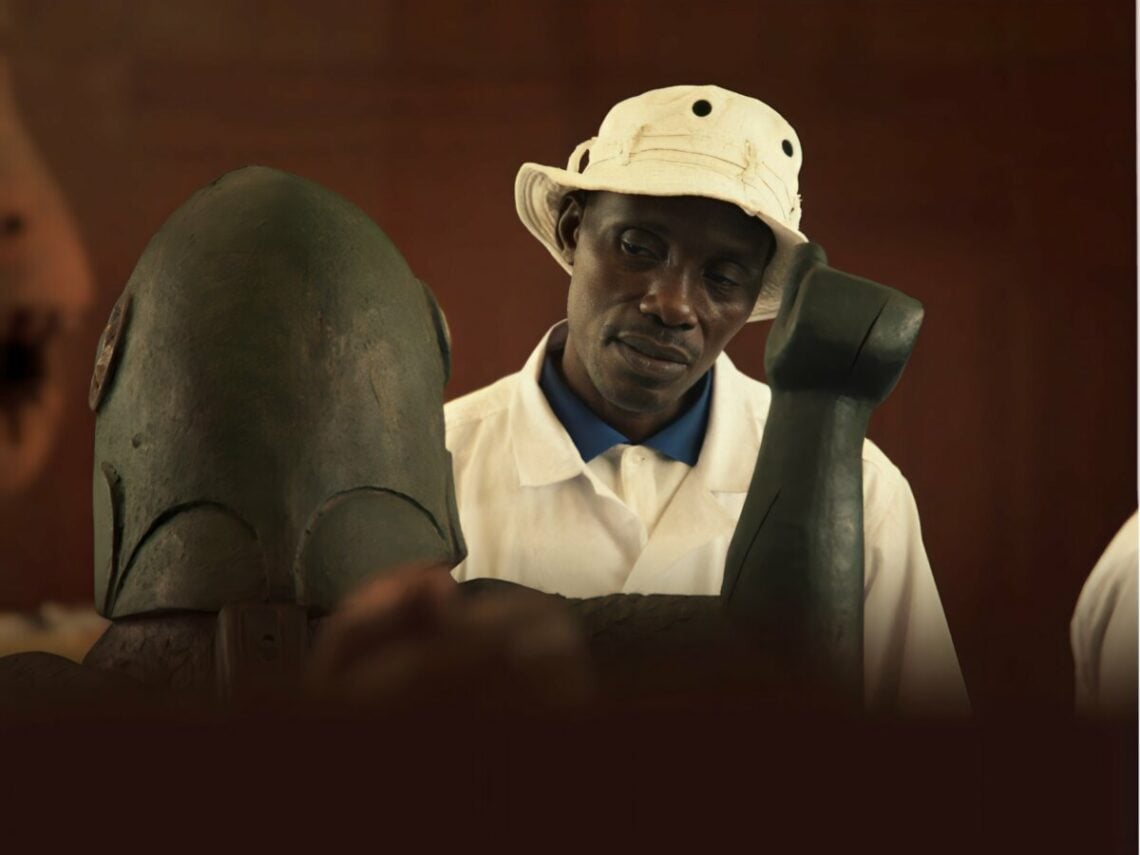
Paris-based director, actor, and writer Mati Diop chose a fascinating combination of fact and fantasy to tell the story of the cultural treasures’ homecoming. Opening on a scene in the French museum that held the artworks, it shows the French, entirely non-African staff packing the artefacts for transport. Their voices cannot be heard, except as a vague murmur, until one of them refers to an imposing sculpture as “item #26”. A voice-over (voice of Makenzy Orcel) in an unknown language (subtitled) suddenly remarks, “They keep calling me number 26. Could they have forgotten my name?” It soon becomes clear that the narrator of these events is one of the artefacts, speaking the traditional Dahomian language known as Fon.
This unusual conceit is surprisingly effective, allowing the artefacts to speak for their nation and people as if they had absorbed their history. The personified artwork is wearily distressed at being so long among strangers and wonders why it is being moved again. Being secured in a shipping crate with chains causes disturbing memories to emerge from its colonial past. There is a shift in the action when the Dahomian artefact is shown being moved and created by a group of white, European, French-speaking museum workers, and then its crate is carefully and respectfully opened by Beninese people at its destination: home.
The artefacts’ repatriation is portrayed through a moving and lively set of free-flowing random scenes. Beninese people sing and dance in the streets to celebrate their treasures’ return and welcome them home. ‘Item #26’ hears the Fon language, recognises familiar sounds and smells, and expresses its joy at being back where it belongs.
At the museum, #26 is displayed, and its original identity and significance are made clear. Later, its voice lovingly describes the scene as Beninese residents gather in the dark streets as the celebration winds down. The filmmaker’s fanciful approach brings across the historical and cultural importance of the event and its significance to the people of Benin in a way that a scholarly explanation could not. Careful camera work also brings life to the celebration; rather than simply displaying these events, the film has us join them in the company of the invisible #26.
The second half of the film takes an alternate and more down-to-earth perspective. It follows an extended public discussion held in the museum displaying the restored items, mostly among university students. The young people express their resentment over the appropriation of their national treasures, the praise France has received for returning a small number of stolen items, and their emotions at having some of them returned. The conversation moves into wider areas, touching on their feelings about language and culture and the foreign influences on their own education. Their earnest remarks put France’s generosity in perspective and reveal the longstanding impact of colonialism on their culture.
Unrestrained creativity and genuine enthusiasm for the subject have made this otherwise straightforward account a compelling and moving tribute to a resilient culture and people.
