


‘Masters of the Universe’ review: An unabashedly geeky, good-natured fantasy romp

Director Travis Knight’s reimagining of the Masters of the Universe mythology is better than any Mattel-based film has any right to be.
Given that Masters of the Universe originated within action figures and comics intended for children, there’s no reason that a cinematic adaptation needed to be previous about honouring the source material. There’s ample room for creative possibilities within a cosmic fantasy world, but a film requires something more than just nostalgia; the 1987 film starring Dolph Lundgren is the perfect example of how dull and uninspired the material can feel without a stylistic distinction.
Knight is known best for his work with Laika and has already proven himself capable of impressive world-building, but he also cracks just the right tone with 2026’s Masters of the Universe; although it is refreshingly self-aware about how goofy the premise is, the film is also fairly sincere within an era where snark has become a dominating perspective.
While there’s a fair amount of Easter eggs for those who know the material by heart, the film gets to the point quickly in explaining what the world of Eternia is all about. It’s after King Randor, played by James Purefoy, is usurped as the ruler of the mythical land by the evil Lord Skeletor, played by Jared Leto, that its heroes are scattered, and the noble Man-At-Arms, Duncan, portrayed by Idris Elba, is forced to flee.
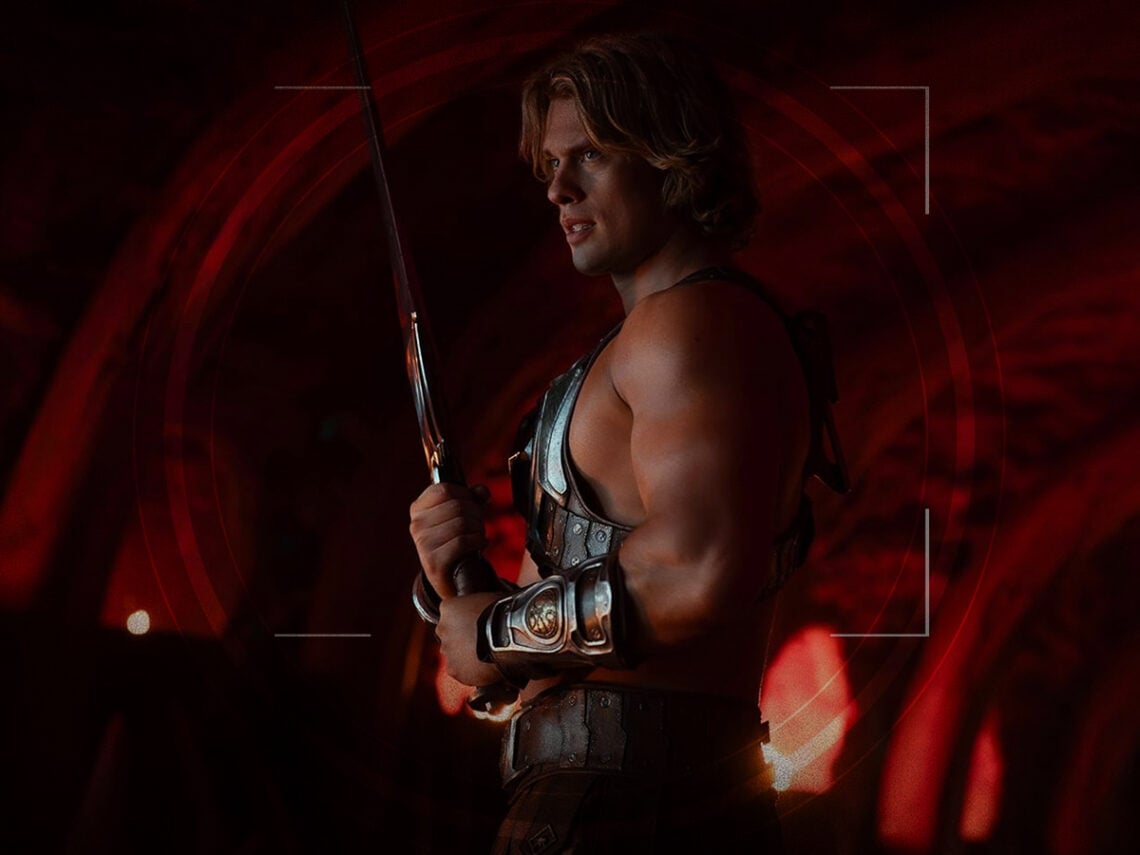
Randor’s son, Adam, played by Nicholas Galitzine, is raised on Earth with only a passing knowledge of his history. Adam’s goal is to recover the lost Sword of Power, which his father used as a means to protect and control Eternia, after he is reunited with his childhood friend Teela, played by Camila Mendes. However, his kingdom has suffered greatly under Skeletor’s domain, and it might not be ready to accept a hero once more.
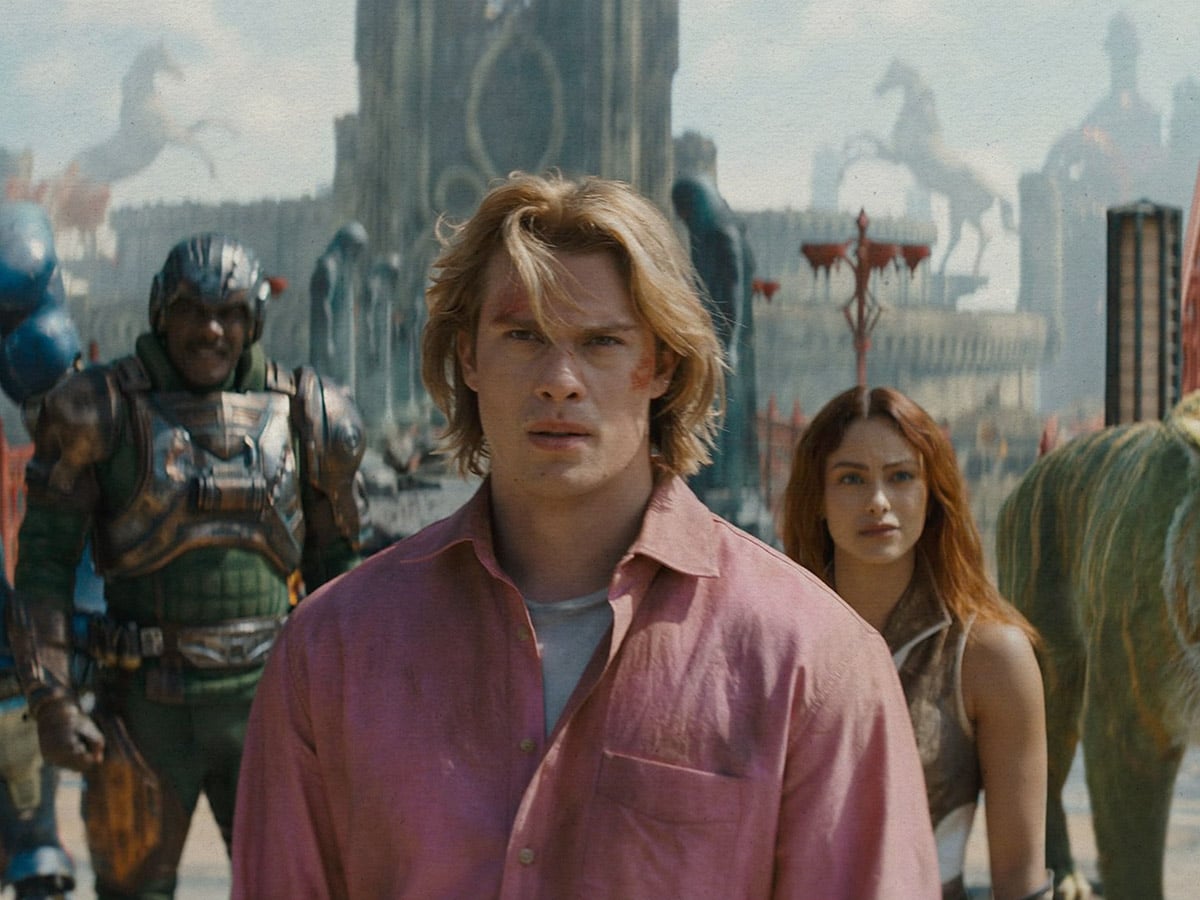
Masters of the Universe might initially spark comparisons with superhero films like Thor or the original Superman: The Movie with how it grounds its protagonist on Earth, but Knight seems well aware that there’s no point in killing time before the adventure in Eternia begins. Adam left Eternia at a young enough age for it to feel like his real home, and the scenes on Earth aren’t intended to suggest he truly assimilated.
Rather, it helps create a more vulnerable, awkward character who is too self-serious in his chivalry to be taken seriously on Earth, yet never afforded the opportunity to unlock his potential as the heir to a kingdom. The decision to make Adam into an enthusiastic, yet confused hero who is distinguished by his compassion and understanding is perhaps the best decision that Knight made with the film, as he’s able to take advantage of Galatzine’s inherent charisma and affability.
This is a stylised film that is at least consistent with its use of CGI, as the world of Eternia is populated by enough bizarre creatures, massive sets, and exotic fantasy details to feel like more than a series of greenscreen cut scenes. Knight’s experience with animated films like Kubo and the Two Strings is most evident within the character designs, such that, even if Adam’s allies are intended to be goofy in the style of a cartoon, the eye-popping costumes, makeup, and eccentric performances create an engaging set of heroes.
That Galtazine has the perspective of someone rediscovering this world does come in handy when the film needs to poke fun at the silly names, but he’s also the butt of the jokes rather frequently and does some impressive physical comedy. His ability to offer more beneath the surface of a character adored by fanboys for decades is not dissimilar to what Chris Pine did with his role as Captain James Kirk in the rebooted Star Trek franchise.
Masters of the Universe doesn’t offer many narrative surprises, and the Sword of Power is predictably a MacGuffin that is used as an excuse to move between set pieces. However, the 141-minute film clips along at a nice pace because it rarely dwells on exposition or provides information dumps without a dose of comedy.
Although there’s commendable work done by the VFX artists, the unsung hero is composer Daniel Pemberton, best known for his work on the Spider-Verse films and Project Hail Mary. Pemberton provides a propulsive, rock-heavy score that adds an operatic sound to the tunes of a cartoon theme and unquestionably adds more aura to the purest moments of spectacle, helped by featuring contributions from Brian May of Queen, whose stunning guitar solos are reminiscent of his work on Flash Gordon and Highlander.
The biggest surprise of Masters of the Universe is the unusually committed performances by Elba and Leto. While Elba is the type of consummate professional who tends to improve everything that he is in, the character of Duncan has an interesting arc as a protector who feels as if he let down his kingdom, and has thus become an alcoholic; he’s not only an adopted father to Teela, but involved in a charming dynamic with Adam that shows a sensitive side of masculinity.
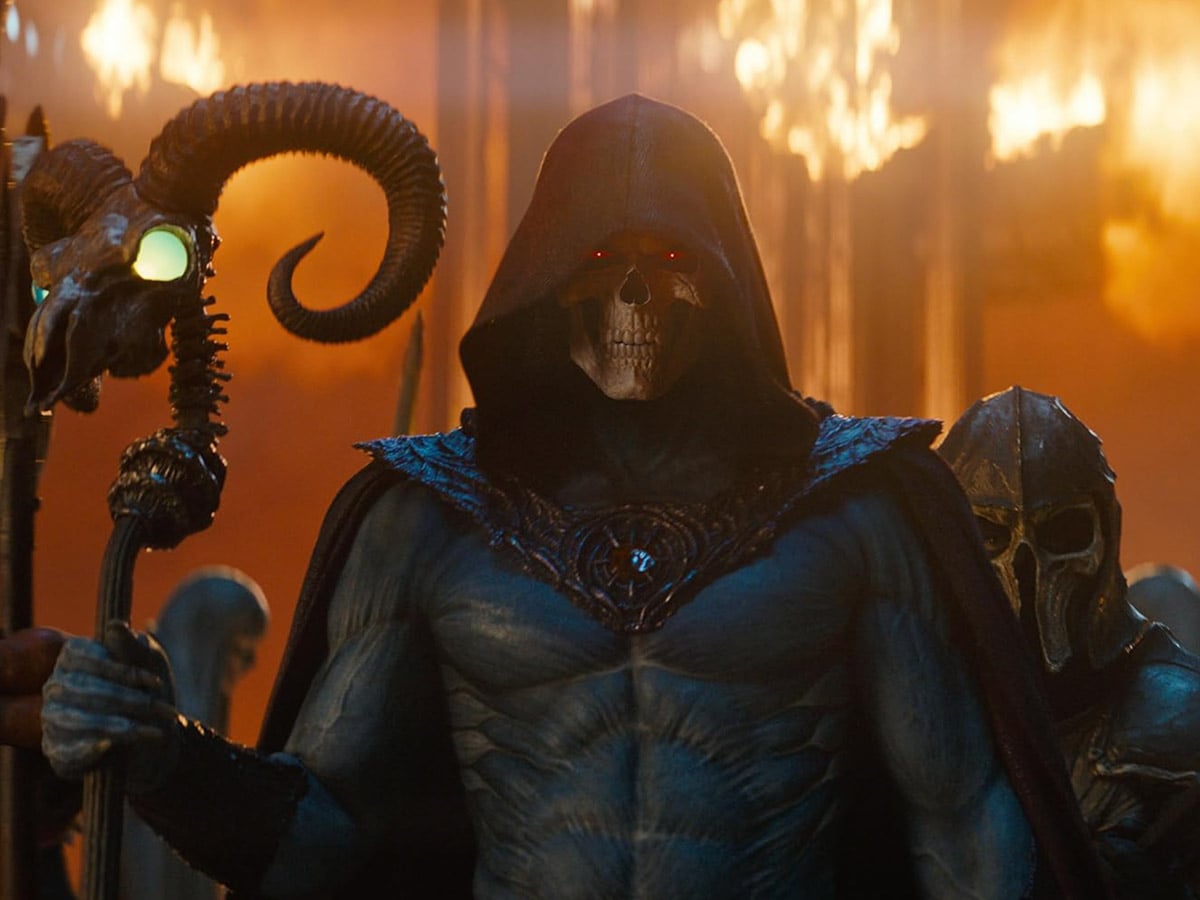
Leto is a divisive actor who tends to let his big choices overwhelm the material, but playing a petty, ridiculous villain who serves as an annoyed boss to an army of monsters is a role that he was tailor-made for. Not only is Leto’s performance arguably better than his Oscar-winning role in Dallas Buyers Club, but it honours the example set in the 1987 film by Frank Langella, who seemed to think of Skeletor as a Shakespearean part.
Masters of the Universe isn’t without its clunkiness, particularly in its first third, but it also has a perspective on why the franchise is so relevant, and does a great job at making it accessible for those who aren’t asking for fan service. It’s certainly a star-making part for Galitizine, and it makes use of the possibilities of Imax better than some of this year’s other films that debuted in the same format. Making a $200million Masters of the Universe may not have been a logical decision for Amazon Studios’ bottom line, but a studio shouldn’t be criticised if the product is this worthwhile.
