


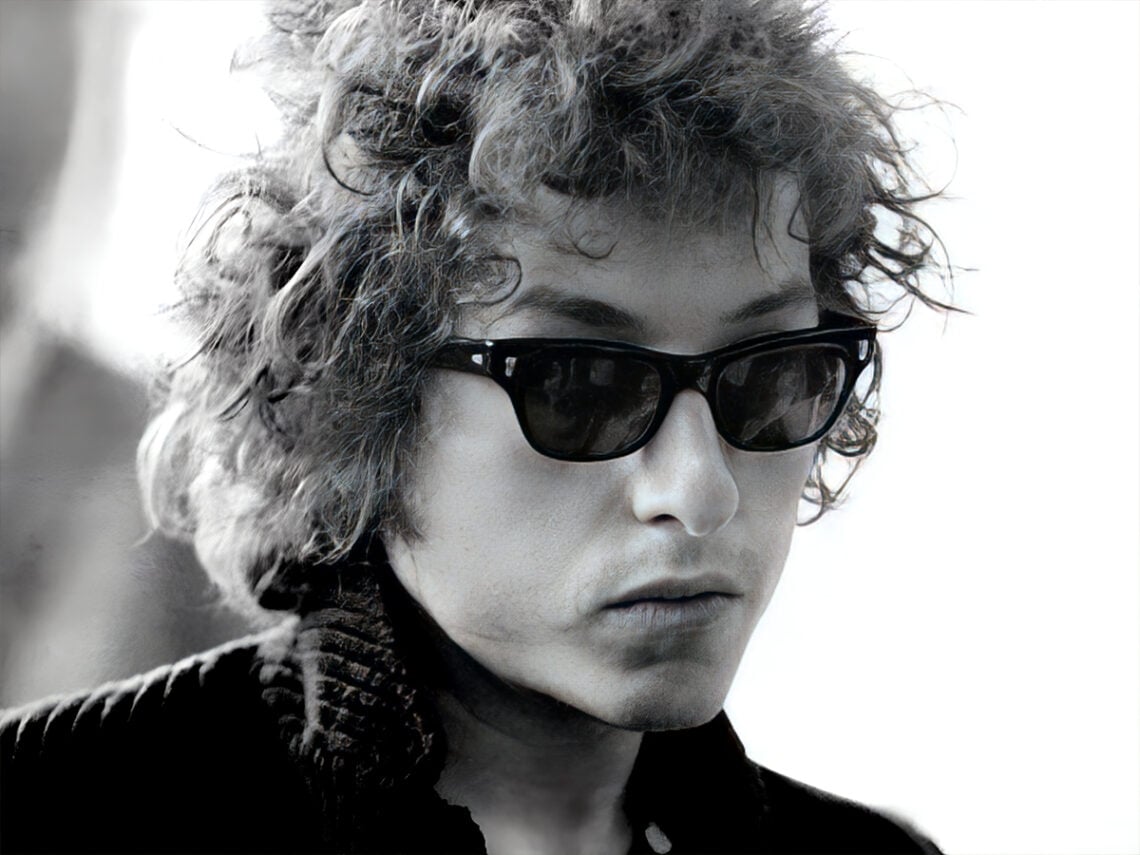
“The direction where music had to go”: The masterpiece that changed Bob Dylan’s outlook

In 1963, Bob Dylan just about reinvented the musical wheel. The Freewheelin’ Bob Dylan is undoubtedly in the running for the greatest album of all time, but part of that brilliance goes way beyond the music itself—it paired poetry and introspection with music in such a way that no other record ever had. With it, he influenced everyone.
In The Beatles Anthology, John Lennon is quoted as saying: “In Paris in 1964 was the first time I ever heard Dylan at all. Paul got the record [The Freewheelin’ Bob Dylan] from a French DJ. For three weeks in Paris, we didn’t stop playing it. We all went potty about Dylan.” It showed them that if the pop culture revolution was going to make the imprint on society that it hoped, then it needed up its tonnage of depth.
In time, the Fab Four would meet the original vagabond, and Paul McCartney would later explain that he felt like he had uncovered “the meaning of life” that night, only to lose sight of it in a haze of marijuana moments later. And eventually, ‘Like a Rolling Stone’ would prompt McCartney to proclaim, “It seemed to go on and on forever. It was just beautiful … He showed all of us that it was possible to go a little further.”
However, Dylan was usually reticent about his praise in the other direction. It simply didn’t suit his folk style to get involved—being a fanboy was not becoming of a fellow who was also churning out lines like, “I hope that you die, and your death will come soon”. Nevertheless, The Beatles were bound to have been in his mind when he went electric.
The Liverpudlian lads were tapping into the pop and fizz of the zeitgeist, creating a brand of rock ‘n’ roll that buzzed with a bopping zap, and a fair share of weirdness, too. Dylan, likewise, was looking to channel the times. From the get-go, his mission was to defy the dated Greenwich Village mentality of folk ‘authenticity’ uber alles. He ditched the notion that you had to perform bygone murder ballads to be worth your salt. Thus, the Fab Four became purveyors of an electronic connection to the masses that he coveted, and ‘I Want To Hold Your Hand’ was the track that made him borrow their Mersey beat.
Speaking about the classic track released only a matter of months after The Freewheelin’ Bob Dylan he said of the meek tale of palm-to-palm affection: “They were doing things nobody was doing. Their chords were outrageous, just outrageous, and their harmonies made it all valid. You could only do that with other musicians. Even if you’re playing your own chords you had to have other people playing with you. That was obvious. And it started me thinking about other people.”
Dylan’s head had been turned by the adrenalised triumph of ‘I Want to Hold Your Hand’. In his view, it typified the energy of the band—a facet that exemplified their appeal. Four chords on an acoustic had a power of its own, but it was looking like a power of the past. ‘I Want to Hold Your Hand’ might have been a tad kitsch but that was to be expected in the commercial charts for a young band finding their feet.
As Dylan explains, “Everybody else thought they were for the teenyboppers, that they were gonna pass right away. But it was obvious to me that they had staying power. I knew they were pointing the direction of where music had to go.” That’s high praise indeed from a star who has done more for the development of music than, well, anyone.
What’s more, he retains that respect to this day. Commenting on the friend he helped to shape and, in turn, was shaped by himself: “I mean I’m in awe of McCartney. He’s about the only one that I am in awe of. But I’m in awe of him. He can do it all and he’s never let up, you know. He’s got the gift for melody, he’s got the rhythm. He can play any instrument.” For a man who was reticent with his praise, for once, you can just about start hollering, ‘Get a room, mate!’
Evidently, Dylan was enamoured, and now his punk mission was to drag the literary tenets of folk kicking and screaming towards a marriage with the invigorating energy of rock ‘n’ roll—the alloy of this unholy mix produced a musical renaissance period that we’re still positively reeling from. And Lord knows where we would be without it.

Never Miss A Beat
The Far Out Beatles Newsletter
All the latest stories about The Beatles from the independent voice of culture.
Straight to your inbox.