


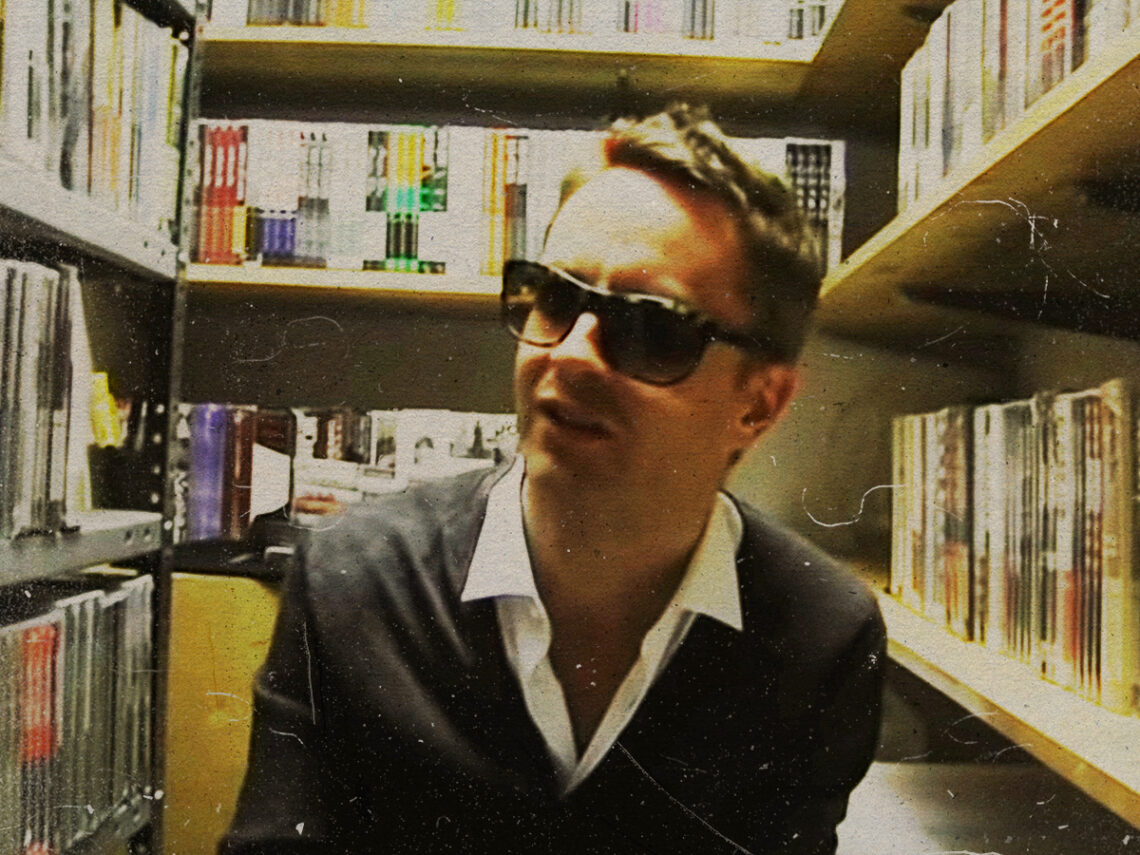
“Master”: the director Nicolas Winding Refn has “stolen many things from”

There was a point, sometime in the infancy of the new millennium, that the Danish director and screenwriter Nicolas Winding Refn was tipped to be the next Stanley Kubrick, Quentin Tarantino and Martin Scorsese all rolled into one, with his crime films pulsing with a distinct style that oozed meticulous perfection. While this reputation was short-lived, coming to an abrupt end in 2013, there’s no doubt that Refn is still a talented cinematic force.
Emerging in the independent circuit with his dark and grisly Pusher trilogy, which introduced actor Mads Mikkelsen to the industry, Refn gained a reputation for his intimate portrayals of authentic violence. While Pusher and each of its sequels kept within the boundaries of realism, his 2008 follow-up, Bronson toyed with experimentation and distinct stylisation, which would later come to define the director’s style.
The hype around the Dane steadily mounted until the release of Drive in 2012 sent fans into overdrive, with Ryan Gosling starring in a neon-lit contemporary noir tale about a stuntman who enjoys a side hustle as a criminal and getaway driver. Capturing the mood of the cultural zeitgeist in the early 2010s, Drive became a major indie hit, earning over $80million from a budget of just $15m.
Refn’s career has never again hit the same heights, however, opting to go down a heavily stylised route in his later works that doubled down on the neon purple colour palette that was merely hinted at in Drive. Slapping these neon lights over 2013’s Only God Forgives, and 2016’s Neon Demon washed away all actual substance, making his two most recent feature films totally self-indulgent.
His efforts to emulate his biggest cinematic inspiration, Russian filmmaker Andrei Tarkovsky, are, indeed, lost in many of his movies, even if he admits to having “stolen many things from him,” as stated in his visit to the iconic Criterion closet. Calling the director a “master” before naming 1979’s Stalker as his favourite of his oeuvre, little of the true mysticism and professionalism of his storytelling can be found in a Refn film.
The film that shares the most with a Tarkovsky epic is 2009’s action flick Valhalla Rising, which tells the story of a mute protagonist who is forced to be a slave fighting for survival. Though quite different from the Russian auteur’s movies in its narrative, its stylistic elements at least share some similarities, with the barren sweeping vistas of the countryside having shades of 1986’s The Sacrifice.
Take a look at Refn rummaging through the Criterion closet back in 2014 below.
