


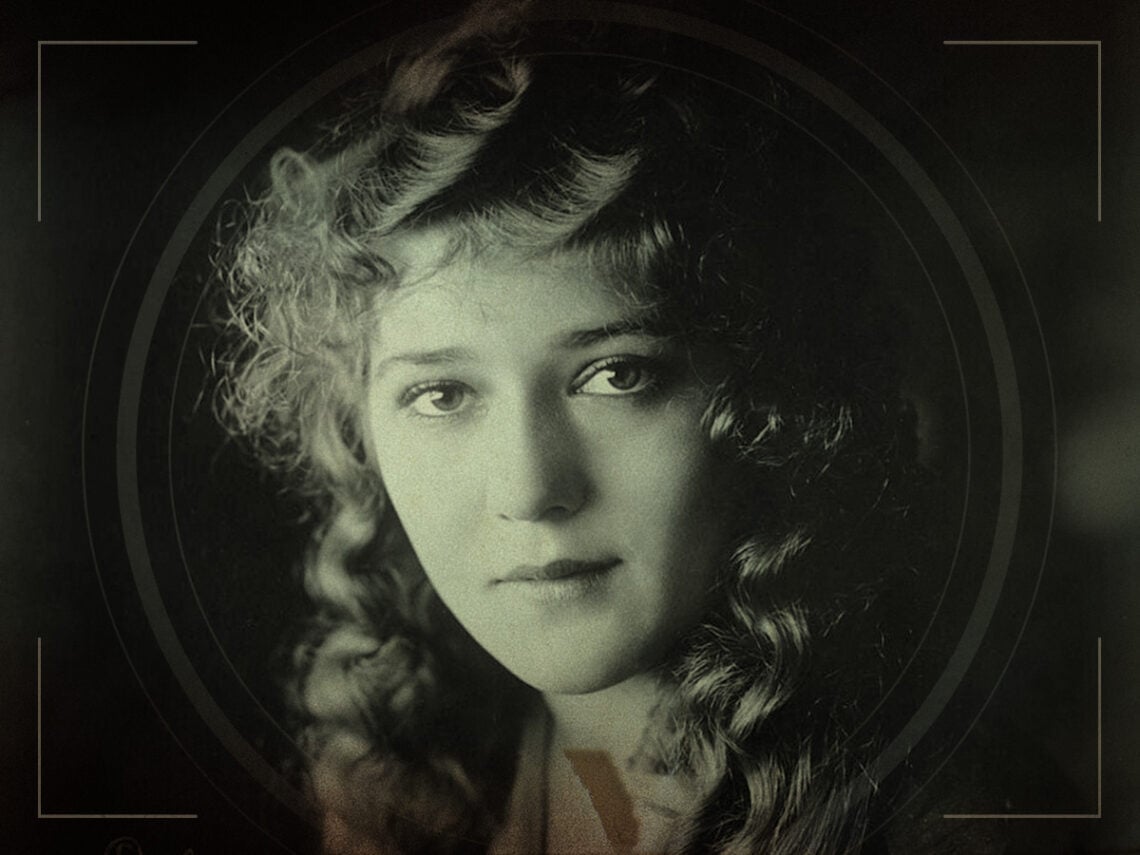
How Mary Pickford became Hollywood’s first movie star business mogul

In 1916, American women couldn’t vote, own property without their husbands’ consent, or serve on juries. But in Hollywood, one woman held an unprecedented amount of power. Mary Pickford was the first movie star, and, more than a century later, is still one of the most powerful figures – male or female – in film history.
She broke into movies after a fledgling career on Broadway, catching the attention of pioneering filmmaker DW Griffith after a brief screen test in 1909. She signed a contract with his production company, Biograph, and appeared in a staggering 51 movies that year. Even though she quickly gained a following, she was known simply as the ‘Biograph Girl’ because, at the time, actors’ names were not listed in the credits.
After signing a contract with Famous Players-Lasky (later Paramount) in 1913, Pickford’s profile continued to expand. Unlike other actors who appeared in the brand-new medium, she recognised that acting for the camera was different than acting for a theatre audience. Her expressions were less exaggerated and her movement was more naturalistic. Audiences fawned over her performances in movies like Caprice and Hearts Adrift, and she eventually demanded became the first star to have her name included in the marketing of her movies.
Even now, many aspiring actors struggle to know their monetary value and demand the corresponding compensation. That’s why agents exist. But in the 1910s, when women weren’t allowed to open bank accounts, let alone negotiate salaries, Pickford was a savvy businessperson who made sure she benefited from the money she was making for her studio.
Becoming a household name around the world gave her immense leverage, and in 1916, she made the most of it by renegotiating her contract with Famous Players-Lasky. It provided her with a then-unheard-of $10,000 a week plus complete control over every movie she starred in, something that many top directors nowadays (let alone actors) don’t even get.
Most crucially of all, however, she had the ingenious idea of securing 50% of the profits for each of her movies, something that would become one of the most lucrative avenues for future generations of movie stars. Everyone from Cary Grant and Sandra Bullock to Tom Hanks and Julia Roberts have followed in her footsteps, raking in millions of dollars by betting on the power of their own stardom.
All told, this new contract brought Pickford a salary of more than $1 million, the equivalent of more than $22m in 2025. None of this would have happened if she hadn’t asked for it. She may have won the genetic lottery, but there is a very easy-to-imagine scenario in which Pickford was wildly famous as a star but never a pioneer as a business mogul. She had no blueprint to work from, but had the instincts to capitalise on her popularity in a way that few actors since have been able to approach, let alone match.
Three years after becoming the first actor to earn a $1 million salary, she became a founding member of United Artists alongside Charlie Chaplin, Griffith, and her husband, Douglas Fairbanks. The independence allowed her to produce and distribute all of her movies, which, again, is a level of control that few actors have had in the years since.
The irony of her financial success is that it was built on stereotyping women as delicate children. Pickford was known for playing not just childlike ingénues, but actual children, even into her thirties. It’s hard to imagine her finding equal success had she played the sort of powerful, business savvy woman that she was in real life.
