


The Marvel movie that almost stopped ‘The Substance’ in its tracks: “I held on so tightly”

For years, horror has been sidelined during awards season in favour of emotional dramas, biopics, and even musicals, leaving the genre struggling to find the acclaim it often deserves despite its dedicated fanbase. Yet, with the release of The Substance in 2024, horror seems to be finally getting that recognition, earning various Oscar nominations and other accolades from prestigious institutions.
Directed by French filmmaker Coralie Fargeat, The Substance blends satire and horror to create a highly stylised vision of the quest for ultimate beauty in the face of patriarchal values that cast middle-aged women into the abyss – no longer seeing them as desirable. The perfect casting choice was made in the form of Demi Moore, an actor who was seen as ‘in her prime’ in the 1990s, appearing in many successful (and not-so-successful) movies that established her as a star.
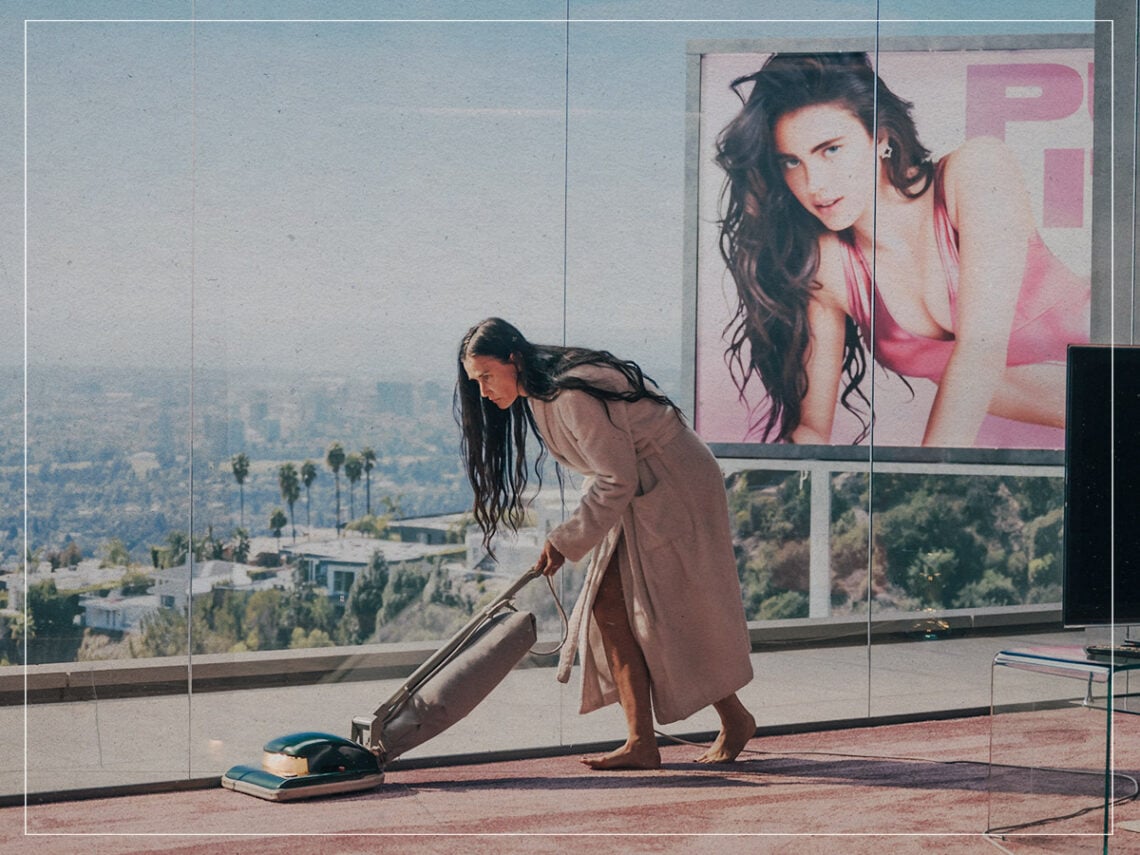
Yet, by the following decade and beyond, Moore’s career declined significantly, and her star power faded fast. Fargeat clearly saw her potential to lead a darkly humorous movie that followed an ageing star, Elisabeth Sparkle, as she reckons with her position in the industry, one seemingly defined by men who decide whether a woman is attractive enough. Despite being in shape, she is fired from her job as the presenter of an exercise show, leading her to take the mysterious titular drug that will allow a younger, better version of herself to emerge (quite literally).
Margaret Qualley plays this younger version, Sue, who crawls out of a nasty wound in Elisabeth’s back and takes her role on the show instead. Events spiral into chaos as Elisabeth and Sue struggle for dominance, resulting in Elisabeth’s body descending into a state of deterioration – her legs breaking and her fingers turning black. In the end, Monstro Elisasue forms a monstrous amalgamation of the two, representing the pain and anguish of these women’s treatment as beautiful objects rather than individuals.
Considering that Barbie was the leading feminist film of the previous year, The Substance offers up a much more grotesque and honest look at beauty standards, patriarchy, and female ageing that refuses to hold back. There’s a sharp contrast between the two, with Fargeat opting for a much more brutal and necessary approach to feminism than Greta Gerwig’s somewhat sanitised look at female issues. It seems as though Fargeat is keen on sticking to her creative impulses, even if they have the potential to isolate viewers with their visceral nature.
Thus, it’s unsurprising to hear that Fargeat turned down the opportunity to direct a Marvel film in favour of The Substance. While she was working on the Golden Globe-winning and Oscar-nominated horror, the filmmaker was in talks with the superhero factory to helm Black Widow, but she knew she had to turn the blockbuster down so that she could bring her shockingly gross and biting feminist satire to life.
“I held on so tightly during the making of the film and the difficult post-production phase when everyone wanted me to make it less violent, less excessive, less gory, less frontal,” Fargeat told Variety. “I knew that I had written this film to be more than — or at least at the same level as — what I’m denouncing in the film.”
“This violence is not delicate. It’s not small. It’s not kind. It doesn’t smile. It’s something overpowering,” she added. “And I knew that to be true to the story I wanted to tell, the film had to show it, make people feel it, and, above all, not censor itself at all on the level of intensity.”
So, while Fargeat could’ve opted for a safer approach to feminism – perhaps in the form of a female-led Marvel Studios movie, she knew that her original idea for The Substance was something she had to pursue at all costs.
