


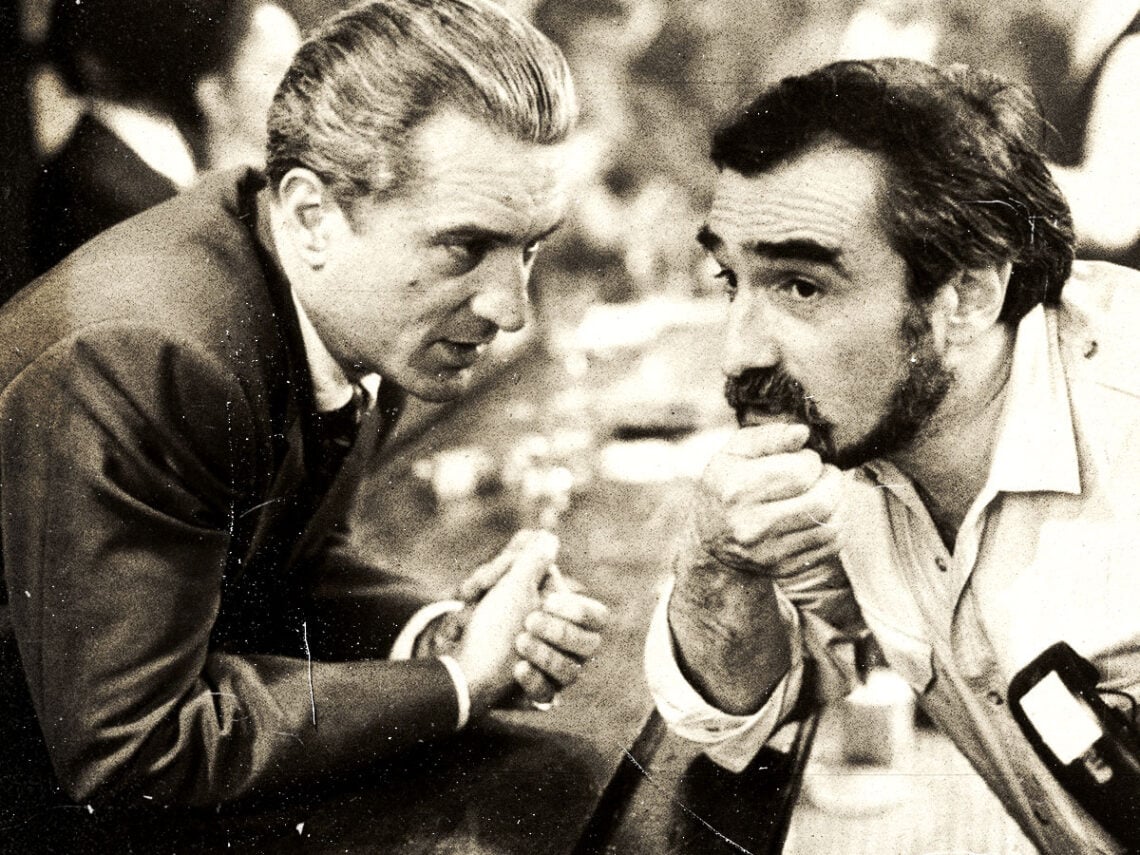
Martin Scorsese names Robert De Niro’s “best performance ever”

There are few cinematic duos that can challenge the dynamism of Martin Scorsese and Robert De Niro, save for perhaps Alfred Hitchcock and James Stewart, Quentin Tarantino and Samuel L. Jackson, or Akira Kurosawa and Toshiro Mifune. Working together on ten different occasions and counting, De Niro and Scorsese have made some of the greatest movies of all time, from 1973’s Mean Streets to 2023’s Killers of the Flower Moon.
Introduced to the actor through Brian De Palma in the 1960s, De Niro and Scorsese soon found a magnetic working partnership, working symbiotically to elevate each other’s work. Although their collaborations began with Mean Streets, they would become better known for such classics as the 1974 Palme d’Or winner Taxi Driver and the 1980 sports drama Raging Bull, for which De Niro would win the Oscar for ‘Best Leading Actor’.
Following a remarkable decade, Scorsese entered the 1980s with a new sense of liberation, with studios willing to give the filmmaker the budget to follow any creative venture he wanted. This led to such eclectic releases as the peculiar comedy After Hours in 1985, the unusually cliched The Color of Money in 1986, and the religious epic The Last Temptation of Christ in 1988, which De Niro almost took the starring role in.
At the start of the decade, however, following the success of Raging Bull, Scorsese took to the satirical drama The King of Comedy with his acting partner, delivering a complex movie during a moment of great hardship for the filmmaker.
“We decided to do The King of Comedy and there was an imminent director’s strike looming,” the filmmaker penned in the 1989 book Scorsese on Scorsese, “Physically, I didn’t feel ready. I shouldn’t have done it and it soon became clear that I wasn’t up to it. By the second week of shooting I was begging them not to let me go on. I was coughing on the floor and sounding like a character from The Magic Mountain”.
Continuing, Scorsese recalled: “By this stage we were shooting every day from 4 to 7pm, for three intensive hours. The whole film took 20 weeks to shoot. The director always sets the pace and maybe a faster cameraman would have got me moving. But I didn’t do it, so what went wrong is really all my responsibility. But I don’t feel anything went wrong in front of the camera”.
A timely drama about the obsession of fame and the allure of the media lights, Scorsese’s film, written by Paul D. Zimmerman, told the story of Rupert Pupkin (De Niro), an enthusiastic yet incapable comedian who is willing to do anything it takes to get to the very top of his game. Making just $2.5million from a $19m budget, the film was a commercial flop and lacked the critical acclaim to back it up.
Still, Scorsese fondly looks back on the film and his time with De Niro, even going as far as to say: “People in America were confused by The King of Comedy and saw Bob as some kind of mannequin. But I felt it was De Niro’s best performance ever. The King of Comedy was right on the edge for us; we couldn’t go any further at that time”.
Take a look at De Niro in the trailer for Scorsese’s 1982 comedy below.
