


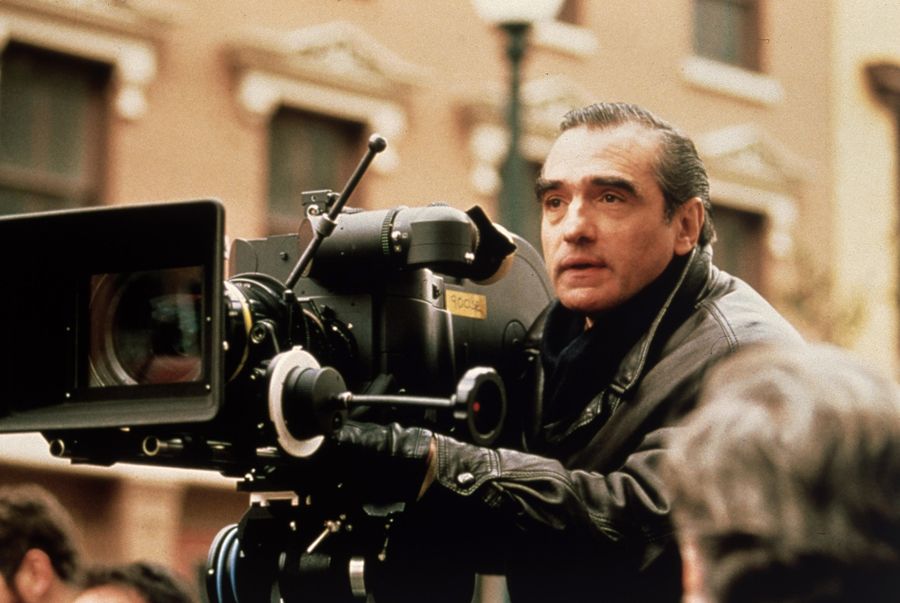
From Stanley Kubrick to Federico Fellini: Martin Scorsese’s favourite films of the 1960s

One of the Movie Brats, Martin Scorsese and his unwanted role as the greatest living director of all time continues to push on into the 21st century with aplomb. Seemingly only getting better with age, the man behind titles such as Taxi Driver, Goodfellas and The Irishman can put much of his success down to his unbridled commitment to the craft. A known perfectionist and love of cinema, what Scorsese doesn’t know about the art of creating award-winning pictures isn’t worth knowing.
“I prefer the escapism of fantasy, rather than the escapism of incredible sentimentality,” Scorsese once said of his storytelling ability. “What I’m afraid of is pandering to tastes that are superficial. There’s no depth anymore. What appears to be depth is often a facile character study…but they’re making a product, and a product’s gotta sell. Movies touch our hearts and awaken our vision, and change the way we see things. They take us to other places, they open doors and minds. Movies are the memories of our lifetime, we need to keep them alive.”
It’s a natural affinity with his art form that has meant Scorsese is often seen as the de facto leader of arthouse cinema, even if he is able to operate within the mainstream. It’s why, when Scorsese labelled superhero movies as “amusement park” entertainment, the world stood up and took notice. At least for a little while. It’s also why Scorsese has often been asked for, and usually dutifully obliged to provide, his own run of movie recommendations for everything from classic gangster flicks to his favourite British films.
While the director is knowledgeable enough to pick out a list of esteem in any genre, in truth, Scorsese’s genuine love of cinema spawned from the 1960s. Like many directors of his generation, he was enraptured by the countless creative movement cinema heralded during the decade and has long since been a proponent of getting people, especially budding filmmakers, to return to such classic titles. Below, we’ve been across his list of recommendations and selected his favourite films of the 1960s.
A classic pick on most people’s lists, when discussing the iconic Federico Fellini film 8½, Scorsese said the project “has always been a touchstone for me,” in an interview with Criterion. Scorsese goes on to praise “the freedom, the sense of invention, the underlying rigour and the deep core of longing, the bewitching, physical pull of the camera movements and the compositions” of the film.
A similar note of admiration and appreciation can be seen when Scorsese is discussing Jean-Luc Godard classic film Contempt; Scorsese describes the work as “one of the most moving films of its era.”
He added: “Over the years, it has grown increasingly, almost unbearably, moving to me,” in an interview with Criterion. “It’s a shattering portrait of a marriage going wrong, and it cuts very deep, especially during the lengthy and justifiably famous scene between Piccoli and Bardot in their apartment: even if you don’t know that Godard’s own marriage to Anna Karina was coming apart at the time, you can feel it in the action, the movement of the scenes, the interactions that stretch out so painfully but majestically, like a piece of tragic music.”
The inclusion of Luchino Visconti film The Leopard should come as little surprise to those who have followed Scorsese’s career choices over the years and, in numerous interviews, how the director has referenced those who have inspired him. When discussing Visconti in previous years, Scorsese said: “He has often been referred to as a great political artist, but that’s too limiting and frozen a description,” with renewed admiration.
“He had a strong sense of the particular manner in which absolutely everyone, from the Sicilian fishermen in his neorealist classic La Terra Trema to the Venetian aristocrats in Senso, was affected by the grand movements of history,” he added.
Across the entire list are esteemed directors and bonafide Hollywood royalty, including Alfred Hitchcock, Stanley Kubrick and Akira Kurosawa, perhaps three of the most obvious names to take their place on Scorsese’s own personal filmmaking Mount Rushmore. But, thanks to Edgar Wright and the Empire podcast, there is also a reem of lesser-known British directors too, with perhaps Seth Holt being the pick of the bunch.
If you’ve just picked up a love of cinema, and we mean real cinema, then the 1960s is the only place for you to begin your journey of discovery. With so many avenues and roads to follow, it’s always good to have a tour guide and, you can trust us when we say there is no better guide than Marty.
Martin Scorsese’s favourite films from 1960s:
- High and Low – Akira Kurosawa (1963)
- Rocco and His Brothers – Luchino Visconti (1960)
- Shoot the Piano Player – François Truffaut (1960)
- Breathless – Jean-Luc Godard (1960)
- Band of Outsiders – Jean-Luc Godard (1964)
- Il Sorpasso – Dino Risi (1962)
- L’avventura – Michelangelo Antonioni (1960)
- Blow Up – Michelangelo Antonioni (1966)
- Before the Revolution – Bernardo Bertolucci (1964)
- Weekend – Jean Luc-Godard (1967)
- Death by Hanging – Nagisa Ôshima (1968)
- 2001: A Space Odyssey – Stanley Kubrick (1968)
- 8½ – Federico Fellini (1963)
- Contempt – Jean-Luc Godard (1963)
- The Haunting – Robert Wise (1963)
- The Innocents – Jack Clayton (1961)
- The Leopard – Luchino Visconti (1963)
- One Eyed Jacks – Marlon Brando (1961)
- Psycho – Alfred Hitchcock (1960)
- Salvatore Giuliano – Francesco Rosi (1962)
- Le Doulos – Jean-Pierre Melville (1962)
- Mafioso – Alberto Lattuada (1962)
- Point Blank – John Boorman (1967)
- Station Six Sahara — Seth Holt (1962)
- The Nanny — Seth Holt (1965)
- Guns at Batasi —John Guillermin (1964)
- A High Wind in Jamaica — Alexander Mackendrick (1965)
- Night of the Eagle — Sidney Hayers (1962)
- The Flesh and the Fiends — John Gilling (1960)
- Taste of Fear — Seth Holt (1961)
- The Damned — Joseph Losey (1963)
- Plague of the Zombies — John Gilling (1966)
- Quatermass and the Pit — Roy Ward Baker (1967)
- The Devil Rides Out — Terence Fisher (1968)
- Whistle and I’ll Come To You — Jonathan Miller (1968)
- The Pumpkin Eater — Jack Clayton (1964)
- The Innocents — Jack Clayton (1961)
