


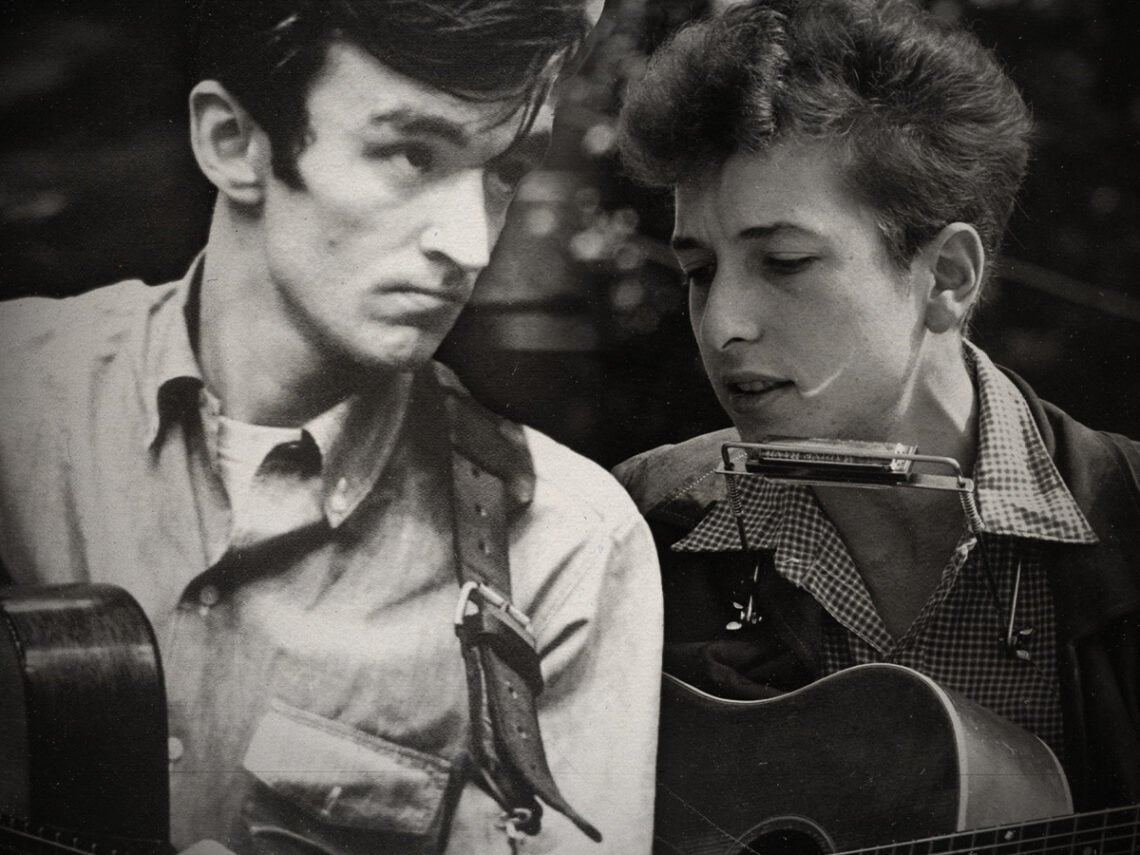
Boy from the North Country: Martin Carthy, the man whose songs taught Bob Dylan “a lot”

Bob Dylan loves a birthday.
He is always quick to celebrate the birthdays of those around him, those he admires and those he remembers fondly. In recent years of unlikely social-media activity, Dylan has posted warm, humorous and reverent birthday messages to Tracey Chapman, Shostakovich, Pete Townshend, Dock Boggs, Ricky Jay and Mary Jo.
Between 1981 and 2010, he even played ‘Happy Birthday’ live in concert ten times, singing the song to various band members who were skipping a party to play with him that night, including Howie Epstein, who he even presented with a cake onstage, and George Receli, and more recently sang the song on the occasion of Brian Wilson’s 80th.
Luckily for a man who seems to enjoy birthdays so much, he has had a staggering 85 of them himself. But he isn’t the only legendary folk-singer who turned 85 this past May.
Born three days before Dylan on May 21st, 1941, and 4000 miles away, in Hatfield, Hertfordshire, Martin Carthy is as important, and arguably more foundational, to the British folk scene of the 1960s as Dylan was to the American folk movement during the same time period. First through Dylan himself, and then later Paul Simon, his impact was felt across the pond, as well.
And Dylan knows it as well as anybody. Speaking in a pre-recorded message at a celebration event last year held in celebration of the long life and career of Martin Carthy, Dylan said that “I’m so sorry I can’t be there to join in the celebration, but I want to let you know, as if you don’t already know, that your songs and your melodies have been with me since we first met, back at the King and Queen club, in that dreadful winter of ‘61.”
“We’ll meet each other down the line somewhere”, he finished, “Stay well, and keep playing”.
They actually first crossed paths in the dreadful winter of ‘62, later referred to by Britons who lived through it as ‘The Big Freeze’, when Dylan first visited England. In London to take part in a now-lost television play The Madhouse on Castle Street, Dylan ensured he did the rounds of the folk clubs, cafes and bars, including stops to meet Martin Carthy first at the King and Queen Club, The Singers Club, and the now legendary Troubadour.
Most recently, the two were reunited backstage at the London Palladium, when Dylan brought his Rough and Rowdy Ways tour to these isles for the first time. Speaking to Ray Padgett for the superlative Pledging My Time: Conversations with Bob Dylan Band Members, Carthy recounted how the pair “basically fell into each other’s arms”.
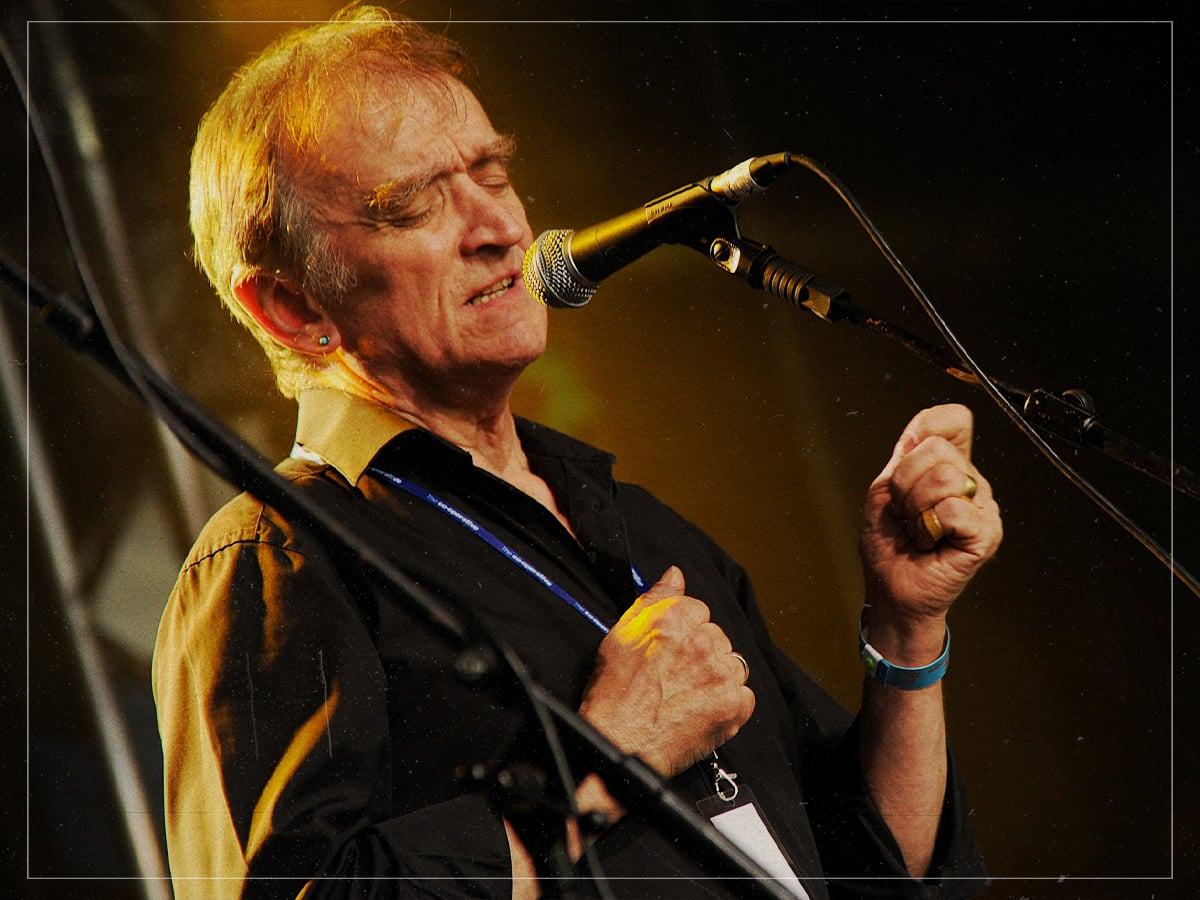
Carthy, who now lives in North Yorkshire, said that “I happened to be down that way, and I got a message. So I walked into the room, and it was arms around, just hugging. ‘I haven’t seen you for ages. How are you doing?’”
When Padgett pointed out that Dylan’s 2022 show would have been so different from the performances the pair shared 60 years earlier at the Troubadour, Carthy came back with “Well, he’s the same bloke. He’s developed astonishingly. It seems to me that he’d actually gone to school in a way, and just worked on his singing, worked on his playing. Worked on everything.”
Some of Dylan’s early musical education and schooling came from Carthy himself, as the former acknowledged in the liner notes to the 1985 release Biograph, where he said that “Martin Carthy’s incredible. I learned a lot of stuff from Martin”.
When the pair got together in that dreadful winter, Carthy had never actually heard Dylan sing before, though he was aware of songs like ‘Blowin’ in the Wind’ and ‘Song to Woody’, whose chords and lyrics had been featured in a then-recent edition of the folk-favourite magazine Sing Out!.
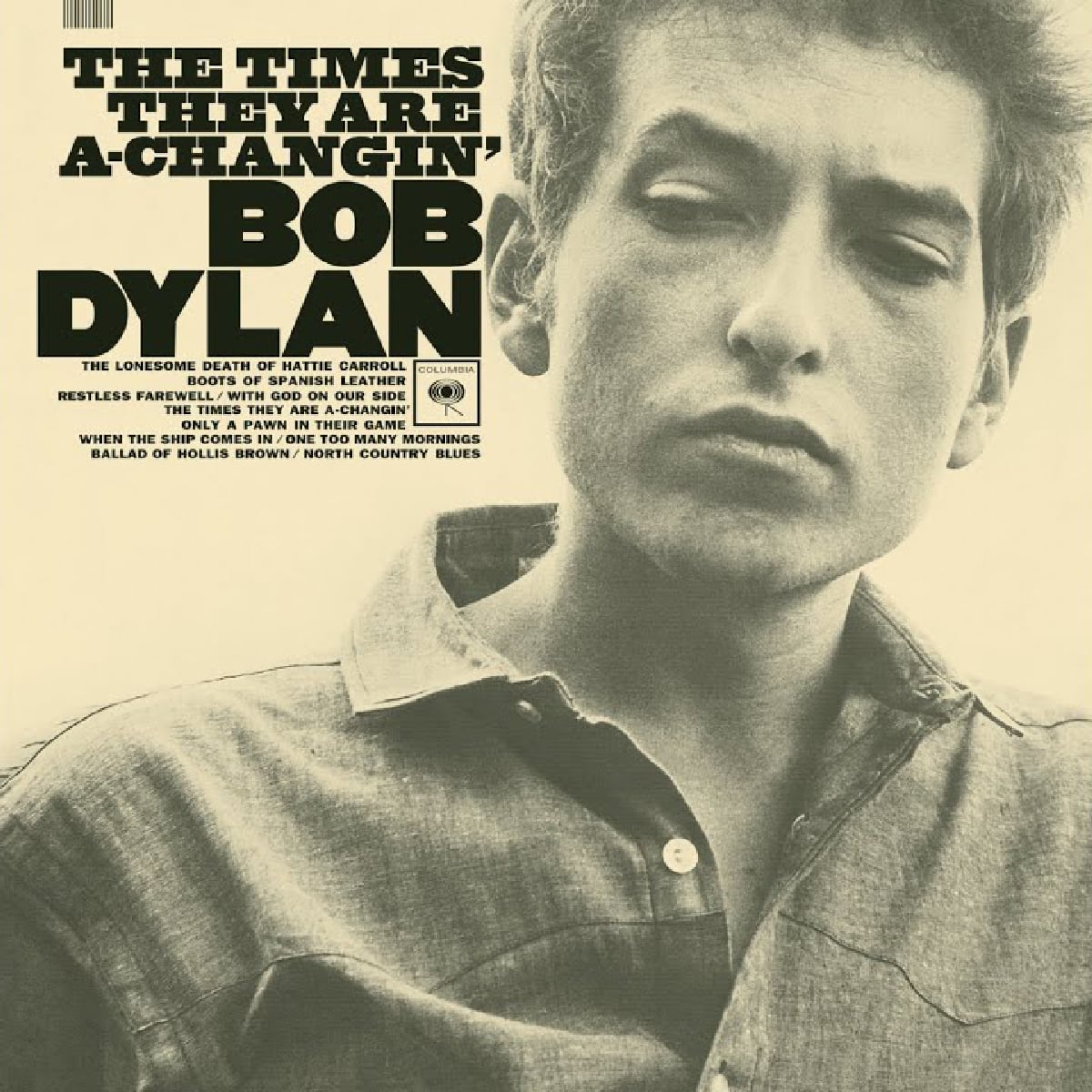
Dylan made it to England before his 1962 debut album did, and upon arrival, gave a copy to Carthy to listen to. In his must-read new book Dylan Revisited: Busy Being Born (1960-66), Colm Larkin writes that Dylan told Carthy when he was handing over the album that “it’s no good, but the next one is great”.
Carthy would go on to have a big impact on the greatness of the next album (and on one of the songs from the one after that, too). He was thoroughly impressed with Dylan’s singing, playing, power as a performer and repertoire. Larkin lets us know that Carthy actually had to convince Dylan to perform at the King and Queen in the first place, but that, having finally relented, in Carthy’s words, Dylan “blew everyone away” and was “totally in charge”. And it seems that the appreciative feeling was mutual.
Carthy recalled how, after playing the traditional English child-ballad ‘Scarborough Fair’ for his American counterpart, Dylan begged Carthy to “teach me that, teach me that”. The lessons didn’t get off to a flying start, though, as the Brit noted, “He wanted to do it with a flat pick, though he’s a perfectly good finger-style player”.
It was only when Dylan returned to London from a trip to Rome that he showed Carthy he had managed to master the finger-picking of ‘Scarborough Fair’ after all, only in the most Dylan way possible: by taking something old, incredibly old, really, and turning it into something new. Toying around with the guitar pattern he’d been taught, he changed the words and wrote the timeless ‘Girl From the North Country’, which would soon feature on his next album, The Freewheelin’ Bob Dylan, and he had begun to work on a second song in a similar musical mode, to be called ‘Boots of Spanish Leather’.
Then, as he is now, Carthy was impressed by the lessons Dylan had learnt, and at the speed with which he’d learned them, and appreciated that the appropriation was part of the folk process and tradition, though he was less pleased when Paul Simon did something similar when he later taught him the same age-old song, and Simon subsequently used the arrangement directly for his own version of ‘Scarborough Fair’ on the ultra-twee 1966 Simon & Garfunkel album Parsley, Sage, Rosemary and Thyme without acknowledging the traditional heritage of the song or Carthy’s arrangement of it in the album credits or liner notes.
Carthy himself had learned the ‘Scarborough Fair’ from fellow folk-royalty Ewan MacColl and Peggy Seeger, and has also credited Big Bill Broonzy, Elizabeth Cotton and Sam Larner as major inspirations in his playing style and performance; as well as the jazz guitarist Diz Disley, who he regularly played with at the Troubadour and the members of the Thameside Four, who he joined in the early 1960s and who, according to him, had a “massively mixed repertoire. “Marion [Grey] sang a lot of gospel songs and Redd [Sullivan] sang lots of shanties and had a repertoire of Australian songs, including a lot of new stuff that was being written in Oz. Everything was exciting!”
Part of the folk process is in the passing down of all that learning; in the sharing of songs and growing a common bank of material together, and singing them with your teachers and pupils alike. In doing just that, Martin Carthy wasn’t just a pupil himself, but soon became a teacher to not only just his own, but also to the next generation of folksingers, like Richard Thompson and Billy Bragg.
Recently, Carthy’s family revealed that the octogenarian legend has been diagnosed with late-onset Alzheimer’s disease and subsequently announced his retirement from live performance, while Dylan continues to tour relentlessly and is rumoured to be returning to Europe for another run of dates this winter. He last played ‘Girl From the North Country’ at a show in Muncie, Indiana, on November 2nd, 2019.

Never Miss A Tale
The Far Out Bob Dylan Newsletter
All the latest stories about Bob Dylan from the independent voice of culture.
Straight to your inbox.