


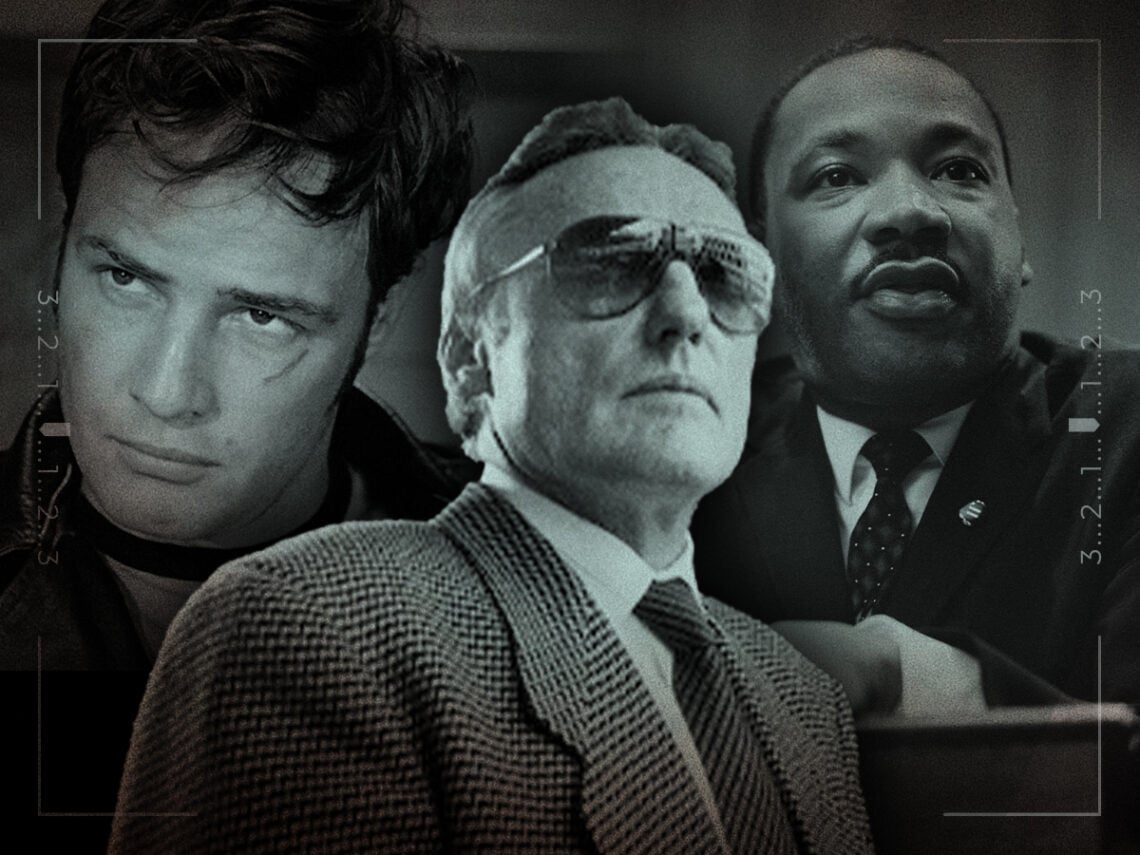
How Marlon Brando and Martin Luther King Jr gave Dennis Hopper a Jesus complex: “He was convinced”

Even without the drugs and debauchery that defined his most infamous years, Dennis Hopper would still be a pretty weird guy. They didn’t help with his paranoia, though, and things got so bizarre that he even developed a Jesus complex, thanks to an assist from two of the most unlikely cohorts.
Hopper was a vocal proponent of the civil rights movement in the 1950s and 1960s, not only as a participant. He was a keen photographer when he wasn’t required on set, and Hopper’s images captured during various marches were widely published, most famously his snaps from Martin Luther King Jr’s 1963 ‘March on Washington’ and the 1965 march in Selma, Alabama.
The Easy Rider architect met King through Sidney Poitier, who introduced him to the face of the civil rights movement, Rosa Parks, and Harry Belafonte when they were at the Chateau Marmont on Sunset Boulevard in the ’50s, where Hopper was living at the time as a man of no fixed residence.
A couple of days before thousands embarked on the Selma march, Hopper was minding his business, strolling around Los Angeles, when a limousine pulled up beside him. The window rolled down, and Marlon Brando popped his head out. “What are you doing?” the iconic actor asked. “Nothing,” came the reply. “How would you like to go to Selma and Montgomery? We’re having a little march,” the Godfather icon inquired.
During the march, he was shocked by what he saw. The local authorities attacked sections of the gathered masses with clubs and tear gas, with March 7th, 1965, becoming known as ‘Bloody Sunday’. “There was a lot of violence going on all around us,” Hopper recalled. “It was pretty scary, actually going in there.”
He remembered “helicopters flying everywhere, and people screaming and yelling at us, waving Confederate flags,” and that constant threat of violence did nothing to help his paranoia. Brad Darrach, who spent two weeks with Hopper in the late ’60s when he was in Peru and in the throes of his drug abuse, couldn’t help but notice that the counterculture figurehead was acting stranger than usual.
“He accumulated weapons; he was convinced the FBI was having him shadowed,” Darrach noted. “Sometimes, he took a gun and stalked through the suburb where he lived, in search of agents who weren’t there.” If that wasn’t bad enough, he even began to envision himself as a Christ-like figure.

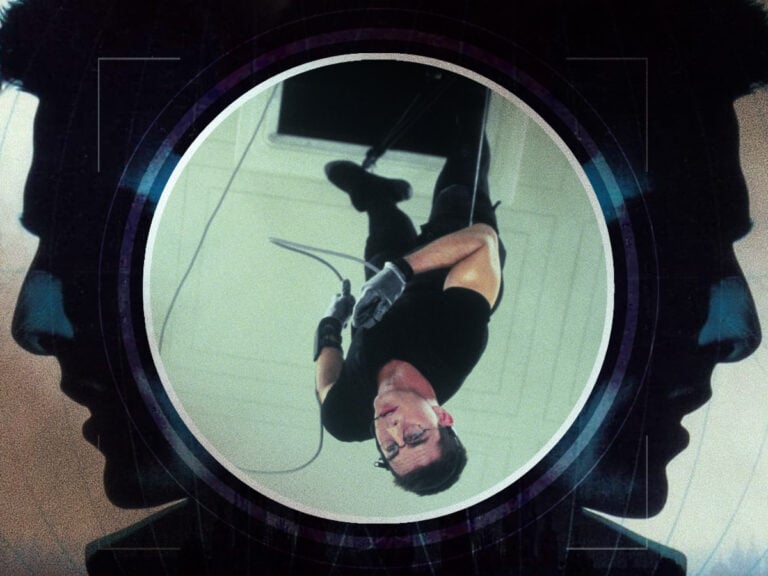

According to Darrach, “He found a portrait of Jesus that looks almost exactly like Dennis Hopper.” In most cases, that would be an odd coincidence, but in this instance, it was something else: “It still goes everywhere with him, and he was convinced that, like Christ, he was going to die in his 33rd year.”
At Brando’s urging, Hopper joined the marches in support of King, and while it would be unreasonable to blame those two for making him increasingly paranoid, especially for someone who was more fond of psychedelics and drug-addled trips than most of his peers, his up-close-and-personal exposure to those levels of state-sponsored violence didn’t do his mindset any favours, either.
