


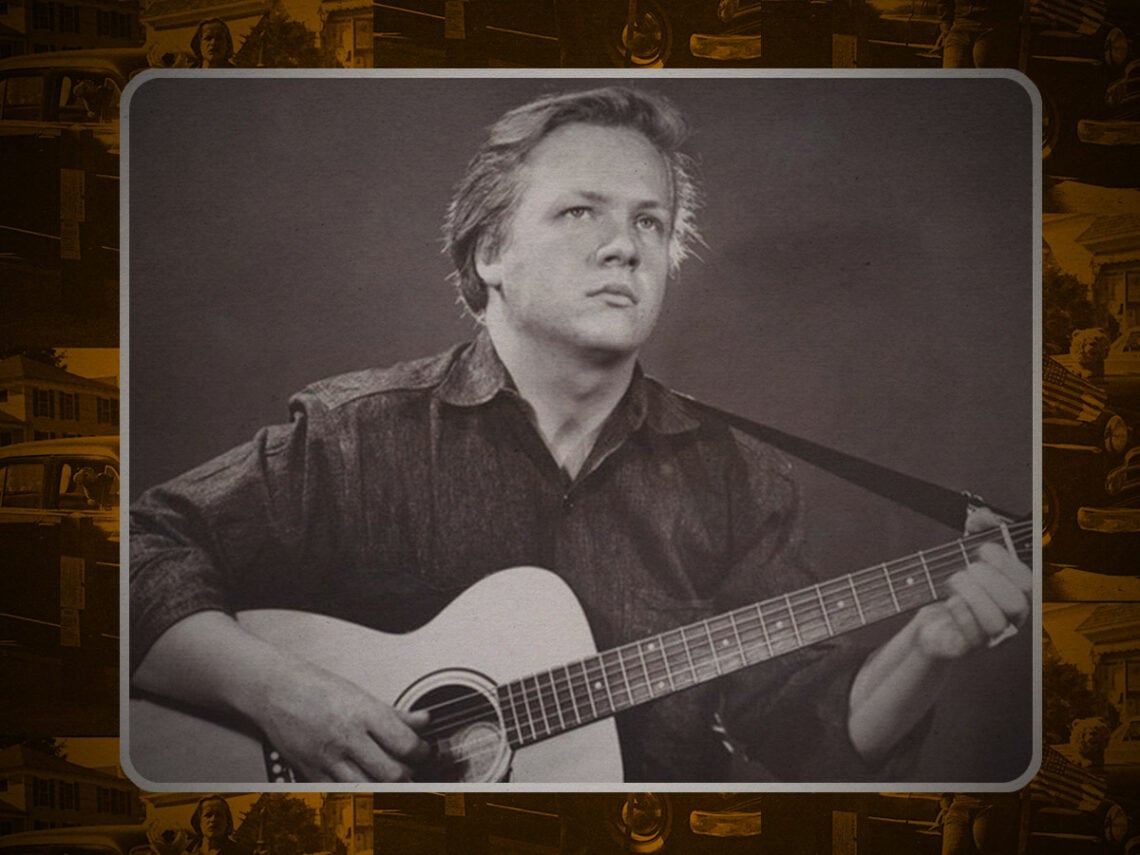
The high school in Cleveland behind the most tragic folk song in history

Bob Dylan once said that “folk is just bunch of fat people”.
The director Ethan Coen commented that Dylan’s quote in itself is a very folk thing to say. It’s folk because the dog-eared genre speaks to the human experience, and I’ll be damned if coyly disavowing the shit out of something you love isn’t just about as human as it gets.
So, while the dusty folk world of maudlin acoustics and sensible clothing might seem sombre sometimes, that ignores the fact that many of us find a strange comfort and cosiness in the melancholy of this world. Making art out of it and filling it with the hue of ‘collar to the cold and damp’ ambience is often the only thing that spares you from the true sharp edge of tragedy and injustice.
This is why music is the best thing that humans have ever come up with. It can dance all over problems and transfigures hardships into comforting tunes in such a way that it almost makes you gladdened that life is tragic after all. In fact, a lot of music is borne from turmoil itself, and when it comes to folk, tragedy and tunes are a harmonious match made in matrimony hell. The bittersweet chronicle of Jackson C Frank’s captivating debut album is testimony to this.
However, one song stands out as definitive within it. ‘Marlene’ may well be the saddest song of all time. That story is not just borne from its high school backstory, but the tale that unfurled out into the future after its fateful release. “I don’t believe in curses exactly,” says Jackson’s friend and biographer Jim Abbott, “But he sure was in the wrong place at the wrong time an awful lot of times.” The notion of a curse might be constrained to fiction, but Frank’s tale is every bit as stupefying as any broomstick fable fetched from a macabre library.

The first and most prominent of those wrong places forms the crux of ‘Marlene’. It is the ill-fated Cleveland Hill High School. On March 30th, 1954, the school caught fire. Fifteen of Frank’s classmates died in the resulting blaze, including his girlfriend, Marlene, the muse for his tragic reflective song. Jackson was in 6th-grade music class at the time. He emerged from the inferno with scars, both physical and emotional. They would pain him for a lifetim,e in which he grieved the loss of Marlene throughout.
“My friends in the bars, they only see the scars,” he sings in a mournful, hushed howl, “And they don’t give a damn that I loved you.” Now, the song stands as testimony to that love. Over a bruising melody, Frank jolts out words like the pained yelps of an old dog. But the darkness briefly makes way for harmonious exultation as Frank relishes in the moments when they “danced like two snowflakes in the falling wind” that he has managed to preserve in his troubled memory.
In the immediate aftermath of the fire, during his recovery in the hospital, he received the fateful gift of an acoustic guitar from his music teacher. While the guitar would provide an avenue of expression for his sorrow, it would do little to ameliorate that same spiritual pain in a life that seemed predisposed to affliction.
His musical talents bloomed from the fertile ground of despair, and he became one of the most revered artists in the early days of the famed Greenwich Village folk scene. He was described among it as a revered talent, a sort of leading light whom the likes of Bob Dylan and Paul Simon looked up to.
He eventually recorded his only album with Simon as producer in England, but sadly this did little to change his fortunes, even though it was a minor hit. The money and popularity that arrived from the record were poured into a profligate lifestyle of drinking.
And when the money dried up, the habit sustained. So, he had to leave England and return to the States. It was not a happy homecoming. He moved to Woodstock, seeking solitude away from the folks who pried on him in the hope of stealing his songs.
Things briefly settled favourably for him in Woodstock. Frank would marry and have two children, only for his son to pass away in infancy. His marriage failed after that, and the despair proved catastrophic, resulting in the singer being institutionalised. Periodically, he would be released from the institutions. During this time, he always returned to New York in the glim hope of tracking down Paul Simon.
It would seem in these interim periods between bouts of being institutionalised, he was seeking some sort of spiritual and financial resurrection. He saw Simon as the key to this. But ultimately, without any way to contact his estranged one-time producer, he ended up roaming the streets in a state of dereliction and homelessness.
This amble of abjection led him to a city bench. While relaxing under the sun, a group of teenagers with an air rifle fired a shot at him. It struck him in the face, permanently blinding him in one eye and impacting his health once again. He died of pneumonia on the streets of Massachusetts in 1999, a forgotten relic of the once-booming beatnik scene of which he was the authentic King.
Even by folk standards, that is a life with enough culminated hardships to make a thousand hard-luck artists rejoice in their relative good fortune and shun the four cursed chords of the acoustic in favour of disco-pop. So, when Frank sings, “I am a crippled singer,” it captures an eerie resonance. For a moment, it feels as dark as folk gets.
The song, however, is a paradigm for the power of music, because while the tale above might be heartbreaking, it’s because of his beautiful music that it’s being told and remembered. The song, despite the tragedy at its core, brings a sense of comfort. Somewhere within the scarred refrain of ‘Marlene’ – perhaps in the snowflake pastiche – there is a slight lilting hope. This fleeting transcendence defines the comfort of folk and cushions the blow as Frank is lifted from a cursed existence by sharing the burden of his sorrow in song.
As for the school as its heart, barring the annexe that was destroyed by the explosion, the school not only still stands, but is recently reconciling the loss and its impact itself. On March 21st, 2024, after years of campaigning, a new law was passed to mark March 31st as a county-wide day of remembrance.
Like the song before it, this move has turned the tragedy that hung over its halls each March into a more meaningful reconciliation of tragedy. Perhaps an eeriness remains where the commemorative boulder plaque now sits, but a semblance of comfort can be borne from the endeavours of the Union Free School District to ensure that such a tragedy never happens again.
