


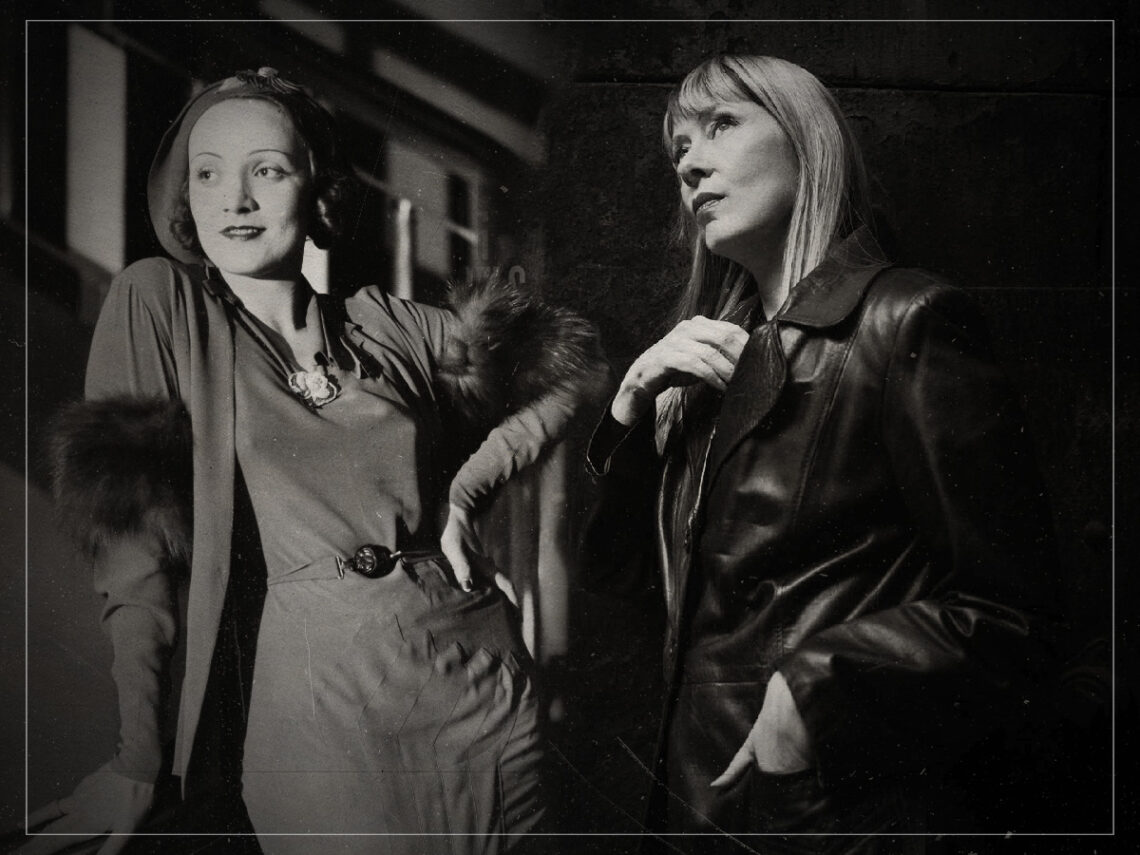
How Marlene Dietrich inspired Suzanne Vega’s most “truthful” song

There hadn’t been quite such a successful marriage of folk arrangements and pop production like Suzanne Vega.
Having played the cafes and small clubs across New York’s Greenwich Village in the 1980s, Vega’s poetic lyrical pen and unique songcraft would eventually lead her through the acclaimed Fast Folk series before landing a record deal with A&M. Releasing her eponymous debut in 1985, Vega achieved a rare feat, preserving folk’s rustic soul but layering her sound with keyboard washes that far from sounding dated over forty years later, enrich her numbers with stirring and evocative atmospheres.
Leading the album was ‘Marlene on the Wall’. An obvious cut with a sharper pop hook, Vega’s intriguing lyrical grapple with loneliness looked to one of yesteryear’s biggest Hollywood stars as a beguiling device to explore her ruminative wanderings, looking up to the black and white poster of German-American Marlene Dietrich on her bedroom wall as a glamorous witness to Vegas’ romantic strife in her early 20s.
“That was a truthful song,” Vega once told SongTalk. “The lines came out of my life. But you want to be careful, too, because you don’t want to get into ‘Oh, my boyfriend left me…’ I have a problem with specifically confessional songwriting. I think you have to craft it in some way. I don’t think you can come on stage and blurt out your innermost feelings.”
Masking her private reverie behind the guise of Dietrich’s frozen beauty, such thematic distance affords Vegas the freedom to disentangle her knotty romantic thoughts with more open revelation, whether exploring the uncertainty of her feelings, “Even if I am in love with you / All this to say, what’s it to you?”, to the advice the famously headstrong Dietrich might have given the young Vega, “’Don’t give away the goods too soon’ / Is what she might have told me.”
It turns out that Vega was a Dietrich fan before acquiring the famous poster. One night in her East Village apartment, the snippet from what’s believed to be 1931’s Dishonoured was heard before her archaic TV was warming up, playing the audio before the visual materialised on screen.
“You have led many men to death with your body,” Vega quoted when discussing ‘Marlene on the Wall’s genesis to 1986’s Royal Albert Hall audience. Still unable to see what was on screen, Vega recounted how she imagined what her response would be should a man make such a statement, before her fleeting daydream was interrupted by Dietrich’s ice-cool quip, “Give me a kiss.”
From then on, she was a fan, Vega gifted the Dietrich poster not long after overlooking much of her private life, later to help shape her debut album. While finding greater acclaim upon its later rerelease, Vega always harboured mixed feelings about her intriguingly wry yet sincere communiqué with the old Hollywood great and the ambiguous role Dietrich plays in ‘Marlene on the Wall’s lyrical snapshot.
“For me, personally, inside myself, I feel I had something in mind, and I kind of did it, it was stylish, it was interesting, but I didn’t feel it was quite the bullseye that some of the others were,” Vega concluded. “The idea of using a poster as a reference point is a very pop idea. It’s a song about Marlene Dietrich. You kind of get that from it, or it’s a song about a relationship.”
