


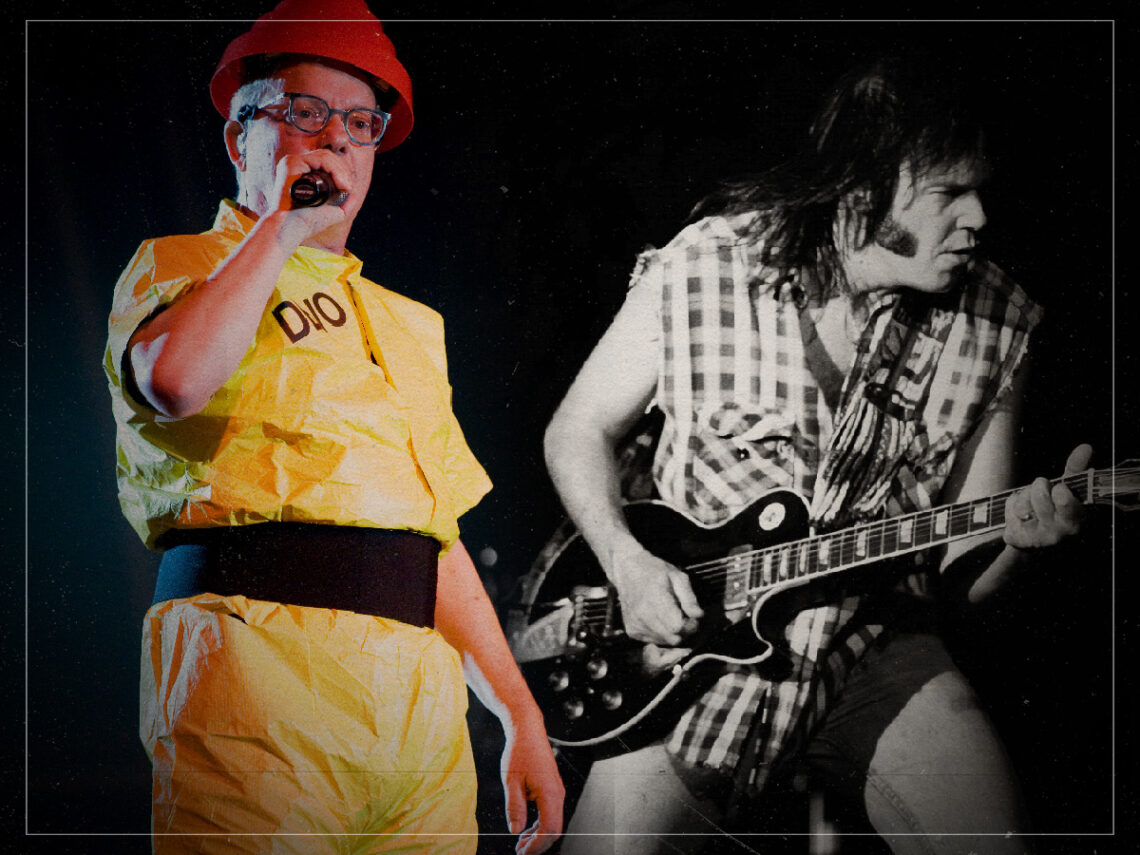
Mark Mothersbaugh on the impact of Neil Young’s ‘Ohio’: “Raw emotion”

No musician understands the relationship between art and politics quite as deeply as Neil Young. His music has forever been interwoven into the knot these two ideals forever find themselves in, and so he’s been looked to as a quiet leader, through the enduring trouble of modern times.
No matter how the plates of politics seem to shift throughout the years, his words seem consistently pertinent. For years, his scathing track ‘Southern Man’ has exposed the roots of America’s systemic racism, while the foreshadowing of ‘After The Gold Rush’ seems to strengthen with every passing day.
Young is cynical enough to realise that that would likely have been the case when writing those songs. The issues tackled in both tracks seemed to be symptomatic of modern culture’s toxic cycle, and so he would have quietly predicted their on-the-nose critique nearly half a century later.
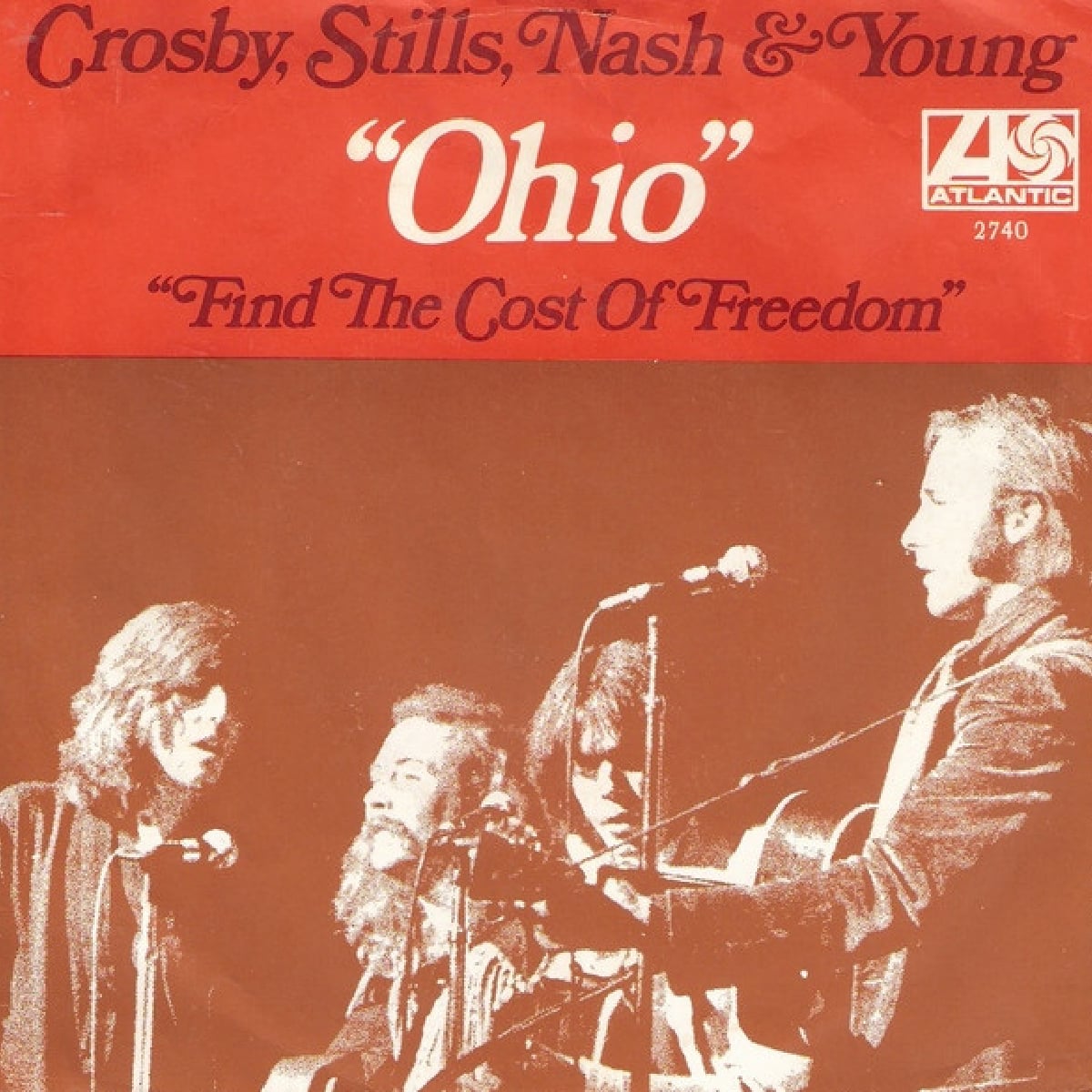
But when Young wrote about the Kent State massacre in 1970 on the seminal Crosby, Stills, Nash and Young track ‘Ohio’, he would have surely hoped that the specificity of the abhorrent event would have been a cautionary tale of a distant and brutal past. Instead, it’s grown to become a harrowing window into the abuse of power that rolls on over half a century later.
The profound impact of that reality has made it one of Young’s most beloved songs of all time. Despite his lengthy catalogue of protest songs, it’s ‘Ohio’ that consistently stands out amongst fans and musicians alike.
Devo lead vocalist Mark Mothersbaugh was introduced to Young through his film Human Highway, where he grew to love the revolutionary heart of the great songwriter as well as understand just how his spirit could influence his own music.
“At first glance, it might have seemed like we stood on opposite ends of the musical spectrum, he claimed. “But as I got to know him, I came to appreciate his pre-hippie-era aesthetic – a post-atomic, beatnik critique of humanity’s place on planet Earth – and his stream-of-consciousness approach to art. Neil turned out to be a true visionary, one who shared Devo’s concerns about where the planet was headed.”
Mothersbaugh continued to explain his love for Young through the lens of ‘Ohio’. But while for most of us, the song serves as a harrowing tale of systemic abuse, for Mothersbaugh, it had an added element of personability.
He said, “The Neil Young song that means the most to me is ‘Ohio’ – it might seem an obvious choice, but I was a student at Kent State when the National Guard shot and killed four student protesters, Neil’s immediate, unflinching response to that tragedy captured the raw emotion of that moment and gave voice to what so many of us were feeling… That song shaped my worldview and inspired the formation of Devo. ‘Ohio’ remains an anthem – a reminder to stand up, question authority, and stay aware of what’s happening around us. Ironically, it feels as urgent today as it did then.”
Young famously retired the song on the basis that it was too painful to sing. But, with the twisted cycle of society rolling back around to the dark days of 1970, it might feel necessary for ‘Ohio’ to return.
