


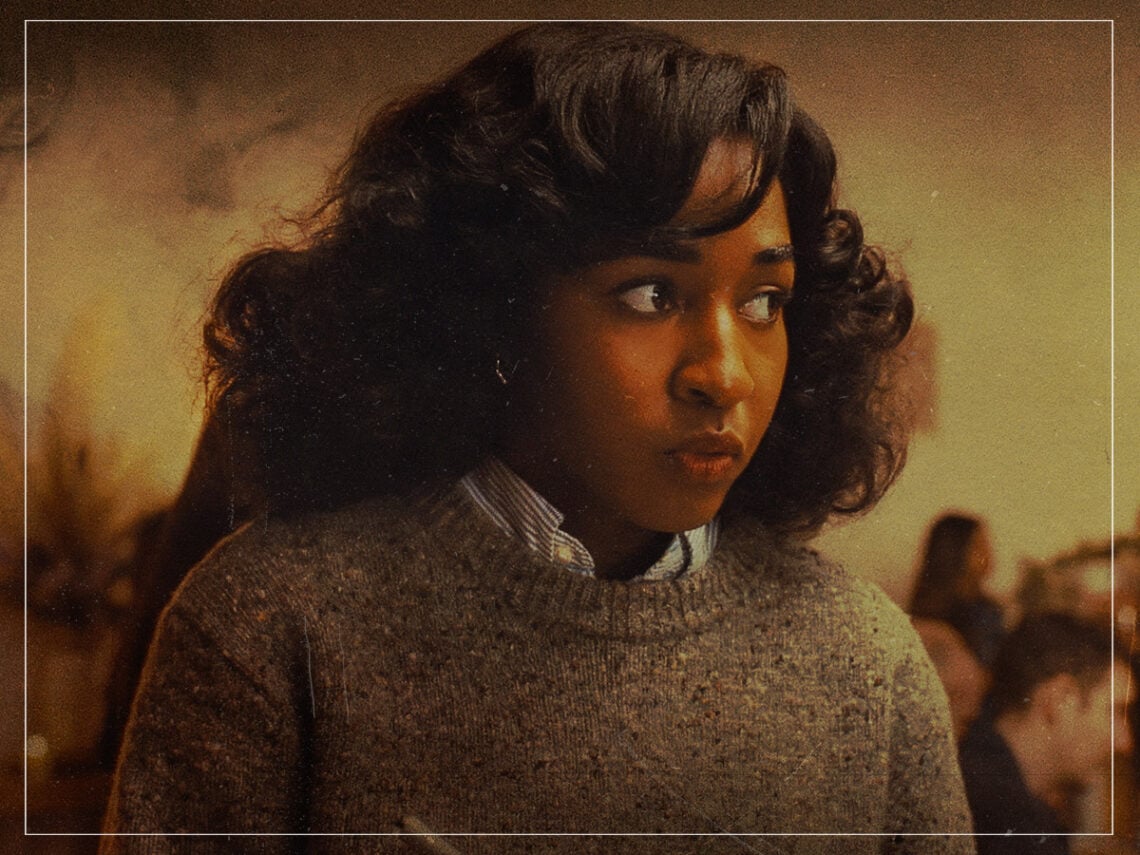
‘Opus’ movie review: a shallow and disappointing exploration of celebrity culture

Ayo Edebiri is an internet darling and impassioned cinephile, becoming known for her role as Sydney in The Bear and her dazzling comedic talents, outsmarting anyone who engages with her witty repartee and endearing audiences with her infectious sense of humour.
Through roles in indie gems such as The Sweet East, Bottoms and Theater Camp, the actor has proven her ability to entertain through a single glance or gesture, and while her sheer star quality is enough to get bums in seats for pretty much anything, it sadly isn’t enough to elevate the confused mess of her recent film, Opus.
Directed by Mark Anthony Green, Opus follows a young journalist called Ariel, who embodies the monolith of the tired writer trope as an artist who is talented but lacks sufficient life experience to infuse true meaning into her work. After the announcement that a legendary pop star called Moretti is retiring from retirement and releasing a final album, Ariel is personally invited to his remote compound with a host of starry-eyed journalists for a private listening party, becoming swept up in an intoxicating world of fame and adoration.
The director attempts to explore the relationship between artist and audience, interviewer and subject, poking at a deeper subtext on the cult-like worship of celebrities, and given Green’s former profession as an editor at GQ, you would expect him to have a more nuanced take on the subject matter that he has devoted an entire film to. Unfortunately, the ideas at play are explored in a shallow and predictable way, oscillating between familiar horror tropes associated with more accomplished predecessors like Get Out and Midsommar.
Opus is an amalgamation of poorly executed ideas, creating a bloated story that dips its toes into concepts explored in the entirety of A24’s catalogue, attempting to distract us through the angle of celebrity worship which is clumsily tacked on in a painfully explanatory final monologue. Everything that comes before this point feels torturously expositional and convoluted, as though the director had an idea for the end scene alone and tacked on a 90-minute film before it to substantiate its existence, but not quite touching on the depths of this conversation.
Overall, Opus is too oversaturated with ideas to grab the audience, becoming a reflection of the vapid culture it attempts to criticise, existing as an empty spectacle that skirts around the depths of its thematic layers and hides behind predictable plot tropes. It feels like a film you’ve seen a million times before, except it’s not quite funny enough to be a comedy, not biting enough to be a satire, and not scary enough to be a horror.
While it’s always a pleasure to see Edebiri on the silver screen, the combined star power of her and John Malkovich isn’t enough to pull the wool over our eyes and lull us into the same blissful submission as Moretti’s devoted fans, leading to a baffling and forgettable project that unfortunately, fails to leave any kind of impression.
