


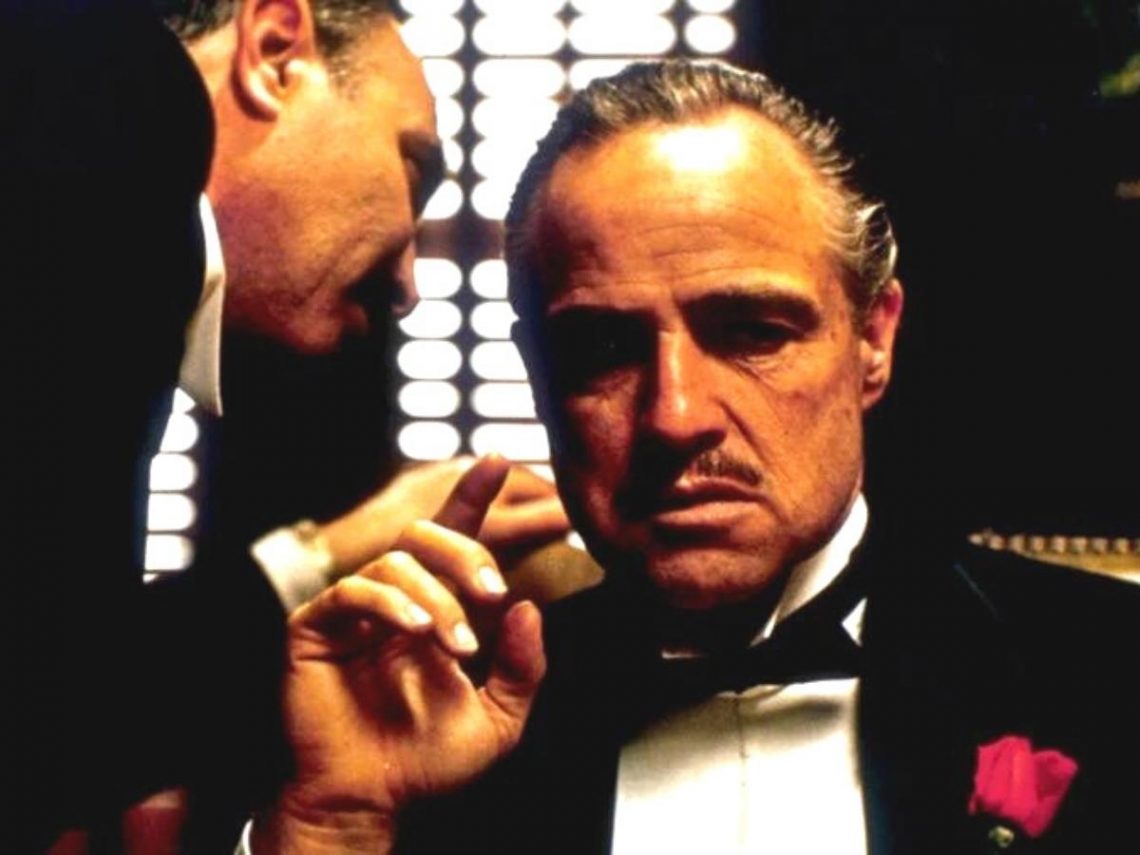
Mario Puzo had never written a screenplay before winning an Oscar for ‘The Godfather’

Francis Ford Coppola’s 1972 crime drama The Godfather is widely regarded as one of cinema’s most influential and significant works. The gangster epic follows the Corleone family, ruled by patriarch Vito (Marlon Brando). The story chronicles the rise of Al Pacino’s Michael, who transforms from an outsider into a hard-hearted mafia boss.
The Godfather was an incredible success. Not only was it the highest-grossing film of 1972, but it became the highest-grossing film of all time for three years, eventually trumped by Jaws. A landmark entry into the gangster genre, it’s hard to imagine the shape that crime cinema would take without the creation of The Godfather. Yet, the film wouldn’t have been possible without Mario Puzo, the man who wrote The Godfather as a novel in the late 1960s.
Puzo had written a few novels before The Godfather but was yet to find success. Wondering what direction to take next, he decided to try and write a best-selling, instantly popular, and commercial book. Little did he know that his attempts would far exceed his expectations, and The Godfather became the then-fastest-selling book of all time. According to Jim Milliot, editorial director of Publisher’s Weekly, “five million copies sold in 1970”, and “by January of 1971, there were seven million copies in print”.
Tony, Puzo’s eldest child, told The New York Post how the author would write the novel in the basement of their family house, which contained a pool table, which his five kids enjoyed playing. When they came down to play a game: “He’d say, ‘Keep it down, I’m writing a best-seller”. Although the children laughed, Puzo proved them wrong. His mafia tale – so convincing that many readers believed the author had real connections to organised crime – made him financially comfortable for the first time in his life.
In Puzo’s memoir, he explained: “Every Italian family has a ‘chooch’, a donkey, a family idiot that everybody agrees will never be able to make any money.” He was no longer his family’s ‘cooch’ – with the release of The Godfather in both hardback and paperback formats, Puzo was reeling in cheques.
However, Paramount had actually expressed interest in turning the novel into a film when it was still an unfinished manuscript. The company’s Vice President of Production, Peter Bart, believed the story to be “much beyond a Mafia story”, offering the author $12,500 for the rights, suggesting an offer of $80,000 if the finished story ended up on the big screen. Despite his agent’s suggestion not to take the offers, Puzo desperately needed to pay off gambling debts, so he agreed.
The film’s producer, Al Ruddy, was unsure of hiring Puzo to adapt the novel himself, worrying that he would be too protective over his work. Yet, Puzo, who had never written a screenplay before, insisted that he was capable of the role. Ruddy once explained that Puzo told him, “If you hire me, I promise you I will never look at this book again.” Following this declaration, “he threw his copy of the book on the floor at the restaurant. I gave him the job.”
Puzo ended up winning the Oscar for ‘Best Adapted Screenplay’ for his work. Yet, according to Tony, “After The Godfather, my dad bought a book on how to write screenplays. On the first page, it said, ‘The best screenplay ever written was The Godfather‘. After he read that, he threw the book away.”
It seemed that writing screenplays came as naturally to Puzo as writing novels did, and he went on to pen movies such as Superman, The Cotton Club, and the subsequent Godfather sequels.
