


‘Jules’ movie review: an eccentric Ben Kingsley vehicle

Sir Ben Kingsley’s latest is something of a departure for the acclaimed actor, a relentlessly strange little comedy/drama that uses ordinariness as a deliberately clashing backdrop for the strange and uncanny. Jules is ostensibly a tale of contact with beings from another planet, but one which uses familiar alien and flying-saucer tropes only as obvious, half-joking conventions, eventually revealing the reality of the alien presence to be stranger than expected. Ultimately, however, the film is not about aliens but about human beings, using a distinct outsider presence to bring both the sad and the funny aspects of human nature into focus.
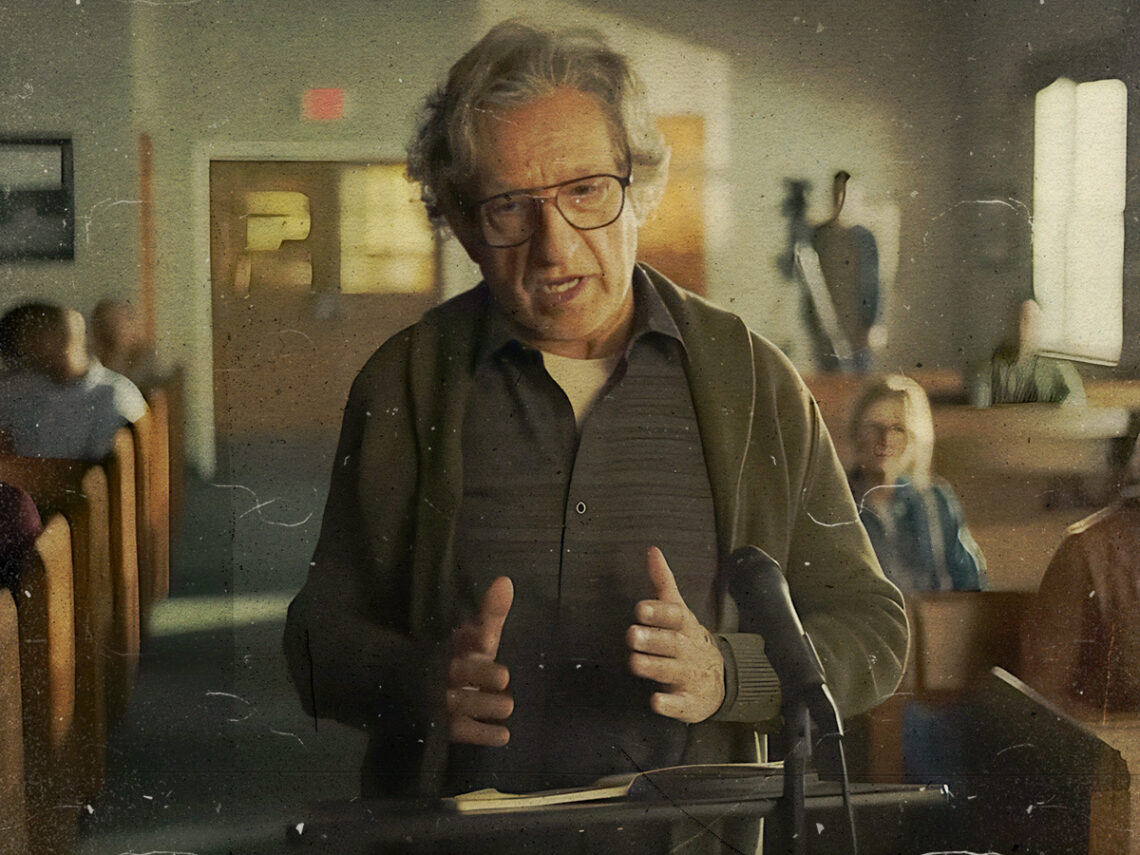
Director Marc Turtletaub, best known as a producer, does an admirable job in this, his third feature film, with the varied cast of Jules. Ben Kingsley plays Milton, an elderly widower and resident of a small town in Pennsylvania – complete with a flawless accent on Kingsley’s part. Milton’s neatly organised life revolves around chores, television, and weekly town council meetings. The script derives gentle humour from the prosaic details of small-town life and the quirky supporting characters, including Milton’s friend Sandy (Harriet Sansom Harris) and local busybody Joyce (Jane Curtin), both very effective comic additions, who become central to the main plot. Scenes of the amusingly mundane daily routine continue for some time as the characters become familiar, the one source of drama being Milton’s early symptoms of dementia, discovered by his affectionate daughter Denise (Zoe Winters). This makes it all the more shocking when the story takes an unexpected turn, with a small flying saucer crashing into Milton’s back garden.
Mild humour continues to draw from the characters’ personalities and their reactions to the alien, whom the three friends nickname Jules, such as Milton’s more robust response to his garden being disturbed by a spaceship than to the actual arrival of the spaceship. Milton’s ineffective and ill-advised attempts to manage the situation are both pitiful and funny, and his friends’ reaction to the visiting alien is hilarious. However, the story expands into something larger when the alien serves as a catalyst for all of them to open up to one another. In doing so, they reveal the secrets of their respective past and face their fears and their futures, particularly the challenge and humiliation of ageing, in a more conscious way. This interaction involves everything from an energetic, impromptu performance of Free Bird by Joyce, to a gruesomely funny extraterrestrial-style rescue of Sandy, to a truly bizarre and complicated plot thread involving cats. The storyline is sometimes imperfect, but it is never predictable.
The unique title character is at once the centre of the action and an apparently passive observer. Jules is played by Jade Quon, whose work in film has been mainly as a stunt double, but who is perfect here as the silent, enigmatic little alien, whose attentive gaze is unthreatening but a bit disturbing. Great care has been taken with the character’s appearance, not designing Jules as a classic, monstrous movie space creature or a human with minor physical differences, but instead something humanoid but distinctly uncanny and unavoidably real. No CGI is used, only painstakingly realistic full-body makeup and dark contact lenses; the actress’ carefully understated body language does the rest. Almost to the very end, we are never completely confident whether Jules is entirely benign or potentially dangerous, as hints about his nature and abilities gradually emerge, and outside attention begins to be focused on the spaceship’s landing site.
Any such threats are partly offset by the three human hosts’ uninformed management of their strange guest and their earnest attempts to befriend him, feed him, and dress him in unsuitable slogan tee shirts. The three human characters, their struggles, and their relationships are the real story, merely brought to light by the presence of Jules. Details of Jules’ nature, and the workings of the spaceship itself, are either kept vague or managed through some form of techno-magic which, while entertaining, is not meant to be taken literally or seriously; this is not science fiction in the usual sense.
As the film scales up into an awkward and increasingly weird rescue mission, both comedy and pathos continue to flow from the simple human struggles of the elderly trio, as artless and blundering in dealing with government agencies or the repair of interplanetary transport as with their own personal lives. Only in the final scenes does Jules become something closer to a full and understandable character with a perspective of his own, but as with the rest of the film, he serves to provide more understanding of the human characters and of humanity in general.
It is a touching conclusion to a film which, despite an occasionally silly and sentimental script, is well cast and well acted, truly eccentric but surprisingly funny and entertaining.
