


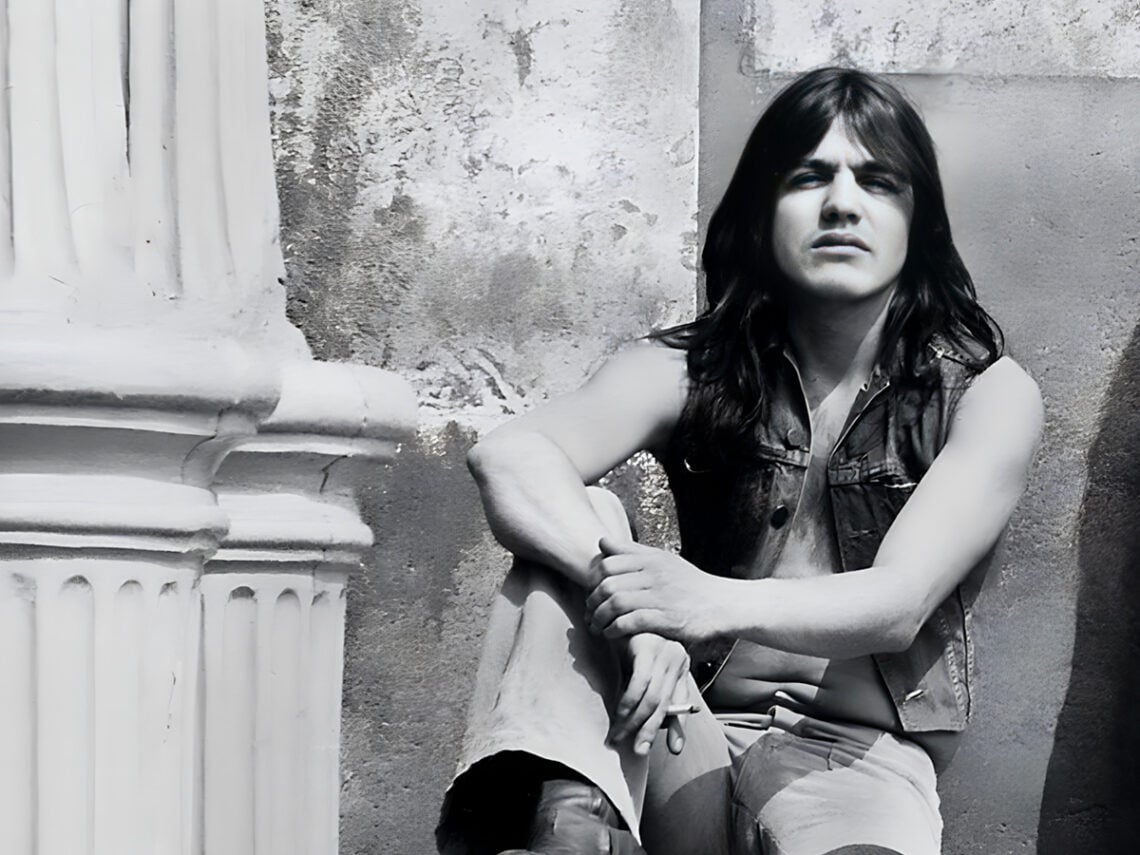
“Tracks out on their own”: Malcolm Young’s four favourite songs

“There’s very few rock ‘n’ roll bands. There’s rock bands, there’s sort of metal bands, there’s whatever, but there’s no rock ‘n’ roll bands – there’s the Stones and us.” – Malcolm Young
The subversive force of rock ‘n’ roll was firmly thrust towards revolutionary heights when Elvis Presley’s shaking hips caused such a stir during his debut TV performance that CBS passed a memo that he had to be filmed from the waist up in future. Liberation and optimism abounded in pop culture thereafter.
However, when AC/DC formed in 1973, 17 years on from The King of Rock ‘n’ Roll’s CBS debut, the landscape of music had changed. The utopian counterculture dream had somewhat faded, and so the rock ‘n’ roll of the ‘Highway to Hell’ band roared with a sense of radical indifference rather than dreamy idealism.
Central to this was Malcolm Young’s wicked guitar. His slicked-back licks embodied the sentiment of the band. They were bold, muscular and cut away all the bullshit to get to the heart of rock ‘n’ roll. The florid prettiness of what had come before in the heady days of hippiedom seemed out of place when jobs were being slashed the world over, and discontent was on the rise.
So, Malcolm Young made the decree that AC/DC should embrace darkness and make light of it in turn. Rather than get all abstract and fanciful, the Aussie rocker wanted to take things back to the roots of it all in a thrilling new way. “The blues singers were talking about everyday life,” he said of his family idols like Big Bill Broonzy, “and they pushed a button.”
However, this decision to get back to basics wasn’t made when AC/DC former in 1973. It had been bubbling in the young Aussie for some time before that day. He was always searching for excitement. And that came to the fore when some of his favourite bands began to get heavier. “The first time I heard ‘My Generation’ by the Who, that was something,“ he told Murray Engleheart in 1995.
“The Beatles and the Stones were the big thing,” he recalled. “Then, all of a sudden, this sounded heavier. That changed my whole thing.” He’d grown up in a family of eight children, so cutting through in a bid to get attention was par for the course, and he identified keenly with the visceral roar of ‘My Generation’.
Thereafter, Young began practising more ferociously with his brother. They experimented with distortion and almost purposefully set out to annoy the neighbours. In his view, following ‘My Generation’, many other guitarists followed suit. They were liberated by the daring Who song. They later solidified this by doubling down on the visceral nature of the song in their performances.
Speaking about this matter, Pete Townshend said, ”We sort of invented heavy metal with (our first live album) Live At Leeds. We were copied by so many bands, principally by Led Zeppelin, y’know heavy drums, heavy bass, heavy lead guitar.” There is no doubt that AC/DC tried to emulate that raucous energy with their shows. Albeit they did draw a degree of criticism from Townshend in the process, with the guitarist quipping, “AC/DC made 50 albums, but all their albums were the same.”
However, even before Live At Leeds, bands were taking a leaf out of their book. As Young said of the string of songs that followed, they deeply inspired him. “Later on, I guess ‘Jumpin’ Jack Flash’. I’ll give you two more, ‘Honky Tonk Woman’. These are all just tracks out on their own. And then ‘Get Back’ by the Beatles. That’s just pure rock ‘n’ roll as it evolved, I reckon,” Young concluded.
This anthemic foursome looms large in the welter of AC/DC’s back catalogue. They’re cutting songs that get you moving, hiding complexity and societal wherewithal behind a bloody good time.
Songs that changed Malcolm Young’s life:
- ‘My Generation’ – The Who
- ‘Jumpin’ Jack Flash’ – The Rolling Stones
- ‘Honky Tonk Woman’ – The Rolling Stones
- ‘Get Back’ – The Beatles
