


Malang Reggae Supporters: The DJs bringing northern soul, ska, and subculture to Indonesia

Great music is universal – a fact that was proven back in the 1960s, when the record collections of the Windrush Generation merged with white working-class culture in Britain to form the basis of the skinhead subculture. Now, over half a century later, that same subculture is witnessing something of a resurgence in the unlikely surroundings of Malang, Indonesia.
Ska music was the prevailing sound of the skinhead scene when it first emerged from the tail-end of mod during the late 1960s, and from the football terraces of Yorkshire to the underground nightclubs of Brixton, young people across the nation were shaving their heads, donning Dr Martens, and dancing all night to the sweet sounds emanating from the Caribbean. Despite the formidable reputation later skinheads attracted, the movement was always born from racial unity and integration; a message which is still just as important in the 21st century.
Skinheads are still around, of course, in the pubs, gig venues, and specialist outfitters of this scissored isle, but it is fair to say that the subculture doesn’t have the same cultural force as it once did back in its golden age. That is, of course, unless you happen to be a resident of Malang, where young people in boots and braces, riding scooters, and grooving to the sounds of ska, rocksteady, and northern soul music is still very much in vogue.
In a rare occurrence of my social media algorithm serving me something worthy of my attention, Malang Reggae Supporters popped up on my feed a few weeks ago, luring me in with footage of various sharply dressed people on scooters and in dancehalls, listening to the Trojan ska music that had soundtracked the skinhead scene way back in the 1960s and 1970s. Intrigued, I ended up reaching out to DJ Syifa Maulana from the collective to find out more about why this old-school subculture has taken root in East Java.
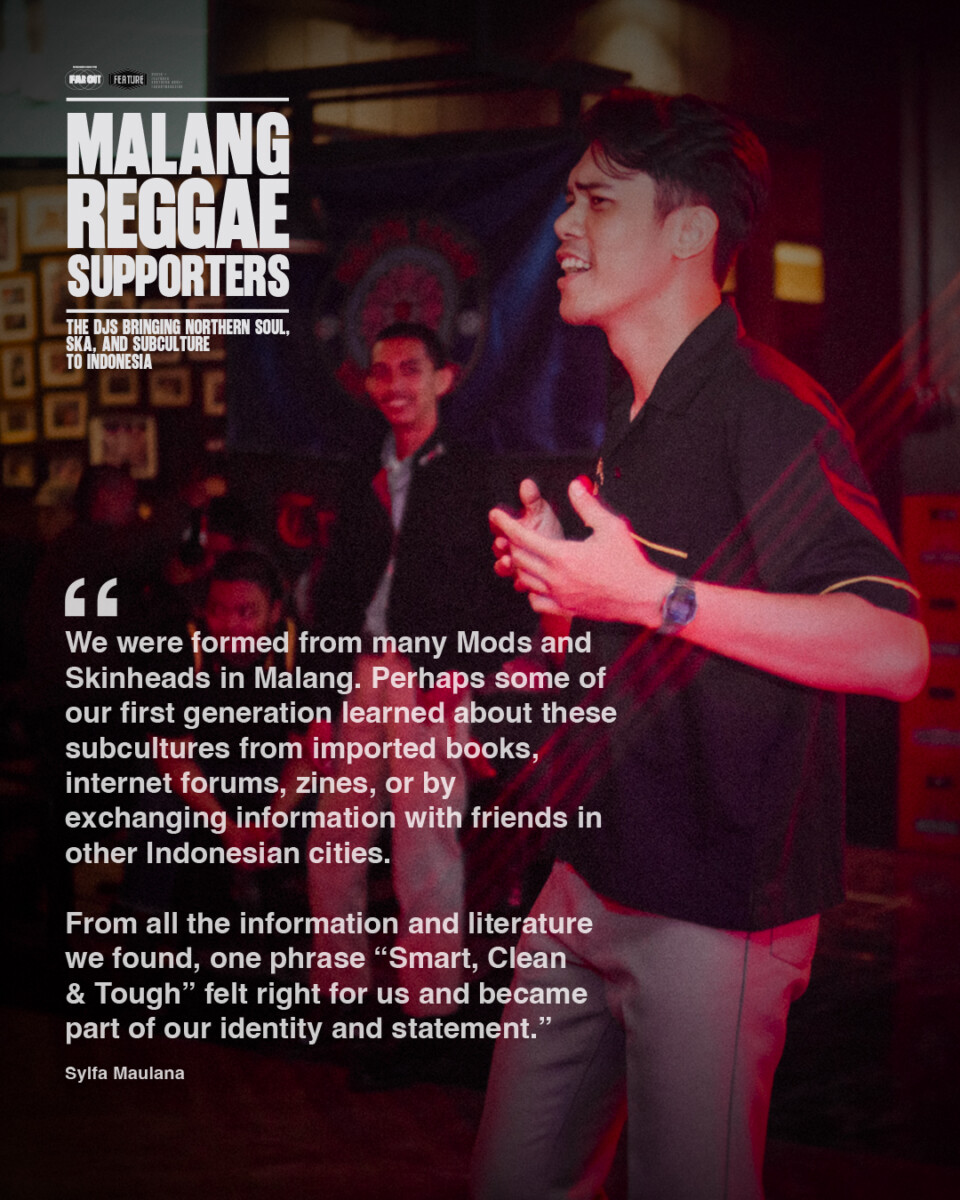
As it turns out, the subculture scene in Malang is not a new addition to the city’s cultural landscape. “The existence of Malang Reggae Supporters is inseparable from Malang Soul Club, which existed earlier around 2014,” Maulana told me. “Over the years, the Malang Soul Club members met many friends from various subcultures – mods, skinheads, rudeboys, and even some punks.” Towards the end of 2024, this subcultural stew culminated in the formation of Malang Reggae Supporters, although there is seemingly still a lot of crossover between the two groups.
According to the DJ, Malang is not the only city in Indonesia to have found itself infatuated with ska and soul, either. He was quick to highlight similar outfits in Jakarta, Bandung, Makassar, and Surabaya, among various others. At the root of all of these groups, though, is a deep adoration for ska, reggae, rocksteady, and soul music – music which was never originally released in Indonesia in the first place.
Explaining how exactly the sounds of Jamaica first reached Indonesia, Maulana shared, “Before I knew songs from labels like Trojan, Treasure Isle, Studio One, I think, like many people, my first introduction to reggae was through Bob Marley.” From those reggae roots soon came an equal appreciation for the ska greats of Prince Buster, Alton Ellis, and, of course, The Wailers. Not every track spun by the Reggae Supporters is imported, though, and the DJ pointed me towards Weaken Amorē and the Jakarta-based Gudtings as being key beacons of local talent.
“Who doesn’t love reggae music?” Maulana expertly summarised. “I bet most people in the world will sing or hum along when Bob Marley songs are played in public. We, too, gather out of the same love for this genre to celebrate together,” he added. “Many reggae songs carry messages of peace and love, like rocksteady or lovers rock, and even fast-tempo ska is still very relevant to modern life today.”
Music is one thing, but when you see images of the Malang Reggae Supporters, they look as though they could have been lifted straight off the set of This Is England, or the cover of Symarip’s Skinhead Moonstomp. For the subculture side of the collective, the influence seems to have arrived largely through the digital airwaves.
“Perhaps some of our first generation learned about these subcultures from imported books, internet forums, zines, or by exchanging information with friends in other Indonesian cities,” the DJ shared. “From all the information and literature we found, one phrase, ‘Smart, Clean, and Tough’, felt right for us and became part of our identity and statement.”
As a predominantly vinyl-based DJ, Maulana is dependent on the internet to source most of the collective’s musical material, too. “Most of the records we buy come from various overseas websites online,” he affirmed. “Nowadays, many resellers also buy and resell them. Sometimes we ask friends to buy records when they travel abroad. In Malang, there is only one record store: Rekam Jaya Record Store.”
Seemingly, though, that one record store has been able to support an entire scene of people falling in love with music and subculture. Aside from the skinhead ska at the heart of Malang Reggae Supporters, the scene also has a lot of crossover with northern soul: “In several cities, northern soul music is always played by DJs during ‘Mods Mayday’ events. This is closely connected to collectives from other cities under ‘Collective Reggae & Soul Nusantara’”, the DJ told me.
Northern soul was already a pretty miraculous scene when it sprang up in the towns and cities of northern England back in the 1970s, with amphetamine-fueled and sweat-stained young people dancing all night to impossibly rare American soul singles that – by rights – they should have never heard. It speaks to the enduring power of that scene, though, that it seems to have spread far from Blackpool and Wigan, to the clubs of Indonesia.
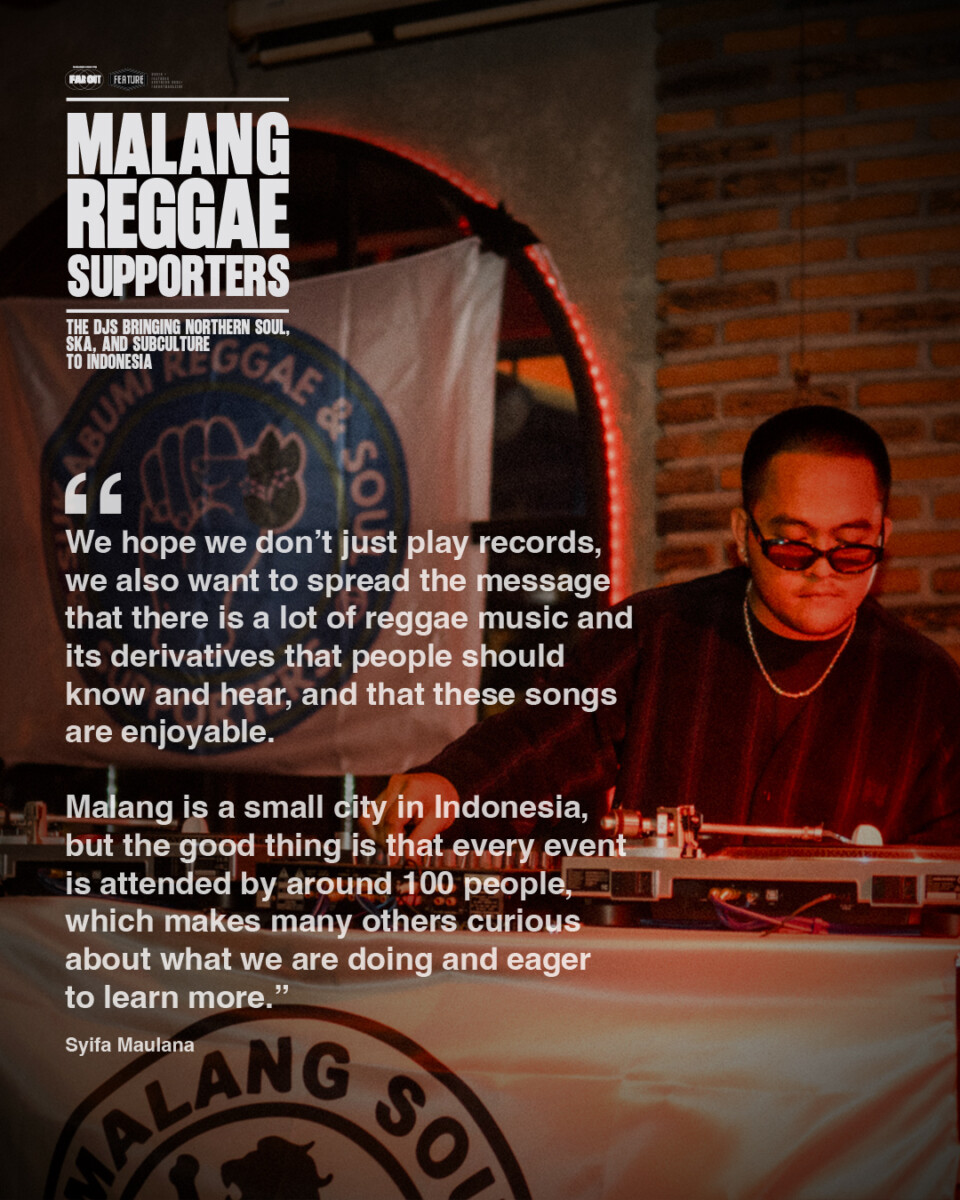
With every club night and event, the reggae and soul scene only seems to grow in Malang, too. “We hope we don’t just play records,” Maulana attested. “We also want to spread the message that there is a lot of reggae music and its derivatives that people should know and hear, and that these songs are enjoyable.”
He concluded, “Malang is a small city in Indonesia, but the good thing is that every event is attended by around 100 people, which makes many others curious about what we are doing and eager to learn more.” So, if you are in the UK and fancy a change from the usual ska and soul hangouts of old working men’s clubs and sticky-carpeted venues, a flight to Indonesia might be your best bet.
Subcultures might not have the cultural capital as they once did back in the 1960s and 1970s, but clubs and collectives like Malang Reggae Supporters show that their message and attitude still ring true all these years later. For a scene which emerged in Britain, via Jamaica, to have now taken root in the music scene of Malang, Indonesia,
Skinheads and soulies might not have the same cultural capital as they did back in the 1970s, but the sheer endurance of those scenes shows that the inherent message, attitude, and music still resonates with people all these years later. What’s more, a subculture which emerged in Britain, via Jamaica, has taken root in Indonesia, which just goes to show the universality of that movement.
