


‘Suzume’ movie review: A tedious exploration of trauma with severe narrative issues

Makoto Shinkai’s new film Suzume is an examination of the kind of trauma that is buried so far within us that we often don’t know the extent that it impacts our lives. However, Shinkai’s anime takes its damned time to properly explicate its themes, leading to a thoroughly frustrating viewing littered with clichéd dialogue, odd moments of sexual repression, and strands of narrative that utterly confounds its audience.
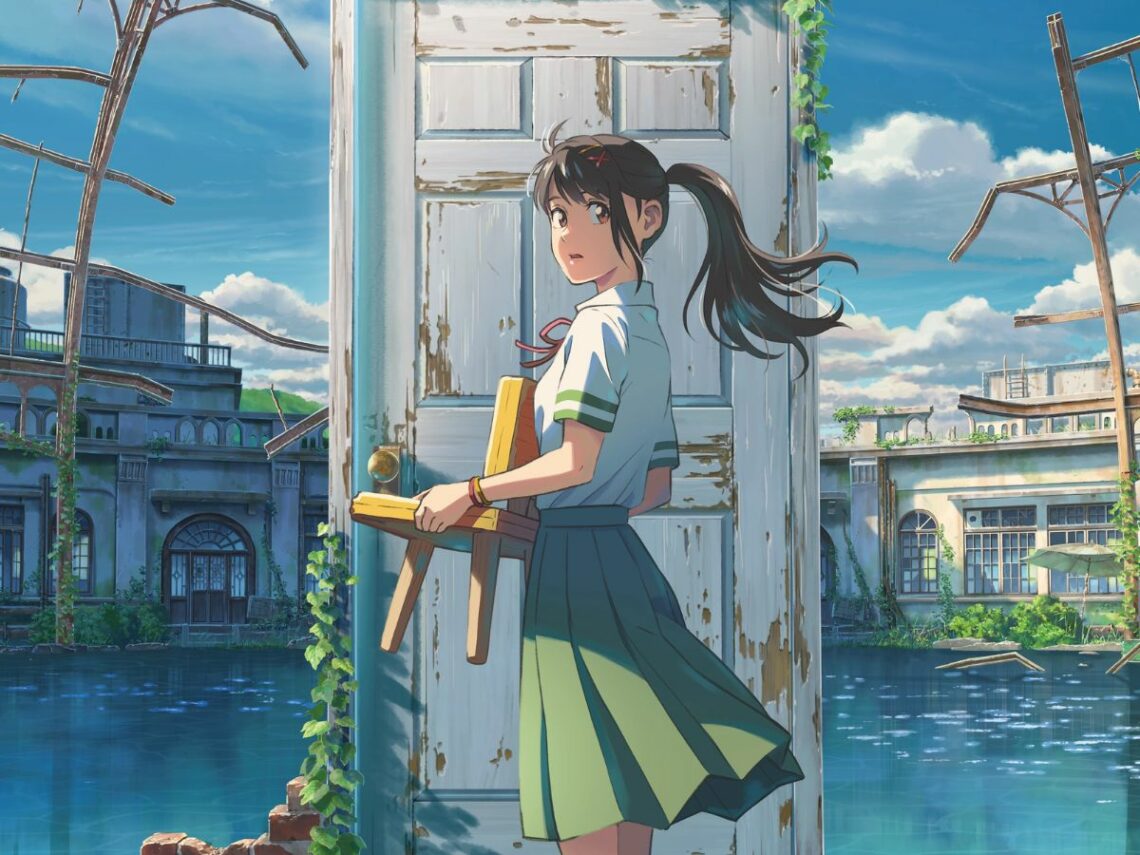
In terms of its quality, though, Suzume looks admittedly breathtaking. Rarely has animated Japan looked so shimmeringly beautiful, and Shinkai’s team has painstakingly detailed every facet of every scene. The interiors are realistic in terms of their embellishments, and the outside world makes us long to visit this fantastic and gorgeous fictional environment.
There are several references to the most significant anime creators of all time, Studio Ghibli’s Hayao Miyazaki, throughout Suzume, such as a helicopter displaying the name ‘Miyazaki Broadcasting’ and a cat character – who we are persistently unsure of being either an ally or an antagonist – claiming on their social media account (sigh) that they feel like they are in 1995’s Whisper of the Heart. Whether Shinkai is paying homage to Ghibli or is establishing himself as their main competitor – especially after the success of 2016’s Your Name – remains to be seen.
Whilst Suzume shines visually, it is in the narrative that it suffers from some serious problems. We begin by being introduced to its 17-year-old titular protagonist as she awakens from a dream in which she has lost her mother. Late for school, Suzume then rushes out the door and begins her cycled journey to what looks to be any given day of education. On the way, though, she is greeted, no, captivated, by a ridiculously good-looking gentleman. Her infatuation blossoms in an instant for no other apparent reason than her sexual attraction to him.
When Suzume follows the man, Sota, to a nearby onsen resort, the film explodes into fantasy without a second warning. This move comes far too quickly. We don’t know who Suzume is, nor are we given reason to care for her just yet. A giant supernatural worm (based on the Japanese mythological Namazu) bursts out of a door that Sota is desperately trying to close, and when he does eventually manage to do so, he merely explains that he is “a man who closes doors to try and stop giant worms from escaping” from “the Ever-After” into the real world.
With this all happening before the opening credits have even been displayed, we are left pondering why we should give a damn. Suddenly, out of nowhere, Suzume is caught up in Sota’s quest, and we are given no reason why she is aiding him other than the fact that she is sexually attracted to him. His physical magnetism is only given further meaning and rationale far later in the film and far too late at that.
Despite the teen-centric mood of Suzume, there is undoubted sexual energy running throughout it. These consist of a peculiar Lynx Africa moment at the film’s beginning, then develop into the unspoken electricity between Suzume’s Aunt Tamaki and Sota’s university friend on a car journey to another wormhole door or the blushing of Suzume as she sits on Sota, who has turned into, well, a chair…
On that misguided narrative explanation, the fact that Sota is turned into a three-legged chair eventually holds thematic and narrative significance, but its elucidation also arrives far too late. Come the third act of the film, we finally discover that Sota, the doors, the Ever-After, the bloody chair – the whole fantasy ordeal – is actually about Suzume’s personal trauma of losing her mother and the suffocating surrogate relationship she has with her aunt instead.
Suzume does eventually tie together its themes and narrative motifs, by which point we have already sat through 80 minutes or so of tedium and cliché. Relationships are not built anywhere near enough for us to actually care in the slightest about its characters until perhaps the final act, and we do not see – and therefore, do not understand – enough of the Ever-After and its significance to Suzume’s past. If trauma takes this long to heal, then we’d better bloody well strap in for the long haul.
