


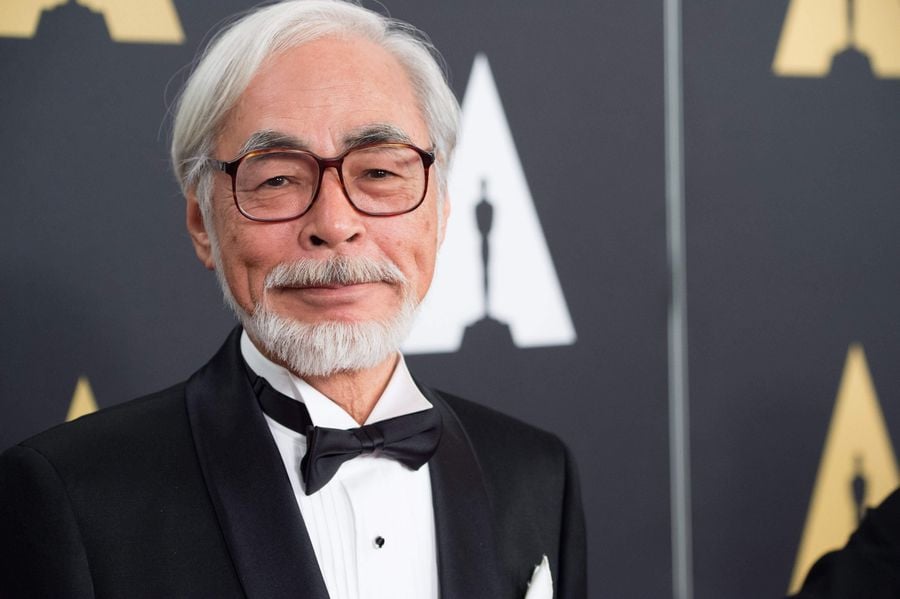
The inspiration behind five of the best Hayao Miyazaki films

The landscape of contemporary animation wouldn’t look quite as vibrant as it does today without the help of the Japanese animator, director, producer, screenwriter and Studio Ghibli founder Hayao Miyazaki. Inspiring the likes of Pixar, Disney and Illumination Entertainment to raise their game in the Western film industry, the early films of Miyazaki and Studio Ghibli have since been considered seminal classics.
Founded by Miyazaki alongside Isao Takahata and Toshio Suzuki, ever since the inception of Studio Ghibli, the company has been dedicated to an ethos of wholesome creativity, instilling a magical vibrancy in each and every one of their movies. Named by Miyazaki, the ‘Ghibli’ title refers to the Libyan Arabic name for ‘hot desert wind’, with the director referring to his own ambition to “blow a new wind through the anime industry”.
Indeed, whilst their films blow over you like a meditative autumn breeze, the impact of the studio itself can be better compared to a gale-force wind, with Ghibli creating 23 feature films and counting that each challenge our understanding of the ‘children’s film’. Often inspired by tales of environmental disaster or personal revolution, Ghibli’s films are more than mere ‘cartoons’, with each one inspiring generations of enamoured fans from across the globe.
From Nausicaä of the Valley of the Wind to Ponyo, each of Miyazaki’s films seem like they were conjured from unspoilt creative juices, yet no story is entirely original.
Hayao Miyazaki’s inspirations:
Howl’s Moving Castle (2004)
Based on the 1986 novel of the same name by the late British author Diana Wynne Jones, Howl’s Moving Castle is set in a fantasy kingdom where magic and technology co-exist and follows a young girl named Sophie who, when attacked by a dark witch, is stripped of her youth. Seeking help, she joins the mysterious wizard Howl and gets caught up in a civil war with a nearby kingdom.
Exploring themes of war, madness and ageing, Miyazaki has also stated that the film was influenced by his own opposition to the United States’ invasion of Iraq in 2003. Speaking to Newsweek, he stated that he “had a great deal of rage” about the conflict, adding that “the film is profoundly affected by the war in Iraq”.
Kiki’s Delivery Service (1989)
The first major commercial success for Studio Ghibli, the fifth film from the animation studio, follows a young witch, Kiki, who runs an air courier service in a new community, seeking the help of newfound friends to help her struggling business. Adapted from the 1985 children’s fantasy novel of the same name by Eiko Kadono, the charming tale explores the development of personal maturity throughout the adolescent transition.
Inspired by the “gulf that exists between independence and reliance in the hopes and spirit of contemporary Japanese girls,” that he saw in the late 20th century, as stated in the English foreword to the book The Art of Kiki’s Delivery Service, Miyazaki’s thinking behind the adaptation was rooted in children’s fiction.
Continuing, he adds: “At one time, the main characters of stories for young people gained financial independence, which was then equal to spiritual independence, after struggling through difficulties. In today’s society, however, where anyone can earn money going from one temporary job to another, there is no connection between financial independence and spiritual independence. In this era, poverty is not so much material as spiritual”.
My Neighbor Totoro (1988)
It was in the late 1980s that Studio Ghibli really came into its own, releasing both the tragic war movie Grave of the Fireflies and the magical fantasy film My Neighbor Totoro in the very same year. Speaking to the harmony between humans and nature, the story follows two girls who move to the country with their ill mother, where they enjoy adventures with the magical spirits of the forest who live just outside their doorstep.
Miyazaki first came to the tale in 1974 when he was working on the anime series Heidi, Girl of the Alps. Travelling to Switzerland to learn how to draw its unique wildlife and inform his own illustration style, Miyazaki became inspired to create his own story about the environmental beauty of Japan. Later moving near the Totoro no Mori forest in Japan, the nature surrounding Miyazaki became the basis for My Neighbor Totoro.
As he stated on a walk with Mayor Fujimoto in 2018: “This scenery is what gave birth to Totoro. It’s important to me, and it’s why I live near here”.
Princess Mononoke (1997)
Miyazaki’s 1997 epic Princess Mononoke may well be the most spectacular film of Studio Ghibli’s filmography, with the sprawling narrative being inspired by the westerns of John Ford. Bringing together “characters from outcast groups and oppressed minorities who rarely, if ever, appear in Japanese films,” as stated by the filmmaker, the movie packs layers and layers of detail into a compact film. It follows young Ashitaka, seeking a cure for a savage animal attack that sparks their travels across a land ravaged by humans.
In another exploration of humanity’s relationship with the natural world, Miyazaki comments that his aim with the film was to “portray the very beginnings of the seemingly insoluble conflict between the natural world and modern industrial civilisation”. Though he was inspired by the natural world, he also took creative influence from Morohoshi Daijiro’s Manga, Mud Men.
Spirited Away (2001)
The only Studio Ghibli movie ever to win an Academy Award, Spirited Away is a magical piece of animated fantasy and an existential piece of adult animation. Rife with references to traditional Japanese folklore whilst also imbued with a message of environmentalism, the film tells the story of a young girl who moves to the suburbs with her family, only to wander into a world of witches and spirits just outside her door.
Whilst similar to other western fairy tales, Alice in Wonderland and The Wizard of Oz, Miyazaki’s film is better rooted in Japanese culture. Speaking about the fantastical inspiration behind the tale, he explains: “In my grandparents’ time, it was believed that kami existed everywhere — in trees, rivers, insects, wells, anything. My generation does not believe this, but I like the idea that we should all treasure everything because spirits might exist there, and we should treasure everything because there is a kind of life to everything”.
