


Much more than looking the part: What makes a good biopic movie?

It’s one of the easiest ways for an actor to get themselves in the running for major trophies, and the most high-profile examples have regularly been box office botherers of the highest degree, but there’s an art to making a biopic that requires much more than a star who bears a passing resemblance to the subject.
Countless biographical dramas over the decades have zeroed in on some of history’s most famous figures, trailblazers, pioneers, legends, and icons alike, but not all of them have set the world on fire. The most famous recent example is Christopher Nolan’s Oppenheimer, which carries several of the characteristics that have defined the genre’s finest offerings.
Of course, the fact it won ‘Best Picture’, ‘Best Director’, and ‘Best Actor’ at the Academy Awards is indicative of that fact, but it ticks several important boxes that not ever biopic fills out. For one thing, Cillian Murphy’s central performance finds him channelling the spirit of the subject and embodying them without falling into the trap of becoming either an impersonation or a caricature.
He doesn’t look identical to J. Robert Oppenheimer, but it doesn’t matter because his work serves the story and the personality present on the page. It’s a lot easier for a performer to resort to mimicry, but in the end, it can regularly come across as something lifted more from a sketch show than a hard-hitting prestige picture.
Along similar lines, Oppenheimer shows the light and dark sides of its protagonist, which is another pivotal aspect of the best biopics. Ones approved by the friends, relatives, estates, or even people themselves should they still be alive can set alarm bells ringing because when the design is to make as much money as possible, then warts-and-all stories tend to be pushed to the background in favour of painting the main character in the best possible light.
Lean too heavily into that direction, and the end result is a borderline hagiography that intentionally omits the less savoury aspects of the subject’s existence in favour of making it look as though the sun shone directly and blindingly from betwixt their two arse cheeks. With a Michael Jackson biopic on the way, it’ll be very curious to see where the line gets drawn, especially when the late singer’s estate is on board the production.
Shades of grey are hugely important, which is why the likes of Malcolm X, Lawrence of Arabia, Raging Bull, and Walk the Line are among the best. They fulfil all of the criteria listed above, and without resorting to heavy-handed sermonising, skirting around the edges of controversy, or pulling any dramatic or narrative punches, they did true justice to the people they were inspired by.
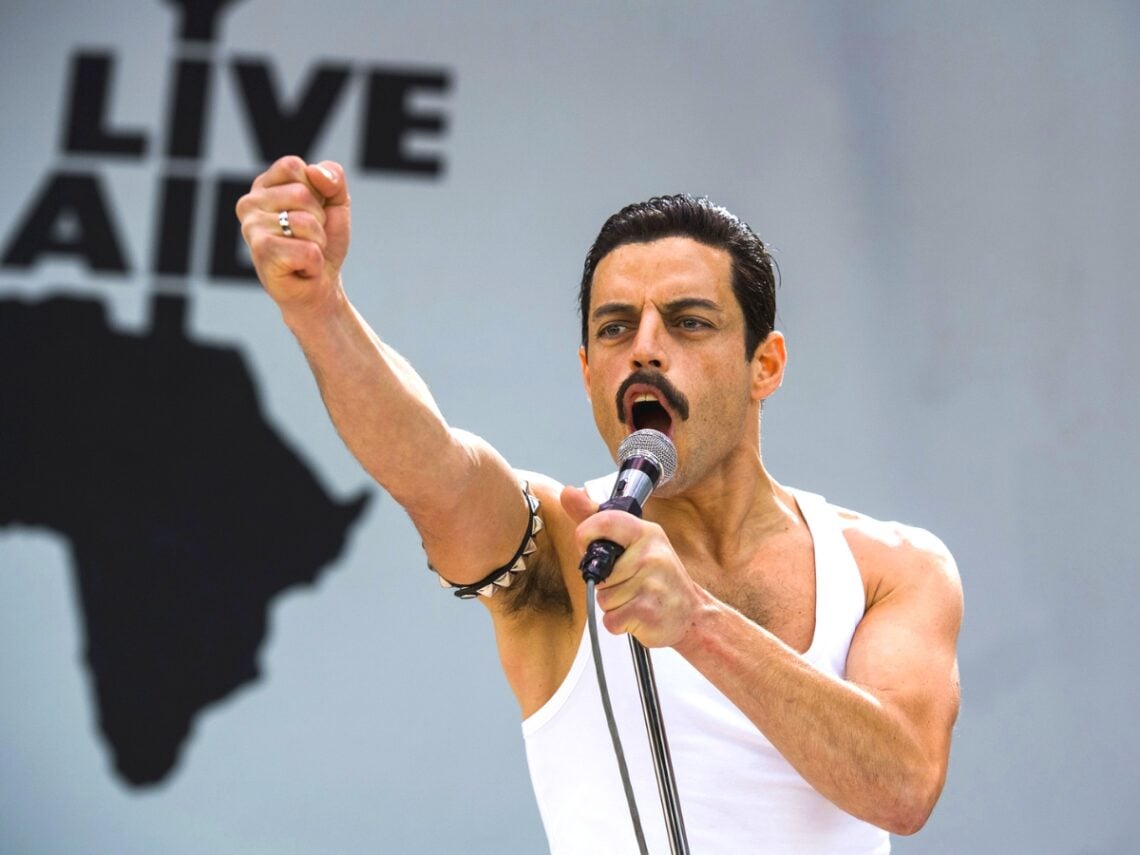
On the other side of the coin, Clint Eastwood’s J. Edgar suffered from laughable old-age makeup and a staunch refusal to rock the boat, both big biopic no-nos. Kevin Spacey’s Beyond the Sea failed because it was a vanity project made by a man in his mid-40s who wanted to play a 22-year-old singer, and while Bohemian Rhapsody was a money-making machine that earned Rami Malek an Oscar for ‘Best Actor’, it was all a bit wishy-washy.
One of the smartest ways to craft a top-tier biopic is to simply think outside of the box, with Todd Haynes’ I’m Not There and Dexter Fletcher’s Rocketman operating outside the lines to retell the ever-evolving story of Bob Dylan with multiple actors representing different eras or transforming Elton John’s ascent into a psychedelic musical fantasy. They couldn’t be more different, but one thing they have in common is that they’d be a lot less interesting if they followed the A-to-B-to-C format of their subject’s lives.
There needs to be an angle, a hook, and a compelling central conflict tied to inner turmoil, not just a well-known figure with an interesting life. Oppenheimer was rooted in its creator’s realisation they’d made humanity a worse place, Raging Bull dealt with the rampant insecurities of a hard-edged brawler, Amadeus hinged on a rivalry with deadly consequences, and Schindler’s List focused on one man trying to provide a ray of light during history’s darkest times.
There’s no magic formula, but there are still a myriad of ways for a biopic to make itself stand out from the pack. Unsurprisingly, adhering to convention only plays a small part in doing so, with invention, imagination, and ingenuity going a great deal further than slavishness.
