


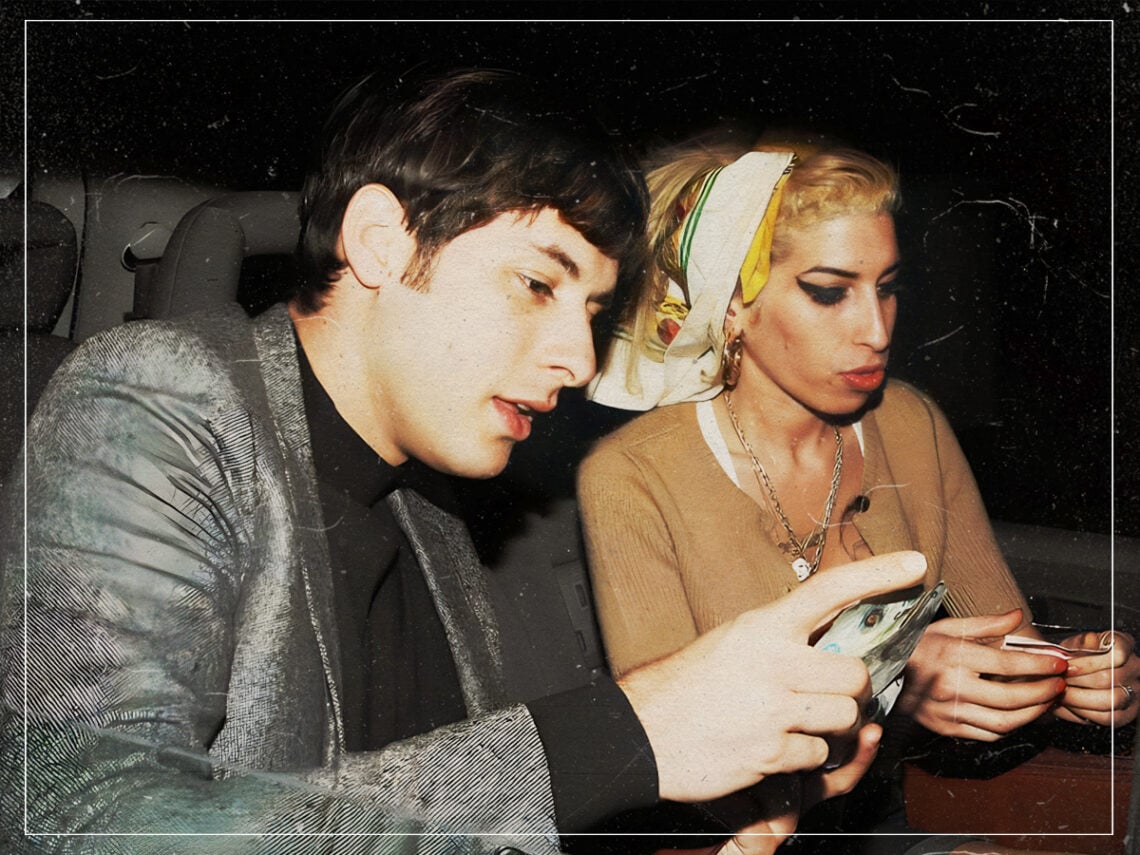
The magical moment Amy Winehouse and Mark Ronson first met: “It just felt raw and honest”

The heady era of 2000s indie has been given somewhat of a bad rap in retrospect. After all, the term “indie sleaze” wasn’t coined out of affection so much as satire for the artists who represented in skin tight jeans, Chelsea boots and as Alex Turner rightly pointed out, a trilby.
But in our caricatured image of that era, we’ve seemingly forgotten some of the pure brilliance that existed. The aforementioned Turner and Arctic Monkeys, for one, were influenced by a wave of great bands from across the pond, like The Strokes and LCD Soundsystem. But perhaps more importantly is one of the key musicians of the era, who existed outside the four-chord wonder of indie and showed herself to be one of the greatest songwriters of the time, Amy Winehouse.
It was a story of talent and tragedy in equal parts, and while the latter feeling seems to hang over it with an ever presence, there really is no question that it’s the former that cements her legacy. She was far more than the salacious tabloid news thrust upon us, and left us with records that will forever remain timeless classics.
One such record was, of course, Back To Black. It was an album that put her in close contact with Mark Ronson, a man who had one foot on either side of the pond and, as such, was a true purveyor of the indie sleaze era. But not because he was found with a guitar strapped to his shoulder, but instead a CDJ under his arm, and so made the perfect outcast to view the scene from afar.
That unique sense of creative perspective made him the perfect collaborator for Winehouse, facilitating her more jazz-inspired style of songwriting, and so together the pair made a record that stood out from the rest. Listening to it now, her innate personality bleeds through every song, showcasing vulnerability, ferocity and an innocent sense of humour.
It was apt that Ronson teased that out of her in the studio, because upon meeting Winehouse for the very first time, that’s exactly what he was exposed to. “I met her in the spring of 2006, on the stoop of my recording studio in New York,” he explained. “She said, ‘I’m going to meet Mark Ronson.’ I said, ‘Oh yeah, I’m Mark.’ She gave me a blank look and said, ‘I thought you were, like, an old guy with a beard.’”
Winehouse didn’t pull any punches with anyone and, by cutting Ronson down to size immediately, showed him that nothing really mattered except the music. Through honesty, they could foster a relationship that would create some of her best music, even if they didn’t know it. Which surprisingly with the title track for Back To Black, was the case.
Ronson explained, “[One night] I came up with the piano, and a little bit of the percussion track. She heard it the next day, loved it, and wrote the lyrics in maybe an hour.”
He continued, “I had never really made a hit record before. It didn’t sound like anything else that was on the radio, It certainly didn’t seem like something that was going to be this huge commercial success. It just felt raw and honest.”
Its honesty endeared it to the heart of Britain’s music audience and rightly put Winehouse at the top of the charts. Together, the pair would continue on in the same vein and make a short-lived, but iconic discography of raw and honest music.
