


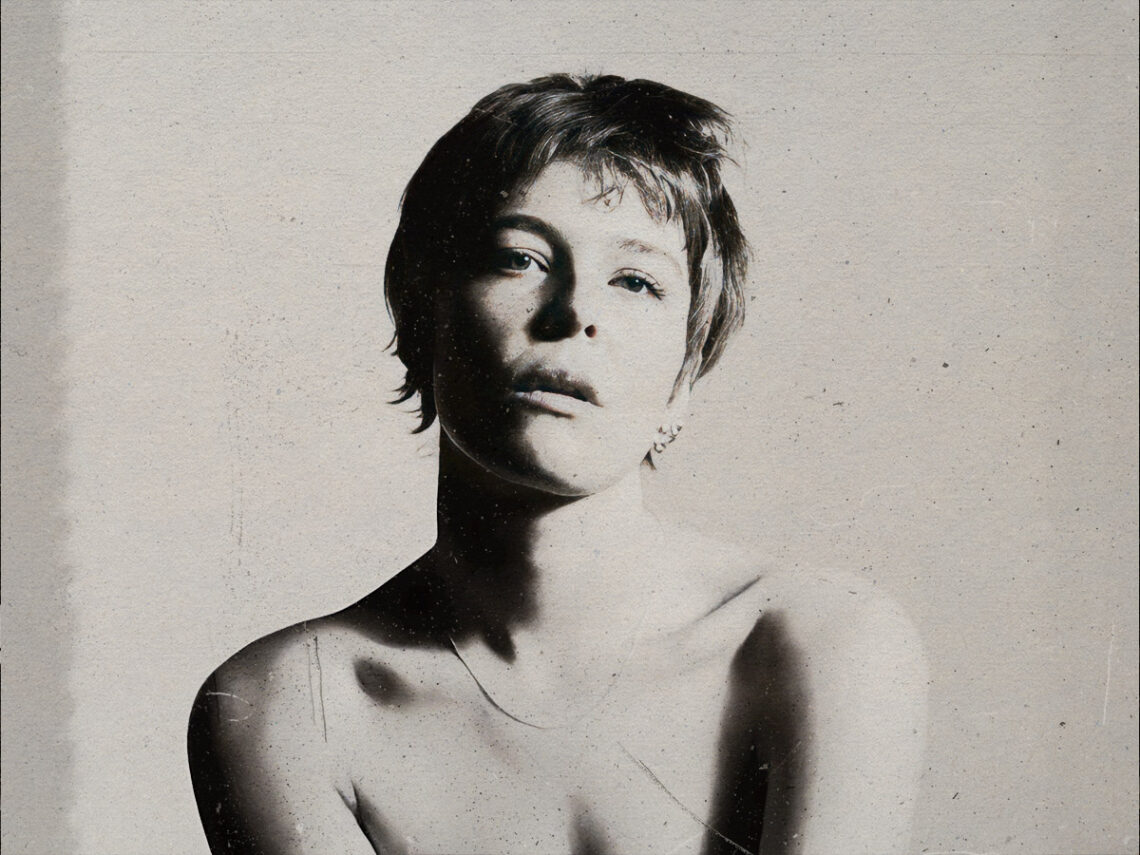
Maggie Rogers explains Björk’s inspiration as a “female producer and as an artist”

Björk has always thrived on her weirdness. She found global fame and success through her unpredictable electronic soundscapes and strange accompanying visual artistry. She even managed to endear herself to the most resistant, mainstream radio listeners with hits like ‘Army Of Me’ and ‘It’s Oh So Quiet’. Now, she’s earned her place as one of the most influential figures in the electronic genre, but her impact extends far beyond that sphere.
The influence of the Icelandic artist can be found in almost every genre and generation of artists, from 1990s alternative rockers Radiohead to modern pop royalty Caroline Polachek. One of the most unexpected contemporary stars to cite Björk as an influence is folk-pop singer Maggie Rogers, who discovered the potential of electronic music through her work.
While divulging some of the songs that inspire her during a chat with The Line of Best Fit, Rogers shared her love for the electronic aficionado, describing her as “essential”. Before she discovered Björk, Rogers acknowledged that her exposure to electronic music was largely limited to the electronic dance music that had swept the United States, which wasn’t quite her style. Björk introduced her to a form of electronic production she could get behind.
“I had this alienating perspective of electronic music,” she admitted, “So when I started listening to Björk the first thing that I noticed was how insane her string arrangements were”. But she didn’t just get caught up in Björk’s talent for string parts; she also found a newfound appreciation for electronic production, even incorporating it into her own sound.
“I would turn to Björk for inspiration as a female producer and as an artist,” Rogers remembered, “The way she communicates her vision is so unfaltering.” She was particularly stunned by Björk’s vision on one track in particular – 1997’s ‘Jóga’, which appeared on her pioneering third record, Homogenic.
The song features those gorgeous string arrangements that Rogers alluded to at its opening, haunting and hypnotic as they underscore Björk’s powerful vocals. But, as the song progresses, it shows off her more electronic leanings with a beat Rogers describes as “industrial”. It’s a captivating combination, one that inspired the art pop artist to take new directions in her work.
Discovering the work of Björk didn’t necessarily push Rogers to make weird, experimental electronic music – she still makes fairly straightforward indie pop – but it did open her up to the possibilities of incorporating electronic elements into her sound. On her signature hit, ‘Alaska’, Rogers cushions her classic indie vocals with a drum beat that may seem more suited to an electronic tune.
It’s a far cry from the strange stylings of Björk, much more palatable than anything in the Icelandic singer’s catalogue, but it adds a new intrigue to the indie pop sound. Blending electronic production with more folky stylings is something that Rogers might never have even considered tackling had she not stumbled upon the genius of Björk.
This is an impact that extends far beyond Rogers. Countless listeners and budding artists have been introduced to the beauty and potential of electronic production through Björk’s work, shrugging off their dislike for the genre in awe of her strangely captivating sound. Though her influence might not always be obvious on first listen – particularly in the work of artists like Rogers – it exists throughout modern music, pushing other musicians to experiment and try new things.
