


From slaughterhouse to cinema: Madrid’s Cineteca Matadero

Grindhouse has been a popular cinematic subculture ever since the offshoot of exploitation first gained fame and notoriety on the dark and dingy underground scene in the 1970s, but slaughterhouse cinema is an entirely different – and distinctly literal – experience that can only be found in Madrid.
Commissioned by the city council, architect Luis Bellido y González was the mastermind behind Matadero Madrid, which was in various stages of construction between 1911 and 1925. It swiftly became a hub for all things meat and cattle-related until closing its doors in 1996, after which it lay dormant.
However, the prospect of leaving such impressive architecture to lie around disused and gathering dust was one the creative industry couldn’t comprehend. After spending eight decades as an abattoir and livestock market, in 2006 the facility was reopened as an arts centre, with the Directorate General for Cultural Projects overseeing Matadero Madrid, which is promoted by the city’s Department of the Arts.
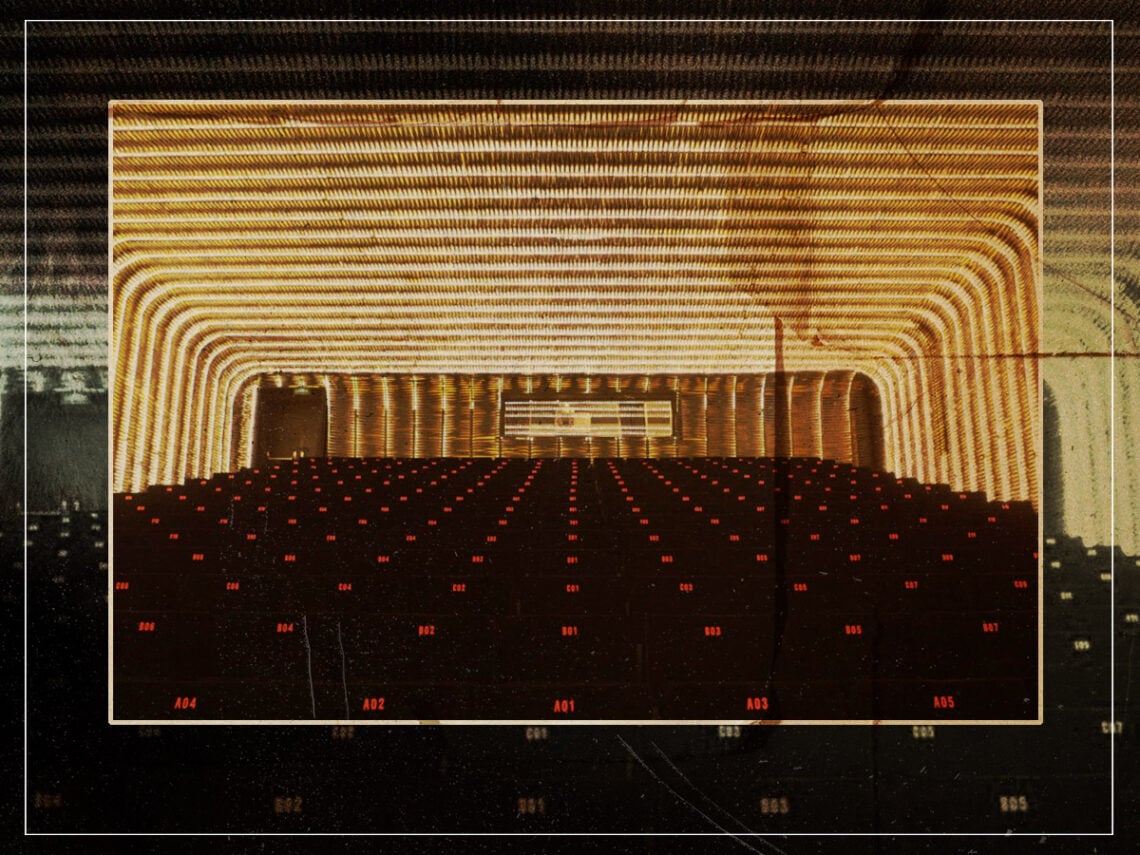
The Cineteca Matadero contains three projection rooms, a production studio, a film archive, and an outdoor terrace, with the unit comprised of five distinct areas. The Azcona Cinema can seat 236, Plató holds 129, and Borau has the capabilities of sitting 65. There are several additional multipurpose spaces, too, after the work of architects José María Churtichaga and Cayetana de la Quadra-Salcedo reinvigorated a municipal slaughterhouse into one of the most arresting cinemas in Europe.
Cineteca Matadero describes itself as “a modern and lively space that hosts programming attentive to new audio-visual forms,” one that places particular emphasis on “independent, alternative, and non-fiction cinema.” Don’t expect to see the latest blockbusters, then, but the arts centre as a whole does a lot more than screen movies.
A “stable program of workshops, seminars, and festivals” draws creative minds and industry figures from across the country into its orbit, with artistic director Luis E. Parés overseeing a team who curate and craft programmes “focused on the best and riskiest current cinema” as part of the Matadero’s position as the city’s Center for Contemporary Creation, which extends into exhibitions, festivals, live gigs, conferences, residencies, educational showcases, and days out for the whole family.
In a place where the floor used to be caked in dust and blood, the Matadero is now “a living place for the enjoyment of culture, for artistic experimentation and for the debate of ideas in the fields of visual, performing and performing arts, design, literature, digital culture, architecture and many other creative practices.”
Needless to say, nobody would have predicted that outcome back in the 1920s when it was essentially a killing floor, but shutting its doors permanently as a slaughterhouse has turned out to be a huge boon for the local arts community in the long run.
