


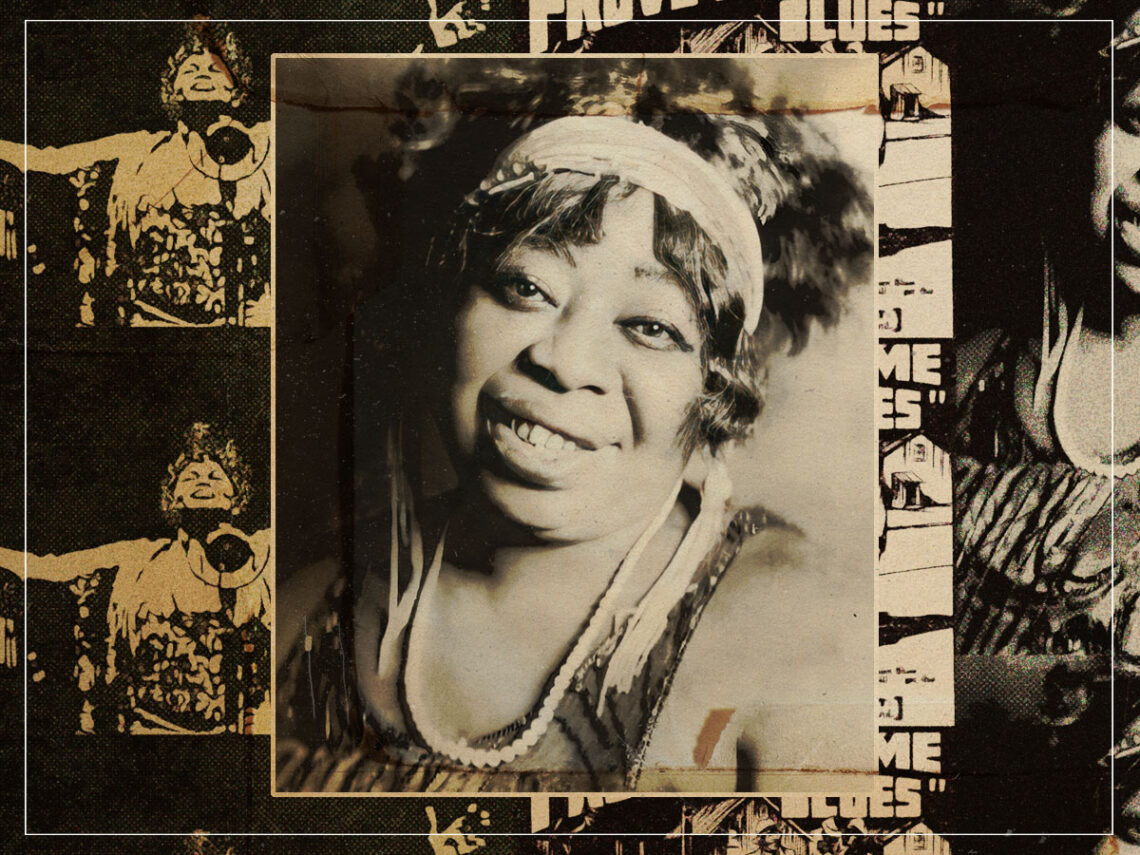
Ma Rainey: the blues pioneer who became an LGBTQ+ icon

Thankfully, in the modern music scene, there is no shortage of representation for LGBTQ+ artists. Musicians creating art which revolves around or touches upon their sexuality has been commonplace since the dawn of pop music, but it is only in relatively recent years that Queer artists have felt comfortable discussing or drawing upon their sexuality in the same way. Of course, these representations of the LGBTQ+ community in music were spurred along by some pioneering figures, but one who is rarely afforded a mention is Gertrude ‘Ma’ Rainey.
Hailing from Columbus, Georgia, Ma Rainey was a pioneering figure in blues music during the early 20th century. In fact, she was among the very first musicians in America to adopt the kind of musical style that would later become known as blues. Through original compositions like ‘Shave ‘Em Dry Blues’, ‘Ma Rainey’s Black Bottom’, and ‘Moonshine Blues’ among countless others, Rainey laid the foundations for the modern era of the musical style, earning herself a dedicated audience in the process.
Nobody could deny the importance of Ma Rainey as a blues musician, but an aspect of her career which is rarely afforded the same kind of legendary reputation is her pioneering representation of Queerness. Throughout her music and performance, Rainey would regularly make references to bisexuality or lesbianism, even subverting expectations of gender by occasionally dressing like a man. While, by modern standards, all of that is fairly tame, it must be remembered that Rainey was doing this as a Black woman in 1920s America.
To say that Rainey lived a hard life would be a gross understatement. After all, she grew up during a horrific period for Black Americans, characterised by Jim Crow laws, widespread discrimination, violent persecution and a distinct lack of human rights. Simply existing in society was a risk for Rainey, but being outspoken about her sexuality added an entirely new layer to the persecution she would face by the white conservative society that dominated the United States during that period.
Perhaps the most overt of Rainey’s explorations of sexuality came on her 1928 track ‘Prove It On Me Blues’. The lyrics to the song include the lines, “They must’ve been women, ’cause I don’t like no men,” which seems overt in its lesbian leanings. However, it must be noted that many of her songs did speak of love affairs with men, and she was married to a man, Will Rainey, which might suggest Rainey was harbouring bisexual feelings.
On top of that, the song also includes the gender-bending lyric, “It’s true I wear a collar and tie.” In today’s society, nobody would bat an eyelid if a woman wore a collared shirt and tie, but back in the 1920s, that was seen as an exclusively male look. It has since been theorised that this line in the song refers to Rainey’s 1925 arrest when she reportedly dressed as a male and took part in an orgy in her home with various women.
It goes without saying that this incident closed a lot of doors for Rainey in the industry, but her overt and unapologetic stance on gender and sexuality formed a pivotal moment in the history of LGBTQ+ culture and history. Throughout the 20th century, a handful of brave individuals fought for the right to love whomever they wanted, and they did not do so quietly. It was down to figures like Rainey that Queer people in the United States and further afield began to feel less afraid to express themselves and their sexuality.
Of course, in the years that followed Rainey’s death in 1939, various other figures would follow in similar footsteps. Dusty Springfield, for instance, was ostracised from the music industry during the late 1960s for being outspoken about her bisexuality. Decades later, Pet Shop Boys received a considerable amount of hatred for being openly gay. The path to Queer representation in music was certainly not an easy one. Still, those few defiant musicians, like Ma Rainey, paved the way for modern artists to be fearlessly open about their sexuality and the issues that still face the LGBTQ+ community to this day.
