


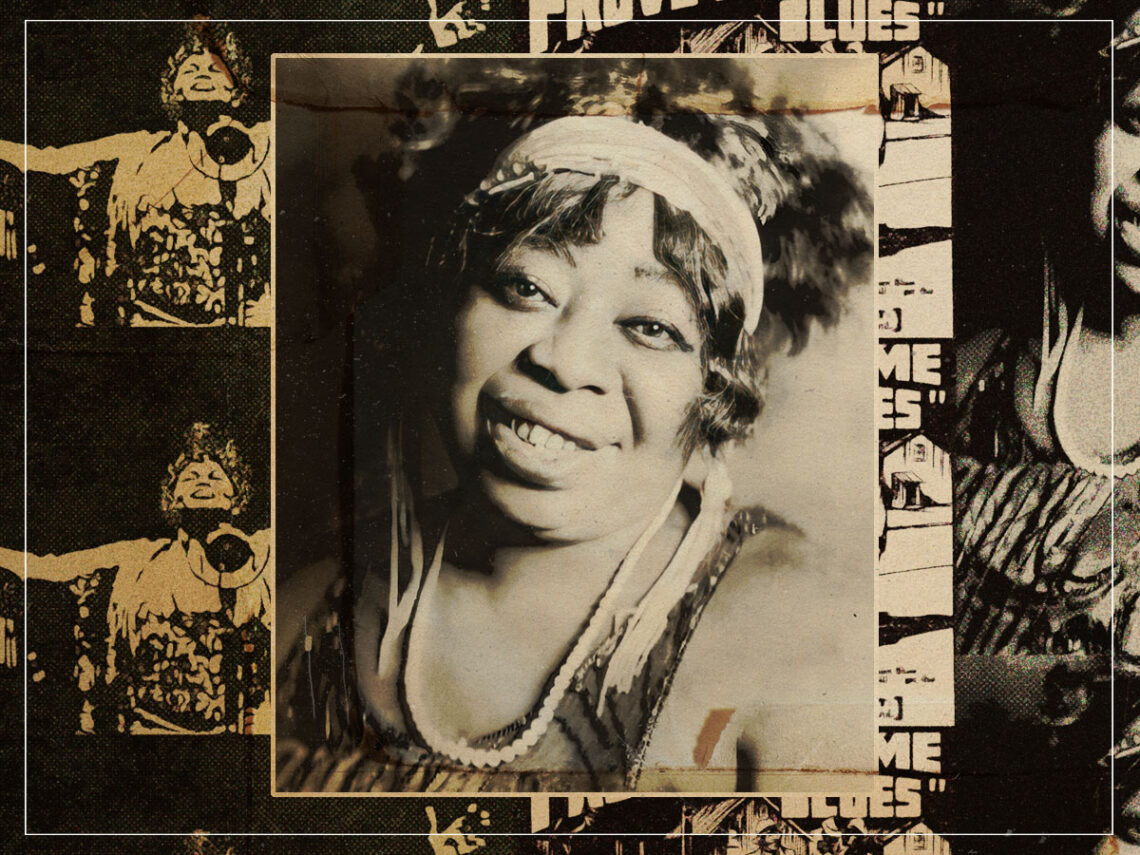
Gertrude ‘Ma’ Rainey: An extraordinary life as ‘The Mother of the Blues’

When I think of the blues, my mind immediately turns to Mississippi, the genre’s spiritual home. The central southern state is named so after the river that bisects North America and is an age-old cultural hub in the US. Undoubtedly, one of the state’s most important exports is the blues, from which rock ‘n’ roll evolved in the 1950s before triggering a countercultural revolution in the Western Hemisphere over the subsequent decade.
It seems somewhat fitting that the countercultural revolution of the late 20th century has its roots in the blues. The Mississippi Delta region, which stretches from Memphis, Tennessee, to Vicksburg, Mississippi, provided a fertile breeding ground for the musical style in the late 19th and early 20th centuries. The Delta hosted a large population of African American agricultural labourers, primarily working in the cotton farming industry.
These southern African American communities faced much hardship, including that associated with economic exploitation, racial discrimination, and social isolation. The blues provided a suitable medium to reflect on these societal themes. The early folk and blues innovator Lead Belly thrived on such themes and inspired a generation of musicians, including many of the folk and rock artists of the countercultural movement.
After Lead Belly’s period of eminence in the 1930s and ’40s, blues music began to sweep the US thanks to eminent recording musicians like Robert Johnson, BB King, Muddy Waters, John Lee Hooker and Howlin’ Wolf. As this list suggests, the scene was dominated by male artists, but that’s not to say there were no female blues singers. On the contrary, taverns across the Mississippi Delta region frequently hosted female singers, though they would find gaining widespread exposure via record contracts and major venue bookings rather difficult.
In the early 20th century, the US hosted a severely unequal society where racism was rife, especially in the southern states. Additionally, the suffragette movement had still yet to gain traction, meaning most regions observed gender inequality. While not all gender-based discrimination was active, passive subscription meant that many women failed to have their voices heard.
Henceforth, alongside painstakingly gradual progress in the Civil Rights Movement, several female musical icons helped to pave the way towards the (more) equal industry we enjoy today. Particularly effective were Black female icons such as folk star Odetta, the ‘Queen of Soul’, Aretha Franklin, and the ‘Queen of Rock’ n’ Roll’, Tina Turner. Less well-known is the early blues singer Gertrude ‘Ma’ Rainey, who opened the door to all of the above.
Born in 1886, two years before Lead Belly, Ma Rainey, née Pridgett, became one of the earliest prominent names in blues music. As a teenager, she began singing in vaudeville and minstrel shows and became locally revered for her vibrant tone and emotional range. In 1904, she married fellow musician Will Rainey, with whom she began touring across the southern states as Ma and Pa Rainey.
Crucial to her enduring legacy, Rainey became one of the first blues singers to have her performance recorded. She reached the peak of her recording career in the 1920s and continued to perform until the early 1930s, when the Great Depression and evolution of musical trends led to a decline in her career. After her brush with stardom, Rainey retired to her hometown of Columbus, Georgia, where she was the proprietress of several local theatres until her death in 1939.
Throughout her brief career as a blues singer, Rainey recorded over 100 songs, which was impressive for a Black female artist working in the 1920s. Her catalogue includes ‘Moonshine Blues’, ‘Ma Rainey’s Black Bottom’, ‘Bo-Weavil Blues’ and ‘See See Rider’, throughout which she reflected on the highs and lows of African American life in the early 20th century.
As a pioneering blues singer and one of the first on record, Raney opened the door and set the pace for a century of profound change. Most directly, she inspired the so-called ‘Empress of the Blues’, Bessie Smith, as a contemporary performer, friend and occasional on-stage collaborator. Following her death, Raney inspired a cascade of Black female performers far beyond the limits of blues music. Bessie Smith may have been the Empress and Muddy Waters the Father, but before both was the Mother, Ma Rainey.
