


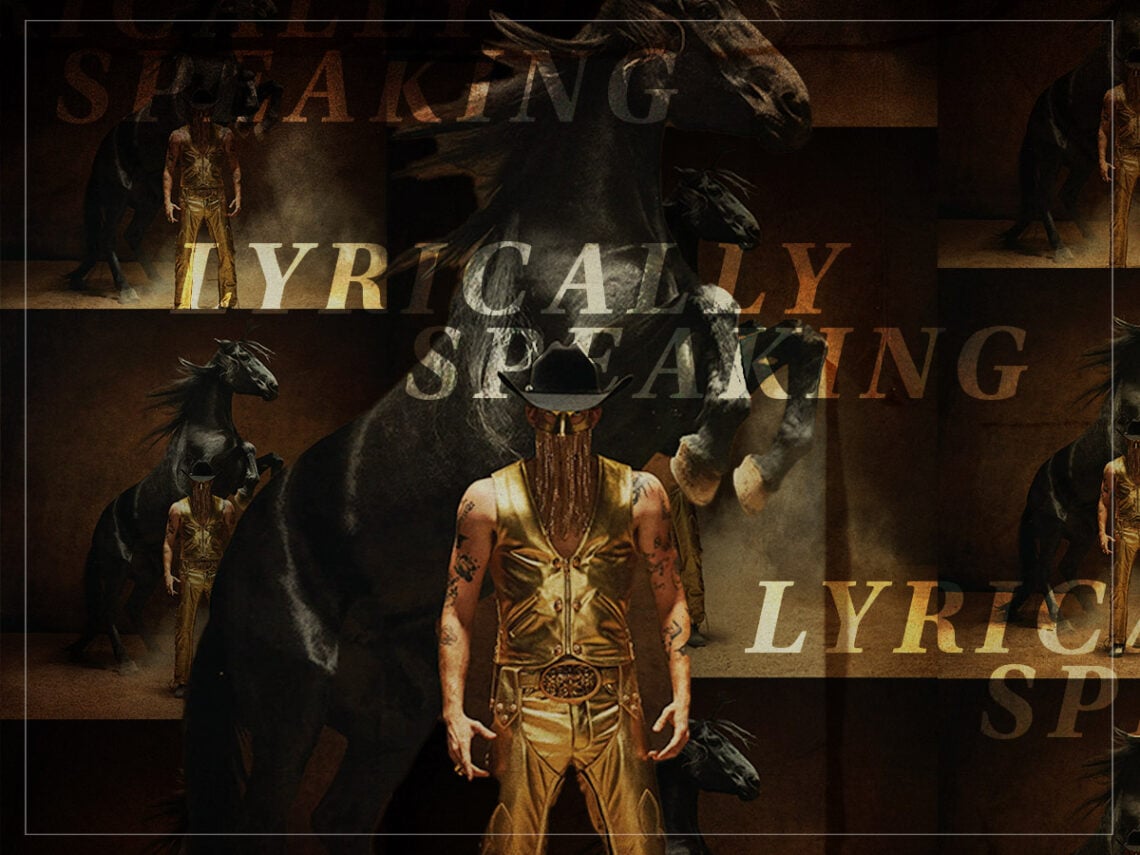
Lyrically Speaking: Orville Peck and the quintessential country sadness in ‘City of Gold’

Orville Peck may still be early in his solo career, but his impact feels far more immense. Amid the chaos of unkempt romantic liaisons and the struggle with alienation in the glitz and glamour of the Los Angeles music scene, everything Peck has created so far culminates in Bronco—a record filled with lyrical gems, including the heartfelt lament of ‘City of Gold’.
The sonic conveyor belt of this particular record dishes out something for everybody. Though not almost the most accessible of sounds—an immediate turn-off for anybody opposed to country—Bronco is a torpedo-level blast of emotion from start to finish, wading through the impassioned swirls of ‘Daytona Sand’ through ‘All I Can Say’. “You always take the dare, that’s what I learned,” Peck sings on the opening track, setting the tone for an album that doesn’t hold back.
Just before the closing track is ‘City of Gold’, an intimately revealing track about Peck’s upbringing and repeated mistakes, through the whimsy and self-reflectiveness of his own secret desire to feel wanted. A more stripped-back affair, even compared to the soft calculations of ‘The Curse of the Blackened Eye’ and the explosive ballad ‘Let Me Drown’, ‘City of Gold’ presents nothing but Peck and his yearnful sorrow, underscored by a winning vocal and lyrics to stop you in your tracks.
Rivalling all the other love songs that ever compared heartbreak to losing yourself entirely, Peck begins with a soft lamentation: “I used to find hope in the wreckage / Dark news in from the past / And all I can feel is the feeling that we’ll never say hi if ever we pass.” The haunting feeling of becoming a stranger to someone who once meant everything—or perhaps the other way around—sets the scene for a song that builds with the same tension as love and loss itself, like passing someone on the street who once held you warmly at night.
This continues in the following lines, where Peck almost whimsically—or even playfully—acknowledges his loss of self in the breakup. He calls for someone to “send word to my last known existence,” now “lost at last in the wind,” before reflecting that love is all “come-ups and clover until it’s all over,” ultimately signalling that “all good things come to an end.” There’s a sense of defeat in these words, though they come underscored by the kind of raw emotionality that shows that Peck, no matter how much he tries, is far from healed.
All of this remains even as Peck details the reasons he has lost hope, telling his former lover that he might seem strange, but it’s because he “comes with the pain of a man scorned again and again.” However, his judgement isn’t too cloudy, especially as he seems aware of his pain and hurt in a way that hasn’t turned entirely inward: “I’vе been thinking lately about the way you’d speak to me / I think it’s time I disappear, I’m feeling old.”
Still, he can’t shake this person, no matter what. He feels himself growing closer to them every time he is in town, wanting and feeling their presence as he always has, though burned by the fires of misunderstanding and wanting something he can never truly have. In this case, it means never having the relationship on his terms and always ending up hurt and alone. He reflects on these truths even as he wishes his lover would sit with him on their “front porch”, promising he won’t be too much of a fuss—”I’ll be still, I’ll be quiet”—before voicing the troubling thought he’s likely pondered repeatedly: “I never knew why it was so hard for me to be who you want.”
As if answering the listener’s question about why he doesn’t just move on, he then says that his only reason for not doing so, for not “finding new lovers”, is that he still holds onto hope, no matter how flawed or toxic that might be: “All that I want is a kind heart to haunt / My shrink says it ain’t too much to ask.” Whenever he reveals new aspects of the story, the chorus suggests a growing distance between the pair that plagues him, feeding his desire to feel loved.
There are countless gems throughout Bronco, but ‘The City of Gold’ stands out as one of the most defining Orville Peck songs, not just for its emotional vulnerability but also for presenting the singer’s raw talent. In his story, he lays himself bare, though with the dignity and grace of someone who knows how to channel hurt into art. While the song holds a universal appeal, it intertwines longing with the complexity of revisiting home, a place usually associated with safety and love but now haunted by the pain of distance.
