


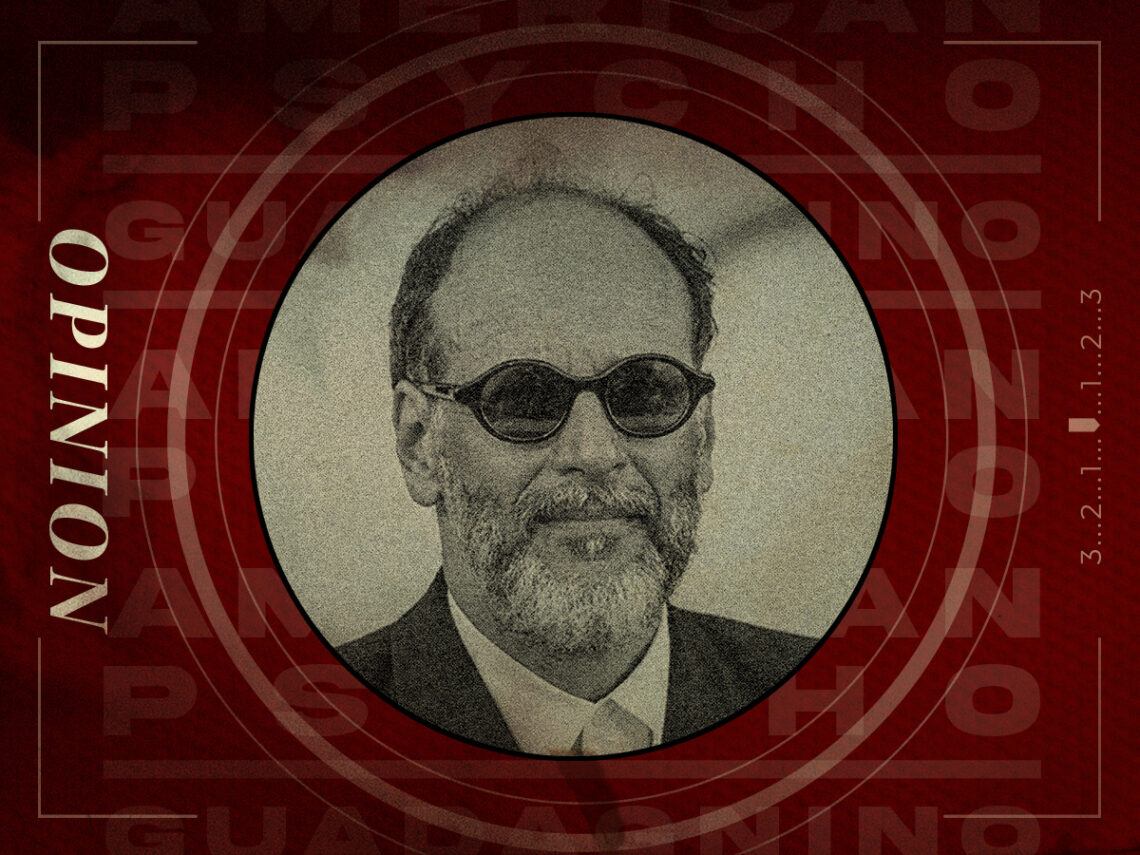
Hear Me Out: Luca Guadagnino is the perfect director to remake ‘American Psycho’

When rumours began to circulate in the fall of 2024 that Challengers director Luca Guadagnino was in talks to direct a new American Psycho movie, the reaction was generally negative, bordering on outrage. Mary Harron’s 2000 adaptation of Bret Easton Ellis’s gory 1991 satire is a beloved classic, featuring one of Christian Bale’s best performances and a plot that only grows more relevant with time.
Set in the 1980s, it follows a young Wall Street investment banker named Patrick Bateman, who is obsessed with status and moonlights as a serial killer. The novel is a creative and graphic indictment of American consumerism and greed, told in a way that is both stomach-churning and completely unique. It was highly controversial when it was published and was censored in multiple countries.
There were several reasons for the widespread condemnation of a new adaptation of the book. The first was that it’s just too soon. It’s only been 25 years since the film was released, and it’s still picking up a cult following. It doesn’t need to be reimagined because it continues to be relevant. Everything from the suits to Patrick Bateman’s workout routine is as current in 2025 as it was in 2000, even though the movie is set in the ‘80s.
Another reason for the outcry was that it is one of the few box office successes-turned-cultural touchstones to be directed by a woman. Mary Harron had only made one movie before American Psycho, 1996’s I Shot Andy Warhol, and she has never turned into a household name. The film did relatively well at the box office, earning $34million off of a $7m budget, but she didn’t get half the credit she deserved. As it grows ever more popular with time, it feels cruel that she didn’t get her moment in the sun, and the idea that a male director would swoop in and eclipse her feels depressingly predictable.
However, if anyone can direct a worthy remake, it’s Guadagnino. For starters, he has made it clear that his version of the story would be an adaptation of the novel, not a remake of the movie. This is important, both because Harron’s work deserves to stand on its own and because Guadagnino has already proven with his 2017 remake of Dario Argento’s Suspiria that he has no business retreading faultless cinematic territory.

The Call Me By Your Name director has frequently shown his willingness to go to extreme lengths in his movies, especially in the last handful of years. 2022’s Bones and All was a romance about teenage cannibals and proved that Guadagnino can put gore at the forefront of a film and still make the story about something else (tragic romance, in that case). American Psycho requires extreme gore, but the gore has to be anchored by comedy and cultural commentary, a challenging needle to thread.
One of the ways in which Harron’s film diverges from Ellis’ book is that the novel is much more specific about Patrick’s villainy. On the page, the murders are significantly more graphic, and Patrick is much more overtly racist and homophobic. The author’s decision to put the novel in the first person means that the reader is forced to follow each killing and Patrick’s hateful justifications for them in gruesome detail. At one point, he brutally murders an elderly gay man for hitting on him. Not only would Guadagnino be able to match these extremities, but sadly, these themes of bigotry have only become more relevant in the 2020s than they were in the early 2000s.
Last but not least is Guadagnino’s track record of objectifying the male body. One of the things that sets Harron’s movie apart is that she flips the script on the male gaze, taking an almost fetishistic approach to filming Bale’s body. Patrick is obsessed with keeping himself fit and glowing, and he undertakes an elaborate skincare and workout regimen every morning in the pursuit of physical perfection. The camera lingers on his muscles in a way that male directors have historically lingered on the curves of female actors. This gives the work a decadent, gauzy aura and provides wordless commentary on the chasm between what a person looks like and who they are. Patrick might look like an Adonis, but on the inside, he is as ugly as they come.
Guadagnino has framed the male body as a work of art from the beginning but has done so even more in recent years. Challengers is the most obvious example. The love triangle between tennis players favours the cagey relationship between Mike Faist and Josh O’Connor’s characters. Most of their scenes involve sweating, and Guadagnino makes sure that it’s the glistening, erotic kind of sweat rather than the suffocating, repellent kind.
If Guadagnino does go ahead with the project, he would have the opportunity to make an even darker, more visually seductive, and tonally complex movie. The best outcome would be for him to recreate something that feels indelibly like a Guadagnino film rather than something that feels like a compromise between his vision and Ellis’s novel. There are countless places where the adaptation could go wrong, but if everything aligns, it could be just as good as the 2000 version, albeit entirely different.
