


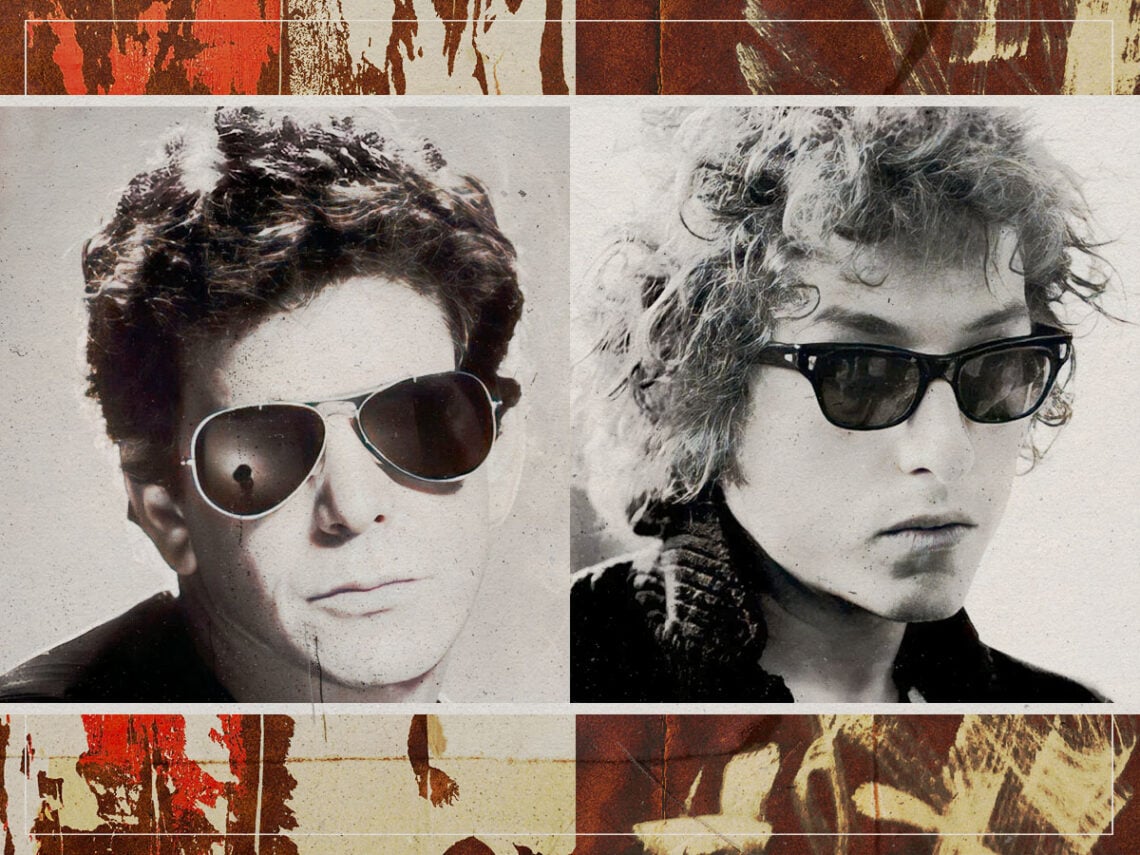
What Lou Reed learnt from ‘Don’t Think Twice, It’s All Right’: “Bob Dylan can turn a phrase”

For an experimental and pioneering force in rock music, Lou Reed’s inspirations were broad and diverse. As an artist, his vision seemed utterly singular, yet as a person, he connected with so many of his peers with a deep level of admiration, turning to friendship. Bob Dylan was one of those, with this early cover showing just how enduring his love for the folk star was.
In his younger years, when he was only just beginning to foster his love for music, Reed’s inspirations were all over the place. As a teenager, his first involvement in making music was in doo-wop groups, which felt worlds away from the type of sounds he’d later come to make. Over time, as he grew up, he would evolve through a love for rock and roll, blues, jazz, and literature, which was just as inspirational to him musically as anything else.
It was a teacher Reed had in college that perhaps inspired him most of all. The poet Delmore Schwartz taught the musician, inspiring the Velvet Underground track ‘European Son’. From his lecturer, Reed learnt how “with the simplest language imaginable, and very short, you can accomplish the most astonishing heights.”
That was in early 1960, and in 1963, Reed set up a microphone at home, long before ever releasing any music or even yet forming the band he’d make his name in, all to cover a Bob Dylan song. Not only does this lyrically altered version of ‘Don’t Think Twice It’s Alright’ provide an early insight into Reed’s songwriting at this early stage. But it unveils the long story of his love for Dylan.
It could be said that Bob Dylan, the folk singer and songwriter extraordinaire, sits perfectly in between all of Reed’s earlier inspirations. With his way with words, Dylan bridges the gap between the rock and jazz Reed loved and the professor who opened his eyes. Perhaps discovering Dylan was a breakthrough moment where Reed realised they could all exist in harmony and that he too could turn literature and poetry into song, re-writing this early Dylan track as a way to shyly test it out before starting his band.
“Dylan continuously knocks me out,” he said later, explaining his love for the artist as he added, “the kind of phrasing that knocks me out is Dylan’s. For language, Dylan kills me to this day.”
It would prove to be an enduring love that would last his whole life. After this cover in 1963, Reed was still enamoured with Dylan’s work in the late 1980s, as he said, “Bob Dylan can turn a phrase, man. Like his last album [Down in the Groove], his choice of songs. ‘Going 90 miles an hour down a dead-end street’ — I’d give anything if I could have written that. Or that other one, ‘Rank Strangers to Me.’ The key word there is rank.” He was a dedicated fan, stating, “I always go out and get the latest Dylan album.”
The feeling became mutual as, to his own delight, Reed once revealed a compliment paid to him by one of his all-time favourite musicians. He recalled, “Bob Dylan said a very nice thing to me once; he said, ‘You never made a bad record’. You know, this is really nice.”

Never Miss A Tale
The Far Out Bob Dylan Newsletter
All the latest stories about Bob Dylan from the independent voice of culture.
Straight to your inbox.