


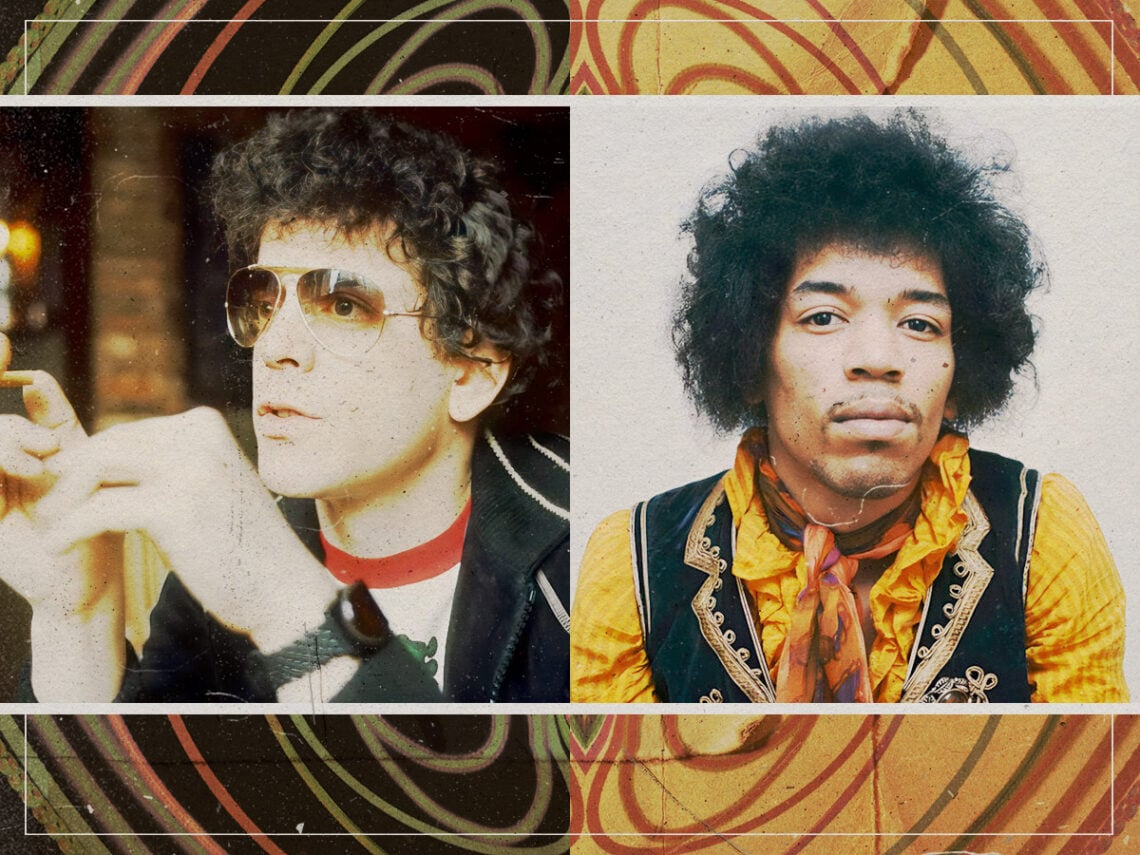
Watch a young Lou Reed discuss Jimi Hendrix: “He was such a bitchin’ guitar player”

Jimi Hendrix and Lou Reed were unparalleled masters of their craft, each carving their own paths as rock ‘n’ roll mavericks in vastly different directions. While the late former Velvet Underground frontman and Hendrix may not have seemed cut from the same cloth, talent always recognises talent.
Despite passing away over 50 years ago, no other guitarist since has come close to matching his skill. Even now, the icon of Hendrix still looms high and above the genre of rock music. His story is all too short but utterly unique. Arriving in London in 1966, Hendrix soon became a wild whisper among the glitterati of the thriving ’60s music scene. His innovative way of playing the instrument had sent shivers down the spines of the leading court of guitar heroes, and his presence was beginning to make waves. Soon enough, Hendrix was the talk of the town and then the world.
Meanwhile, Lou Reed inhabited a completely different scene and found himself at the epicentre of a world revolving around Andy Warhol alongside his band, The Velvet Underground. Unlike Hendrix, who garnered mainstream attention, Reed and his group of dirty, inspired, arthouse hipsters, operated more on the periphery or inside New York’s infamous Factory. Hendrix almost transcended music, becoming a spectacle of sorts, continuously showcased to perform his unique musical wizardry. Lou Reed dipped in and out of the shadows at will.
Three years after his death, Reed took part in a documentary about the mercurial guitarist, simply titled Jimi Hendrix, directed by Joe Boyd and John Head. The film featured an all-star cast who talked about their love of Hendrix, including the likes of Eric Clapton, Germaine Greer, Mick Jagger, Mitch Mitchell, Little Richard and Pete Townshend, but Lou Reed’s take on the great man is perhaps the most fascinating.
“He played 24 hours a day; he was always playing. You always knew when Hendrix was in town that he was jamming here, he was jamming there – he was just always playing,” Reed said in a tone of complete adoration. “His music to me was entertaining, as was his stage act for that matter, but the thing was because he was such a bitching guitar player, that was enough, and the other thing was distracting from it,” Reed added with honesty.
“I think he realised that and wanted to get out of that and wanted people to just listen to the music,” Reed continued. “There’s no end to what he could have done but the situation that he got placed in y’know from either his record company, the management, the promoters or publicity men”.
Of course, the topic of Reed discussing Hendrix remains fascinating because of their obvious differences. While one would boast virtuosic guitar playing, the other preferred irregular vocals, minimalist guitar, and poetic lyricism. Where Hendrix is celebrated for revolutionising the sound of the electric guitar, Reed was always more reserved, not reviving his deserved plaudits until much later in life. Despite it all, however, the reverberations of sound connected them in the same way they do for you and me.
Reed continued explaining his views of Hendrix, but this time focusing on the pressures the guitarist faced after such a rapid rise to fame. “All these guys you’ve got to deal with who are saying, ‘Hey Jimi, you’ve got to tour, and you’re here, here, here and ‘x’ number of people are coming in, and you need to do this because your account is at ‘x’, you invested in Electric Ladyland, and maybe this isn’t working, and that is working’,” Reed delivered in his best industry guy impression.
Concluding: “I think he had all these pressures on him, and you’re not supposed to deal with that; you’re supposed to make music.”
By 1973, Reed had spent enough years in the music industry to understand the trials and tribulations that came with it. This put him in a fortunate position when he achieved commercial success with Transformer in 1972, a record which was very much on his own terms, and his ethos was something that he was never prepared to sacrifice in search of notoriety.
Hendrix’s rise to fame saw him go from an obscurely known session musician to the biggest rock star on the planet in lightspeed, a factor which allowed too many people in his ear telling him differing things, which landed him in the difficult position that Reed described. Perhaps, if he had Lou Reed’s matter-of-fact head on his shoulders, he could have focussed solely on his music rather than being sucked in by the glitz and glamour.
While Jimi Hendrix and Lou Reed were towering figures in rock music, they approached their artistry in different ways. Hendrix was a virtuosic guitarist and charismatic showman, while Reed was a poetic lyricist and introspective songwriter. Together, they represent two distinct strands of rock music history, each leaving an indelible mark on the genre in their own right.
See the clip of Reed discussing his idol below.
